Making Friends at a Japanese University: Practical Advice for International Students

Making friends at a Japanese university is possible, but it may not happen automatically. Many international students arrive expecting that classmates will quickly invite them into social groups. In reality, Japanese students may be polite but reserved at first, and existing friendship groups may already be formed. The best strategy is to create repeated, low-pressure contact through classes, laboratories, circles, dormitories, and daily routines.
Quick summary
- Friendships often grow slowly through repeated contact rather than one dramatic first conversation.
- Classes alone may not be enough; circles, laboratories, dormitories, and language exchange can be more effective.
- Basic Japanese phrases can open many small conversations, even if you are not fluent.
- International students should avoid staying only in English-speaking groups if they want local friendships.
- Consistency, greetings, and small participation are often more important than perfect communication.
Adjust your expectations first
Japanese students are often polite to international students, but politeness does not always become friendship immediately. Some students are shy about speaking English. Others are busy with classes, part-time jobs, clubs, or job hunting. Some already have close groups from high school, department activities, or circles.
This does not mean that you are excluded. It means that friendship may require repeated context. If you appear in the same class, sit near the same people, join the same circle, attend the same seminar, or eat lunch with the same lab members, conversation becomes easier over time.
Use classes, but do not rely only on classes
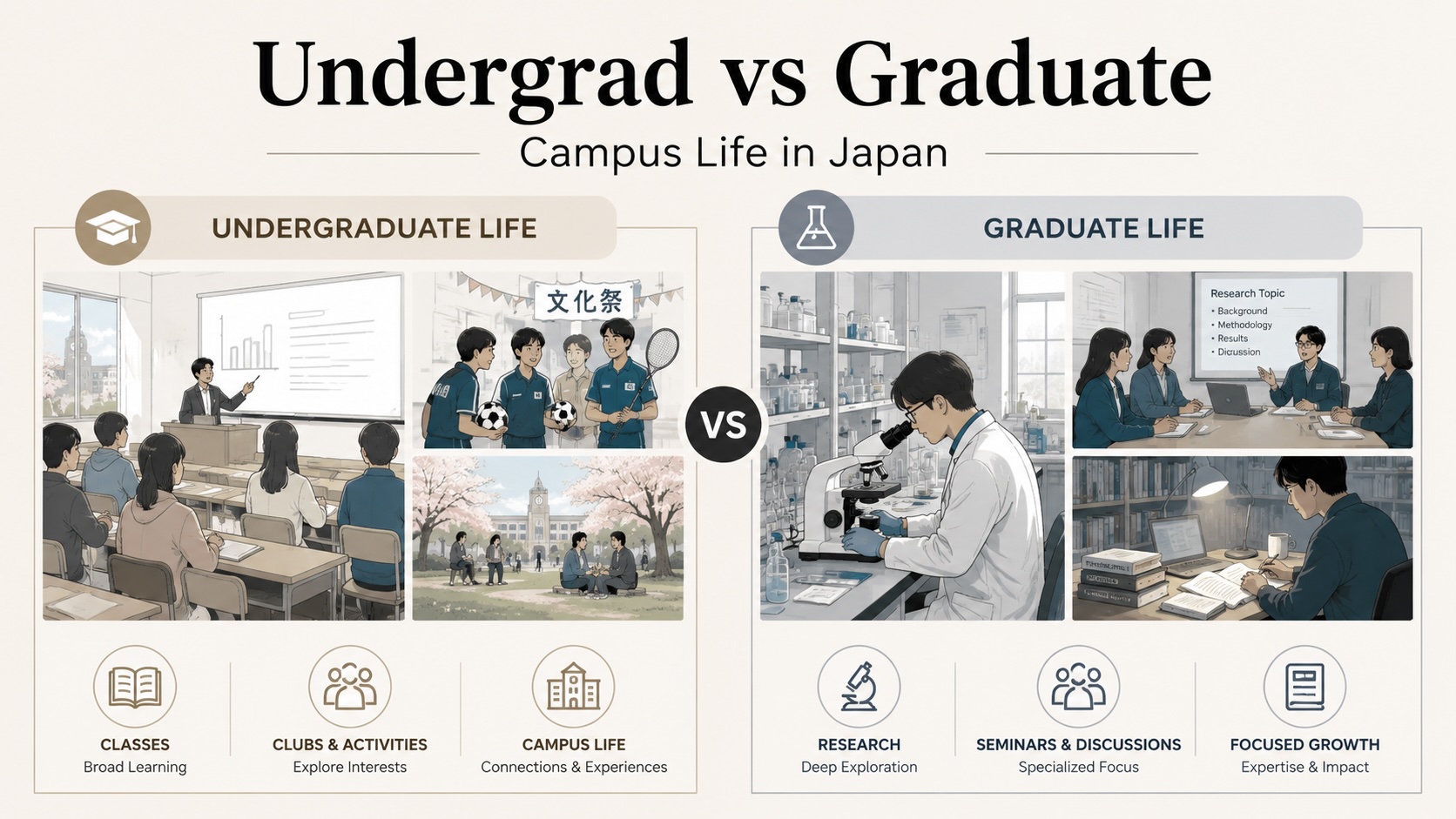
Classes can create first contact, especially if there is group work, presentations, experiments, or language learning. However, large lectures may be quiet and not very social. Students may enter, listen, and leave without much conversation. This can surprise international students from more talkative classroom cultures.
If you want to make friends through classes, start with small actions: ask about homework, confirm the classroom, comment on the assignment, or suggest studying together before an exam. A simple practical question is often easier than starting with a personal topic.
Join repeated activities: circles, clubs, and events
Clubs and circles can be effective because they create repeated meetings. Language exchange, international exchange, sports, music, photography, volunteering, cooking, anime, hiking, and culture circles may all provide chances to meet Japanese students outside the classroom.
Do not choose a group only because it sounds interesting. Visit and observe. Are beginners welcome? Is the schedule realistic? Do members explain things clearly? Are international students included in conversations? A sustainable group is better than a famous or intense group that you cannot continue attending.
Use labs and dormitories wisely
For graduate students, the laboratory may be the best place to build relationships. Lab members meet repeatedly, share equipment, eat together, discuss problems, and help each other with procedures. Joining small lab routines, such as lunch, cleaning, seminars, or informal discussions, can help you become part of the group.
Dormitories can also be helpful, especially for new students. Shared kitchens, laundry rooms, lounges, and dormitory events create casual contact. However, dorm life varies. Some dormitories are very social, while others are quiet and private. Respect others’ space and avoid assuming that everyone wants constant interaction.
Use basic Japanese without waiting for fluency
Many students wait until their Japanese becomes good before speaking. This is a mistake. Basic phrases are enough to start: greetings, thanks, apologies, simple questions, and short comments about class or food. Repeated simple Japanese can be more useful than rare perfect sentences.
At the same time, do not force every conversation into Japanese if the other person wants to practice English. A balanced exchange works well: ask how to say something in Japanese, offer to explain something in English, and show curiosity without treating classmates as free language teachers.
Common mistakes to avoid
One common mistake is staying only with students from the same country because it feels comfortable. This is understandable, but it limits campus life. Another mistake is trying to become close too quickly. Some Japanese students may feel pressure if the first conversation becomes too personal.
A better approach is steady and light: greet people, attend regularly, remember names, join small tasks, ask simple questions, and accept invitations when possible. If you are invited to a lunch, event, or study session, going once can open many future opportunities.
Quick comparison
| Situation | Practical meaning |
|---|---|
| Large lecture | Good for first contact, but often not enough for close friendship. |
| Circle or club | Useful because repeated activity creates natural conversation. |
| Laboratory or dormitory | Often strongest for graduate students and new international students. |
Final advice
The most important point is to treat Japanese university life as a practical environment, not only an academic label. Before choosing a university, program, laboratory, dormitory, or activity, ask how it will affect your daily routine. A good choice should support your study, communication, health, finances, and long-term goals.
Read next