Japanese University Dormitory Life: Living On or Near Campus
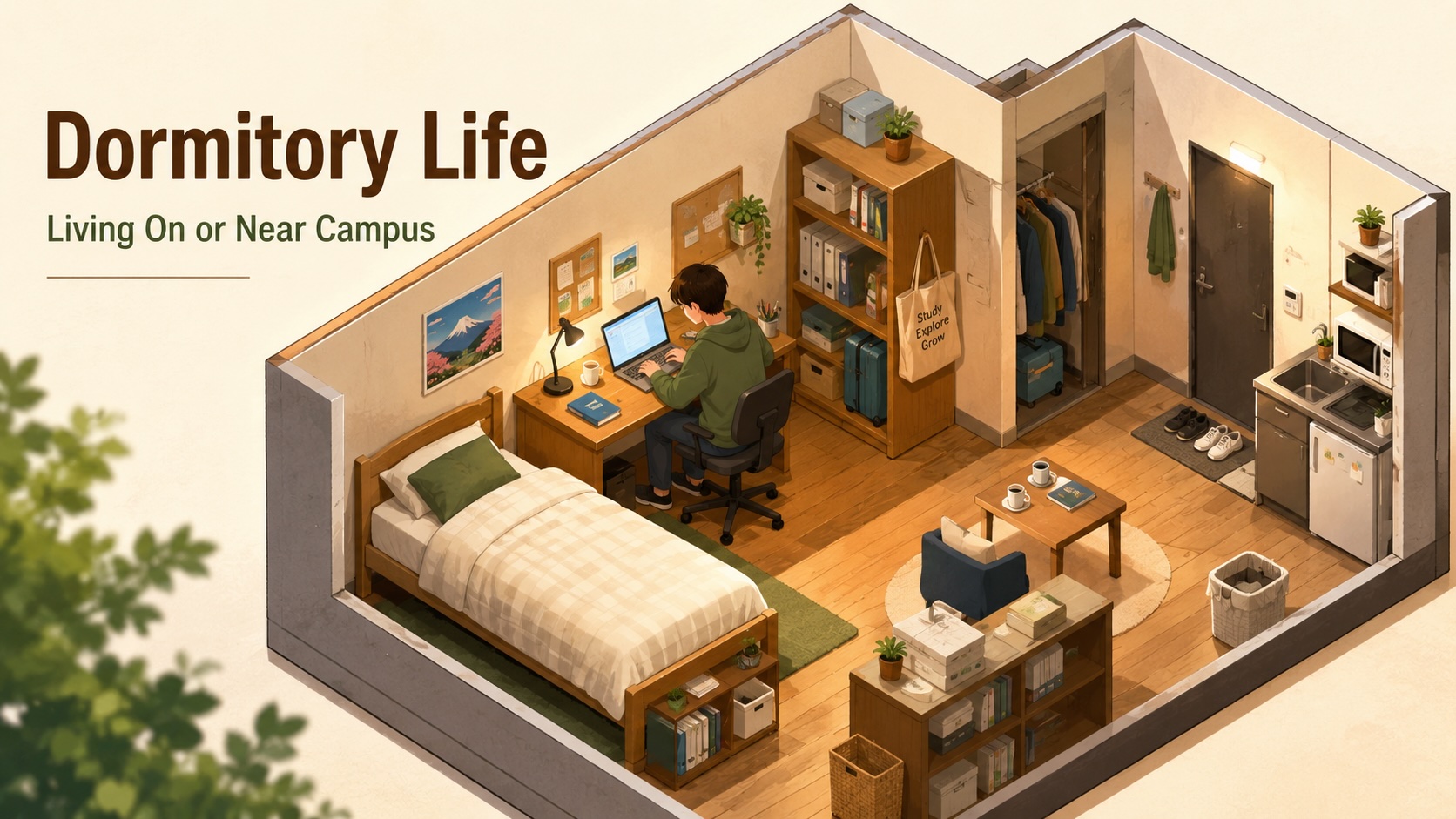
Japanese university dormitory life can be a useful landing point for international students. A dormitory may be close to campus, cheaper than a private apartment, and easier for meeting other students. However, dormitories are not always available for the whole degree period, and each dorm has its own application period, rules, shared facilities, and lifestyle expectations.
Quick summary
- University dormitories can reduce stress during the first months in Japan, especially for students arriving from abroad.
- Rooms may be limited, application deadlines may be strict, and the allowed stay period may be short.
- Shared facilities require rules for noise, cleaning, trash separation, guests, kitchens, and laundry.
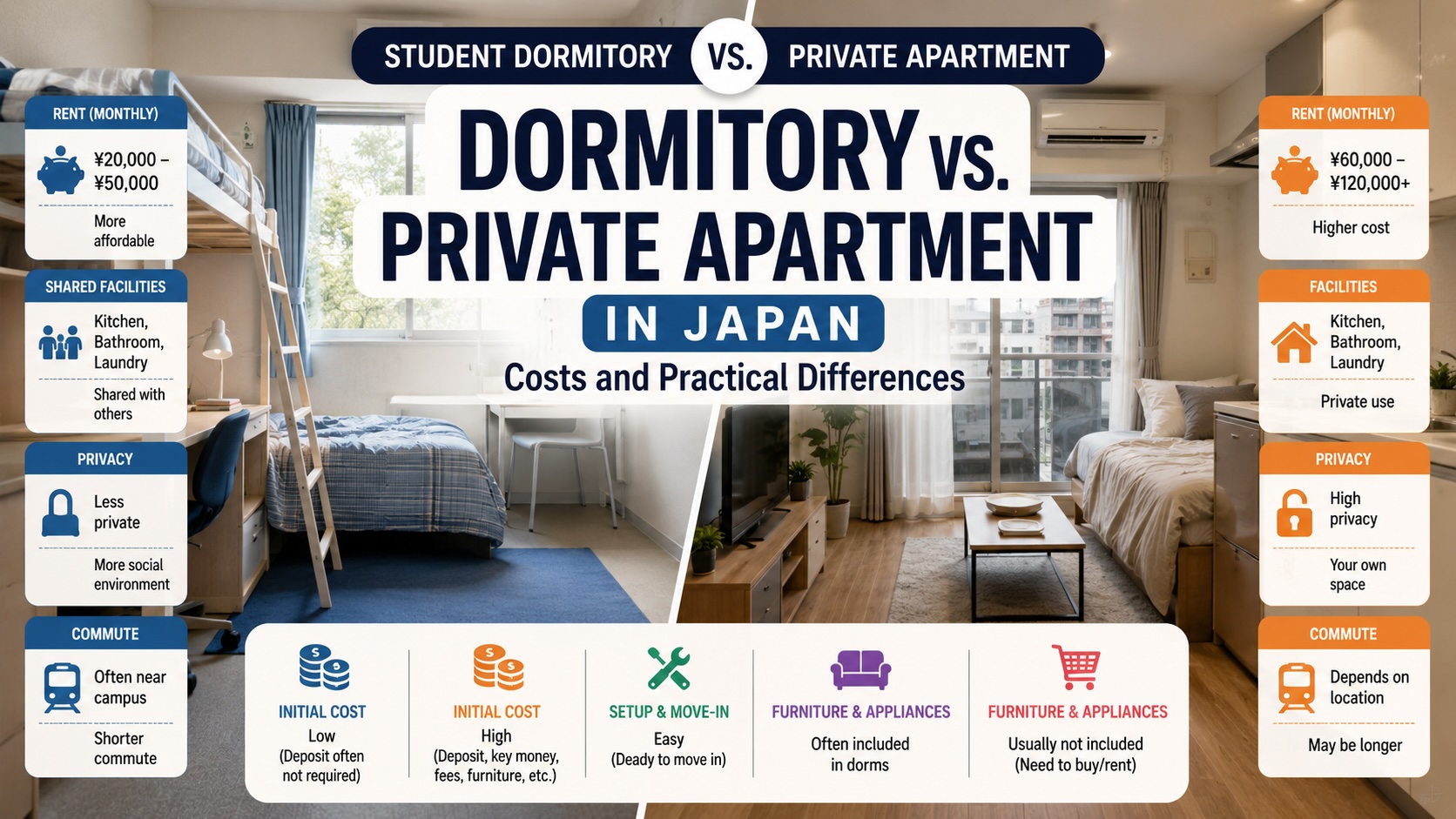
- Private apartments offer independence but require more preparation: fees, furniture, utilities, guarantor, and commuting.
- Housing choice affects friendships, study rhythm, commuting time, and daily expenses.
Why dormitories are useful for new students
A university dormitory can make the beginning of life in Japan much smoother. Students may arrive before they understand Japanese rental contracts, local geography, train routes, or utility procedures. A dormitory near campus reduces the number of problems that must be solved immediately.
Dormitories can also create social opportunities. Shared kitchens, lounges, laundry rooms, and events make it easier to meet other students. For new international students, this can reduce isolation during the first weeks, especially before classes and laboratory routines become stable.
Dormitories are helpful but not guaranteed
Students should not assume that every university can provide a room. Dormitory rooms may be limited, and priority may depend on student type, scholarship status, exchange agreement, arrival period, or lottery. Some dormitories allow only a short stay, such as one semester or one year, after which students must find private housing.
Check application deadlines carefully. Housing applications may be separate from admission procedures. Missing a dormitory deadline can force a student to search for private housing quickly, which may be stressful from overseas.
Shared facilities and dormitory rules
Dormitories usually have rules for trash separation, noise, visitors, kitchens, bathrooms, laundry, smoking, bicycle parking, and common spaces. These rules may feel detailed, but they exist because many students share limited facilities. Ignoring them can create conflict quickly.
Students should learn the local trash schedule and separation rules early. In Japan, garbage disposal can be more complicated than expected. Also pay attention to quiet hours, especially in dormitories where students have different class schedules, research hours, or prayer and lifestyle routines.
Moving from dormitory to private apartment
Many students eventually move to a private apartment. Private housing offers independence, but the initial procedure can be difficult. Students may need to understand rent, deposits, key money, agency fees, guarantor systems, fire insurance, furniture, utilities, internet, and contract length.
Before choosing an apartment, check the actual route to campus. A cheap apartment may become inconvenient if buses are rare, the road is steep, or the last train is early. For students with experiments, late seminars, or part-time jobs, commuting reliability matters as much as distance.
Living on campus vs. near campus
Living on or near campus has clear advantages: short commuting time, easier use of libraries and laboratories, and more chances for spontaneous campus interaction. It can also be helpful during bad weather or exam periods. However, campus neighborhoods may have limited shops or entertainment depending on the location.
Living farther away may reduce rent or give access to a larger city, but it can also increase transportation costs and fatigue. International students should compare total cost, not only rent. A slightly higher rent near campus may be worth it if it saves time and reduces stress.
Housing checklist before arrival
Before coming to Japan, confirm where you will stay on the first night, how to reach the dormitory or apartment from the airport, when you can receive the key, whether bedding is included, how to pay initial fees, and who to contact if arrival is delayed.
Also prepare for the first week: residence registration at city hall, opening a bank account, buying a phone plan, setting up utilities, learning supermarkets, and finding the route to campus. Housing is not only a room; it is the base for your entire student life.
Quick comparison
| Situation | Practical meaning |
|---|---|
| University dormitory | Convenient for first arrival and social contact, but rooms and stay periods may be limited. |
| Private apartment | More independence, but more procedures and initial costs. |
| Near campus | Short commute and easy access to libraries, labs, and campus events. |
Final advice
The most important point is to treat Japanese university life as a practical environment, not only an academic label. Before choosing a university, program, laboratory, dormitory, or activity, ask how it will affect your daily routine. A good choice should support your study, communication, health, finances, and long-term goals.
Read next