University Clubs and Circles in Japan: How Students Make Friends on Campus

University clubs and circles in Japan are important because they create repeated contact. Many international students expect to make friends in class, but Japanese classrooms can be quiet and social groups may not form immediately. Clubs and circles offer another route: shared practice, events, meals, meetings, and casual conversation over time.
Quick summary
- Clubs are often more serious and structured, while circles are often more casual, though the difference depends on the university.
- Welcome events and poster boards at the beginning of the semester are important opportunities.
- International students should ask about language, schedule, fees, equipment, and participation expectations before joining.
- Hobby-based, language exchange, international exchange, sports, and volunteer circles can be easier entry points.
- Making friends usually depends on repeated participation, not one-time attendance.
Club or circle: what is the difference?
In many Japanese universities, a club tends to be more formal and demanding. It may have regular practice, competitions, hierarchy, strict attendance, or long-term traditions. A circle is often more casual and flexible. However, these words are not perfectly standardized. Some circles are serious, and some clubs are welcoming and relaxed.
International students should not decide only by the name. Ask current members how often they meet, whether beginners can join, whether Japanese ability is required, whether there are fees, and whether events are held outside campus. The real culture matters more than the label.
How to find clubs and circles
The best time to search is the beginning of the academic year or semester, when many groups recruit new members. Look for posters, university websites, social media accounts, welcome events, student festivals, and announcements from the international office. Some groups have English information, but many only advertise in Japanese.
If you cannot read Japanese well, use simple keywords: tennis, music, dance, football, photography, volunteer, language exchange, international exchange, anime, hiking, or cooking. You can also ask senior students or international student support staff which groups are friendly to international students.
What to do during the first visit
During a trial visit, observe the atmosphere carefully. Are members willing to explain rules? Do they speak to beginners? Does the schedule fit your classes and part-time work? Does the group expect participation in weekend events, training camps, or competitions? A good group should be enjoyable and sustainable.
Prepare a short self-introduction in Japanese or English. You do not need a perfect speech. Your name, country, department, year, hobby, and reason for interest are enough. If your Japanese is limited, saying that you are learning Japanese and would like to participate is often appreciated.
How clubs and circles help friendships grow
Friendships in Japan often grow through repeated settings. A classmate may not become a close friend after one conversation, but someone you meet every week at practice or an event can gradually become easier to talk to. This is why clubs and circles can be powerful for international students.
Do not expect immediate deep friendship. Show up regularly, help with small tasks, learn names, greet people, and join simple conversations. Shared routines create trust. Even if your Japanese is limited, consistent participation often communicates sincerity.
When a group may not be suitable
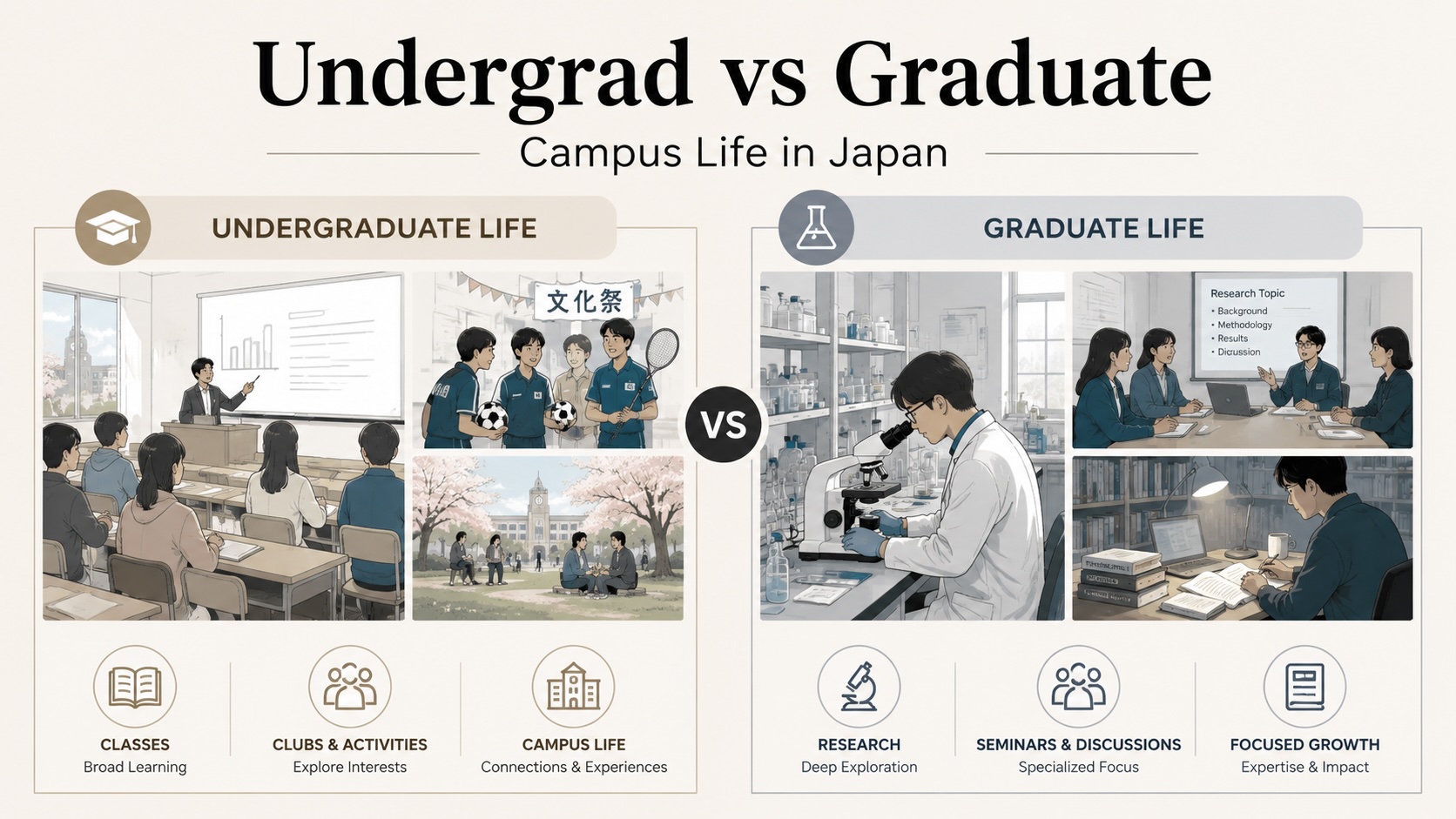
A group may not be suitable if the schedule is too heavy, members are not willing to explain anything, the costs are unclear, or participation interferes with your study. Graduate students should be especially careful because laboratory work and thesis deadlines may not leave enough time for demanding clubs.
It is acceptable to leave a group politely if it does not fit. Thank the members, explain that your schedule is difficult, and avoid disappearing without communication. A good campus life is not about joining many groups; it is about finding one or two sustainable places where you can participate comfortably.
Quick comparison
| Situation | Practical meaning |
|---|---|
| Serious sports club | Good for committed students, but schedule and hierarchy may be demanding. |
| Casual hobby circle | Often easier for beginners and exchange students. |
| International exchange circle | Useful for language practice, but atmosphere varies by group. |
Final advice
The most important point is to treat Japanese university life as a practical environment, not only an academic label. Before choosing a university, program, laboratory, dormitory, or activity, ask how it will affect your daily routine. A good choice should support your study, communication, health, finances, and long-term goals.
Read next