Laboratory Life in Japanese Universities: What Science and Engineering Students Should Know

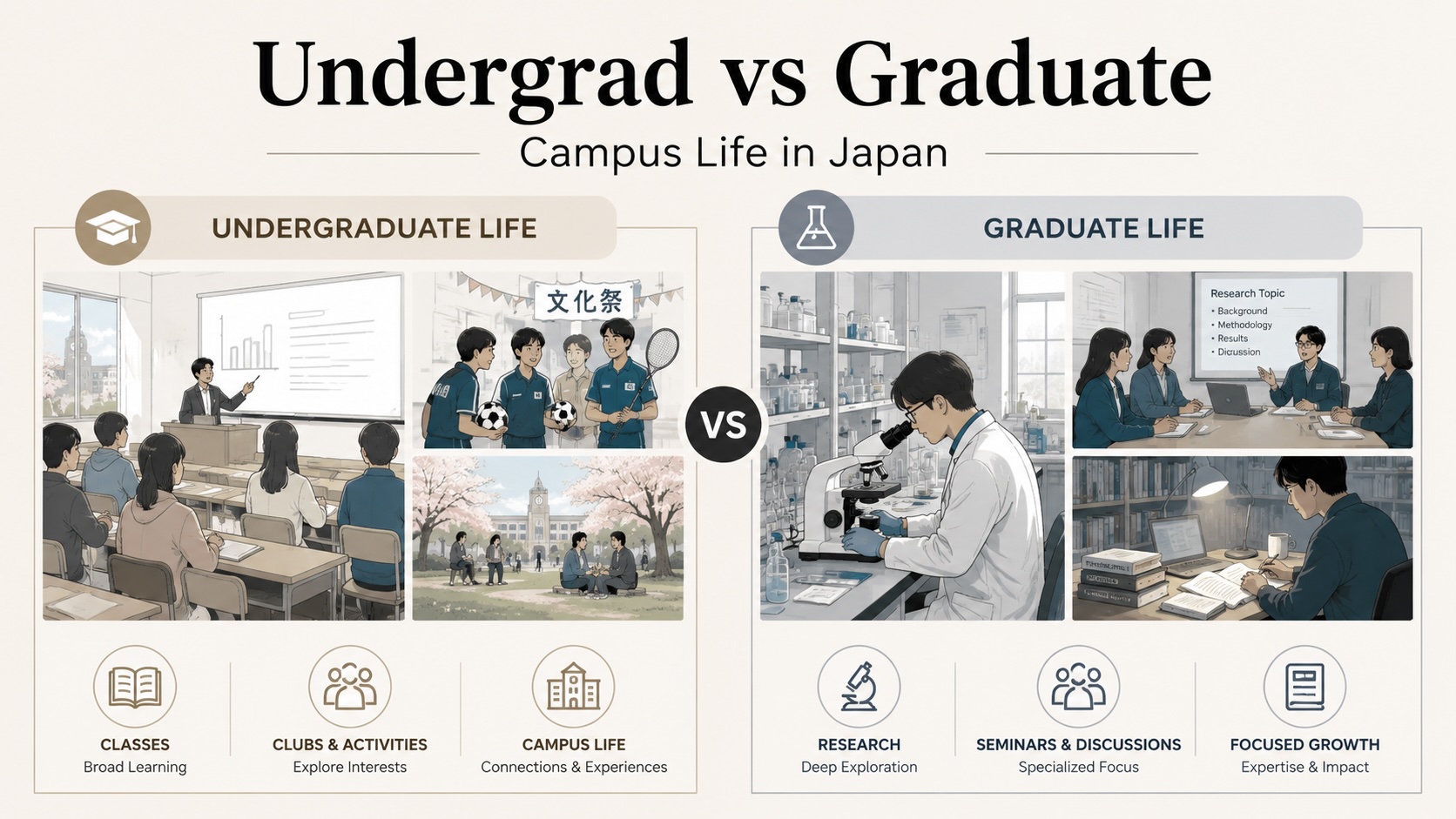
Laboratory life in Japanese universities can be very different from ordinary classroom-based student life. For science and engineering students, especially master’s and doctoral students, the laboratory often becomes the main place for research, training, discussion, equipment use, and daily communication. Choosing a graduate program in Japan often means choosing a lab culture, not only choosing a university name.
Quick summary
- In science and engineering, the laboratory may be more important than the broader campus for graduate students.
- Lab culture varies widely: schedules, English use, meeting style, supervision, and student independence differ by lab.
- Senior students often provide practical training that is not written in official documents.
- Applicants should check publications, member lists, equipment, research topics, and daily expectations before joining.
- A good laboratory fit includes research interest, communication style, supervision style, and sustainable daily life.
Why the laboratory matters so much
For science and engineering students in Japan, the laboratory is often the center of graduate school life. Students may have a desk in the lab, attend weekly seminars, report research progress, use shared equipment, receive advice from senior students, and spend many hours on experiments or data analysis. The lab can become both an academic workplace and a social environment.
This is why international applicants should not choose a program only by university ranking. A famous university may contain laboratories with very different cultures. A less internationally famous university may have a highly active, well-funded, and supportive lab in your exact field. The laboratory is where your daily research life will happen.
Seminars, meetings, and progress reports
Many laboratories hold regular research meetings or seminars. Students may present experimental results, paper summaries, research plans, or thesis progress. Some labs expect detailed weekly reports; others use less formal discussions. Some professors give direct criticism, while others ask senior students to guide daily work.
International students should ask about meeting frequency and presentation language before joining. A lab that says “English is possible” may still use Japanese for casual instructions, safety training, or administrative communication. This is not necessarily a problem, but students should know the reality in advance.
The role of senior students
Senior students can be extremely important in Japanese laboratories. They may teach equipment use, experimental procedures, software, sample preparation, data analysis, safety rules, and unwritten lab customs. Good relationships with senior students often make daily life much smoother.
At the same time, students should understand boundaries. Senior students can give practical advice, but they are not responsible for your entire degree. Important academic decisions should be confirmed with the professor or official supervisor. If advice from different people conflicts, ask politely and clarify the lab’s official expectation.
Core time, flexibility, and working style
Some laboratories have a core time, meaning students are expected to be present during certain hours. Others are more flexible and focus on results. Experimental fields may require long periods in the lab because instruments, reactions, cultures, measurements, or shared facilities must be scheduled. Computational or theoretical fields may allow more flexible locations.
Applicants should ask concrete questions: How often are meetings held? Is there a core time? How do students book equipment? Do students work on weekends? Are there group duties? How are conference presentations decided? A polite question about daily research routine is not rude; it shows that you are thinking seriously about fit.
How to check a laboratory before applying
Start with the lab website. Check recent publications, member lists, alumni destinations, research themes, equipment, news, and whether students are presenting at conferences. A website that has not been updated for years does not automatically mean the lab is inactive, but it is a signal to check carefully.
Then compare the website with papers and the professor’s recent activity. Look for whether student names appear as first authors, whether the research topic matches your interests, and whether the lab has continuity. During email communication or interviews, ask about current projects, not only past famous papers.
What makes a laboratory a good fit?
A good laboratory fit is not only about research topic. It also includes supervision style, communication language, working hours, student independence, equipment access, funding, publication expectations, and daily atmosphere. The best lab for one student may be a poor fit for another.
International students should be honest with themselves. If you need frequent supervision, do not choose a lab where students are expected to work independently from the beginning. If you cannot yet function in Japanese, check whether English communication is realistic. If you need a scholarship, ask whether the professor knows suitable funding options.
Quick comparison
| Situation | Practical meaning |
|---|---|
| Lab website | Check publications, members, projects, equipment, and news updates. |
| Interview | Ask about meetings, daily schedule, language, supervision, and student support. |
| Final decision | Choose for research fit and daily life fit, not only university ranking. |
Final advice
The most important point is to treat Japanese university life as a practical environment, not only an academic label. Before choosing a university, program, laboratory, dormitory, or activity, ask how it will affect your daily routine. A good choice should support your study, communication, health, finances, and long-term goals.
Read next