Student Dormitory vs. Private Apartment in Japan: Costs and Practical Differences
For international students, housing is often the first large financial decision in Japan. A student dormitory may look simple and temporary, while a private apartment may look independent and comfortable. In practice, the better choice depends on your city, budget, Japanese ability, length of stay, privacy needs, and how quickly you need to start life after arrival.
Quick summary
- Dormitories are usually cheaper and easier for the first months in Japan, especially when they are furnished and have simpler contracts.
- Private apartments offer more privacy and independence, but initial costs can include deposit, key money, agency fees, guarantor fees, furniture, appliances, and utilities setup.
- Tokyo and other large cities are more expensive; regional university cities can be much easier for student budgets.
- Dormitory availability is limited, so students should apply early and also prepare a backup plan.
- The best strategy is often dormitory first, private apartment later, especially for students arriving from overseas.
Cost comparison: rent is only one part
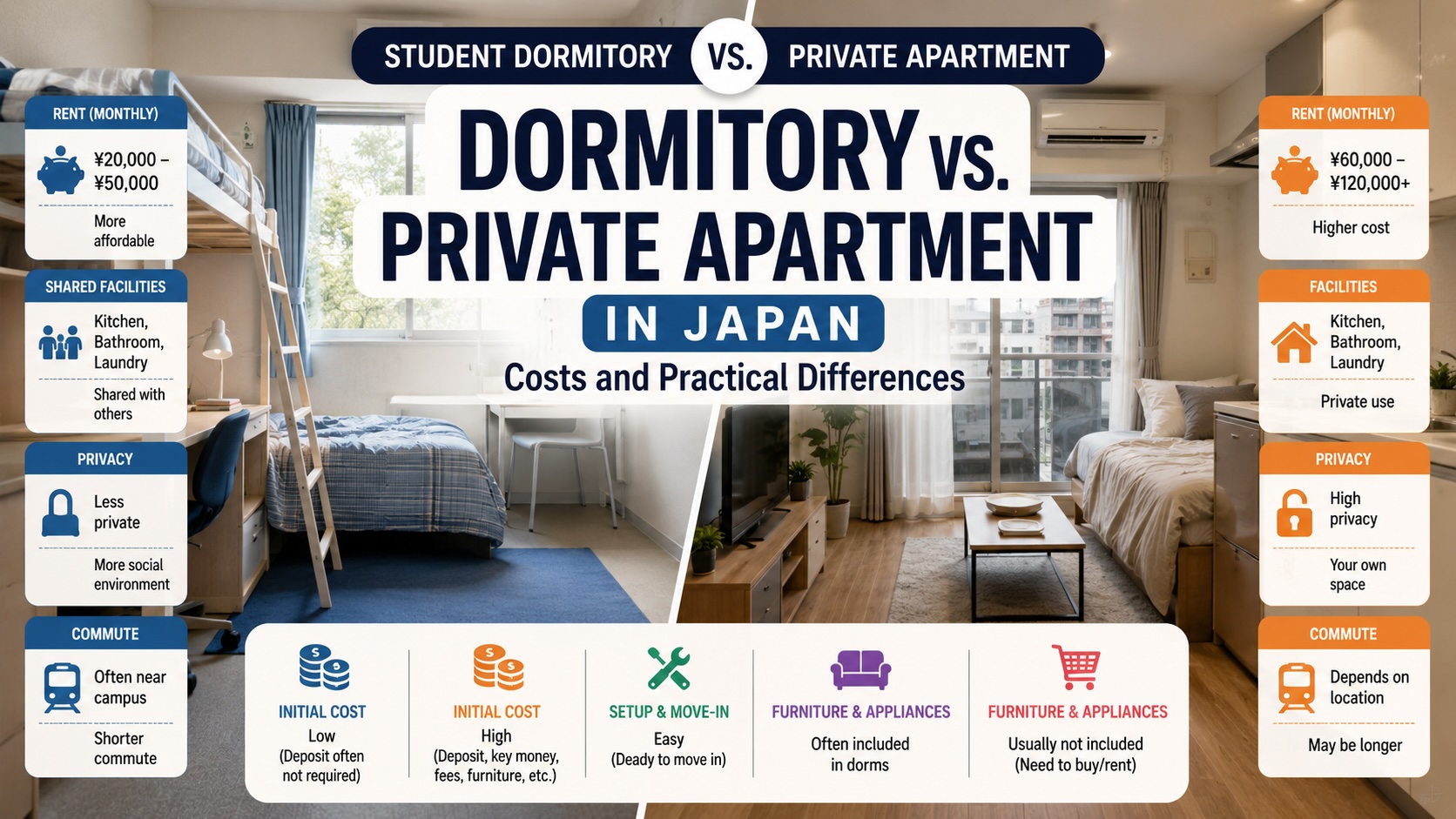
Dormitories are often cheaper than private apartments, but monthly rent alone does not tell the full story. A dormitory may include furniture, internet, common facilities, and simpler move-in procedures. A private apartment may require separate contracts for electricity, gas, water, internet, insurance, and guarantor services.
| Item | Student dormitory | Private apartment |
|---|---|---|
| Monthly rent | Often lower, but varies by university and building. | Varies strongly by city, station, building age, and room size. |
| Furniture | Often furnished or semi-furnished. | Often unfurnished, especially in ordinary rentals. |
| Initial costs | Usually simpler and lower. | Can include deposit, key money, agency fee, insurance, guarantor fee, and cleaning fee. |
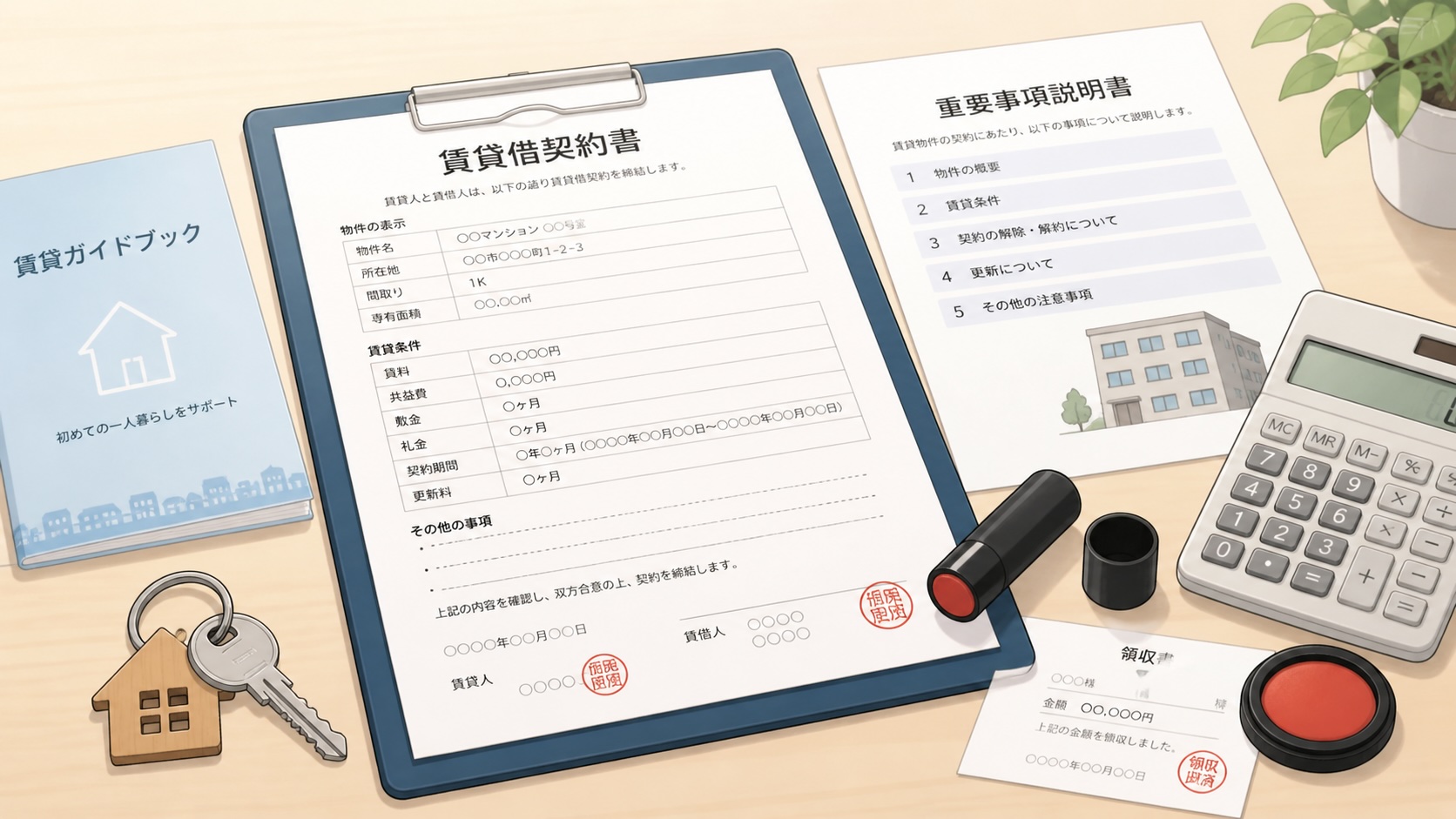
| Contract language | Often handled through university or student support office. | Often requires Japanese documents, guarantor service, and real estate agency procedures. |
| Privacy | Depends on room type and shared facilities. | Usually higher. |
| Flexibility | Limited availability and fixed residence period. | More choice, but contracts are usually less flexible. |
As of May 2026, the official Study in Japan portal notes that housing expenses differ greatly by region, with higher costs in Tokyo and other major cities. It also gives examples such as relatively low dormitory costs and apartments that may be around 30,000–40,000 yen in rural areas, while 60,000 yen can be a reasonable target within Tokyo depending on conditions.
Why dormitories are useful at the beginning
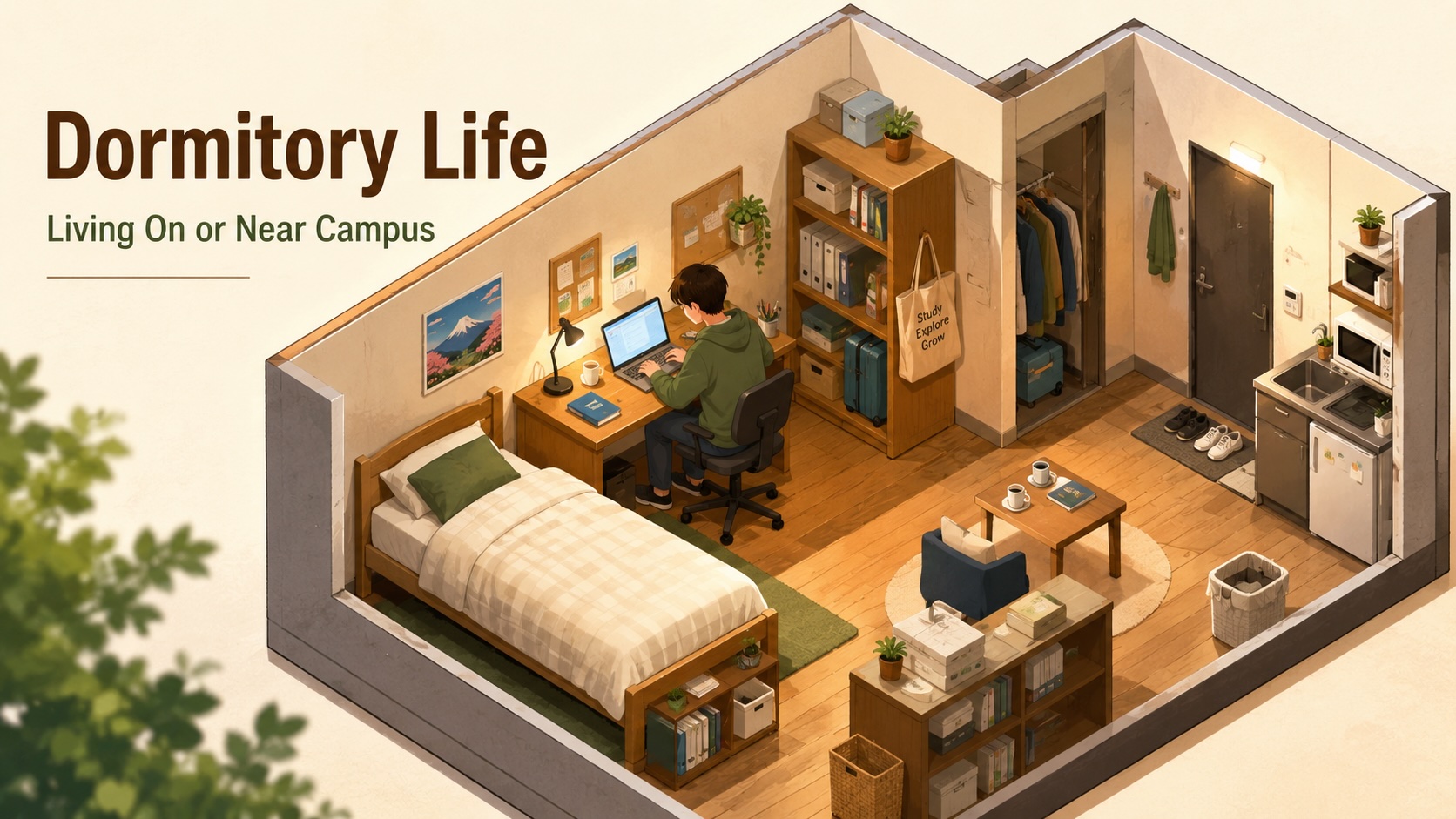
For a newly arrived student, the biggest advantage of a dormitory is not only price. It is simplicity. You may be able to move in soon after arrival, start daily life without buying many items, and ask the university office when problems occur. This reduces stress during the period when you are also handling residence card registration, health insurance, bank account opening, course registration, and laboratory orientation.
Dormitories can also help with social life. You may meet other international students who are facing the same procedures. However, dormitories may have limited privacy, shared kitchens or bathrooms, rules about guests, and a maximum residence period. They are often an excellent starting point, not always a long-term solution.
Why private apartments can be better later
A private apartment gives you more independence. You can choose location, room layout, commuting distance, and lifestyle. For doctoral students, postdocs, or people staying several years, this can make daily life more stable. If you cook often, need a quiet environment, or live with family, an apartment may be much better than a dormitory.
The main difficulty is setup. Many private apartments in Japan are unfurnished. You may need to buy a bed, desk, curtains, washing machine, refrigerator, microwave, lights, and cookware. Some contracts require a Japanese phone number, Japanese bank account, emergency contact, guarantor company, and several weeks of paperwork.
Initial costs that students often underestimate
When comparing dormitory and apartment costs, calculate the first month and the first year separately. A private apartment can be reasonable month by month, but expensive at the beginning because of move-in costs.
- Deposit: money held for damage or unpaid rent.
- Key money: non-refundable payment to the landlord, still common in some areas.
- Agency fee: fee paid to the real estate agency.
- Guarantor fee: fee paid to a guarantor company if required.
- Insurance and cleaning fees: often required by the contract.
- Furniture and appliances: a major cost for unfurnished apartments.
How to decide: a practical strategy
For many international students, the best strategy is dormitory first and apartment later. The first six months or year can be used to learn the city, understand commuting routes, improve Japanese, and decide whether you really want to stay near campus, near a station, or near the city center.
Simple decision rule
- Choose a dormitory if you are arriving from overseas, have limited Japanese ability, or want the lowest initial stress.
- Choose a private apartment if you need privacy, will stay several years, or have family, pets, or strong lifestyle requirements.
- Apply for a dormitory early, but prepare an apartment backup plan if spaces are limited.
Official sources
- Study in Japan: Accommodation
- Study in Japan: Living Costs and Expenses
- JASSO: Residence Hall Entrance Guide
Read next