Japanese Rental Terms Explained: Shikikin, Reikin, and Cleaning Fees
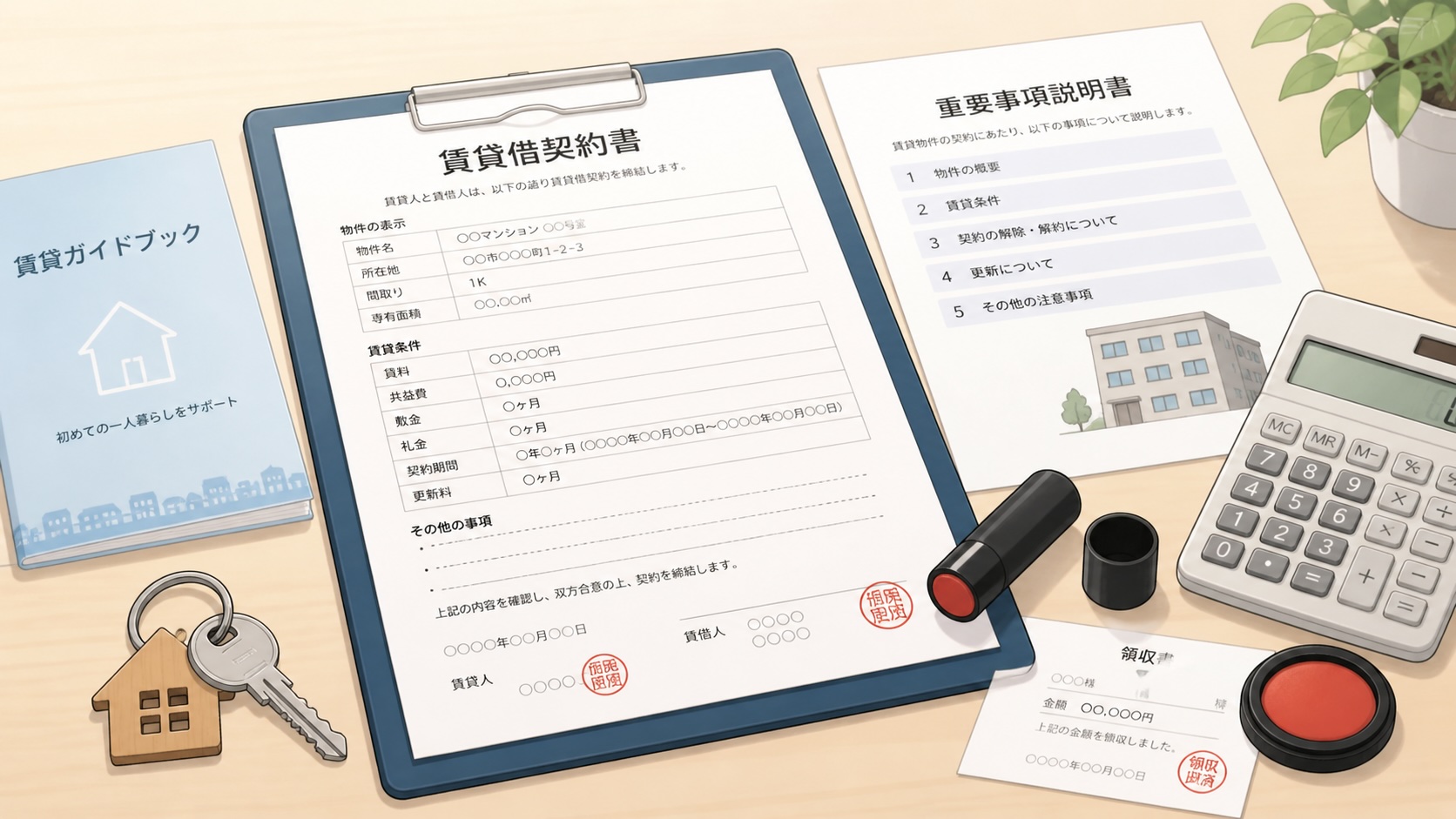
Renting an apartment in Japan can be confusing because the initial cost is often much higher than one month of rent. In addition to rent, applicants may encounter terms such as shikikin, reikin, agency fees, guarantor company fees, key exchange fees, insurance, cleaning fees, and restoration costs. This article explains the basic meaning of these terms and what foreign residents should check before signing a lease.
Quick summary
- Shikikin is a security deposit that may be used for unpaid rent or tenant-borne costs after move-out.
- Reikin is key money paid to the landlord and is usually not returned.
- Cleaning fees may be charged at move-in or move-out depending on the contract.
- Restoration costs do not simply mean restoring the room to brand-new condition.
- Always check the lease, special clauses, estimated move-in costs, renewal fees, and move-out rules before signing.
Why Japanese rental terms matter
Japanese rental housing contracts often include cost items that may not exist in the same form in other countries. Some are refundable, some are non-refundable, and some depend on the condition of the room when you move out.
The most important point is that the name of a fee does not tell you everything. You need to check the amount, timing, refundability, contract clause, and whether the fee is negotiable or fixed.
A low monthly rent does not always mean the apartment is cheap overall. Move-in costs, renewal fees, guarantor fees, mandatory services, and move-out charges can change the total cost significantly.
Main rental cost terms
The table below summarizes common cost items. Actual costs vary by region, property, landlord, real estate agency, and contract.
| Term | Japanese | Basic meaning | Usually refundable? |
|---|---|---|---|
| Security deposit | 敷金 / Shikikin | Money deposited with the landlord as security for unpaid rent or tenant-borne costs. | Partly or fully refundable after deductions, depending on the contract and move-out settlement. |
| Key money | 礼金 / Reikin | A non-refundable payment to the landlord when signing the lease. | No, generally not refundable. |
| Agency fee | 仲介手数料 | Commission paid to the real estate agency. | No, generally not refundable. |
| Guarantor company fee | 保証会社利用料 | Fee for using a guarantor company, often required instead of or in addition to a personal guarantor. | No, generally not refundable. |
| Cleaning fee | クリーニング費用 | Fee for cleaning after move-out or before the next tenant. | Usually not refundable if it is a fixed contractual fee. |
| Restoration cost | 原状回復費用 | Cost related to restoring damage or deterioration beyond normal wear, depending on the situation. | May be deducted from the deposit or charged separately. |
| Renewal fee | 更新料 | Fee paid when renewing the lease, common in some regions and properties. | No, generally not refundable. |
Shikikin: security deposit
Shikikin is often translated as security deposit. It is paid when signing the lease and may be used to cover unpaid rent, unpaid expenses, or tenant-borne repair costs when the tenant moves out.
In principle, any remaining amount after proper deductions should be returned. However, the amount returned depends on the contract, the condition of the room, unpaid bills, cleaning clauses, and move-out settlement.
What to check about shikikin
- How many months of rent is required as deposit?
- What costs can be deducted from the deposit?
- Is there a fixed cleaning fee deducted from the deposit?
- When will the remaining deposit be returned?
- How will damage and restoration costs be calculated?
Reikin: key money
Reikin is usually translated as key money. It is a payment to the landlord at the time of contract and is generally not returned. It is not the same as a deposit.
Some apartments require one or two months of rent as key money, while others advertise "no key money" properties. A property with no key money can reduce initial cost, but you should still compare total cost, monthly rent, location, renewal fees, and other required fees.
What to check about reikin
- Is key money required?
- How many months of rent is it?
- Is it clearly stated as non-refundable?
- Is the monthly rent higher than similar properties with key money?
- Are there other non-refundable fees that replace or offset the absence of key money?
Cleaning fees
Cleaning fees are common in Japanese rental contracts. They may appear as a fixed amount at move-in, a deduction from the deposit at move-out, or a fee charged separately after the tenant leaves.
The important question is whether the cleaning fee is clearly written in the contract. If the contract states a fixed cleaning fee, you should assume it may be charged even if the room appears clean, unless the contract or agent explains otherwise.
Cleaning fees can become confusing when they overlap with restoration costs. Cleaning means ordinary cleaning work, while restoration costs may involve damage, stains, scratches, mold, broken fixtures, or deterioration beyond normal use.
What to check about cleaning fees
- Is the cleaning fee fixed or estimated?
- Is it charged at move-in, move-out, or deducted from the deposit?
- Does the fee include air conditioner cleaning?
- Does the fee change depending on room size?
- Are there separate charges for special cleaning, pet odor, smoking, mold, or heavy stains?
Restoration to original condition
Genjo kaifuku, often translated as restoration to original condition, is one of the most important and misunderstood concepts in Japanese rental housing.
It does not simply mean that the tenant must return the apartment to the exact condition it was in at move-in or pay to make it brand new. In general, ordinary wear and aging from normal use are treated differently from damage caused by negligence, intentional damage, failure to take proper care, or use beyond normal living.
| Example | Likely issue | Practical point |
|---|---|---|
| Fading wallpaper from sunlight | Ordinary aging or normal use may be considered. | Check the contract and move-out inspection details. |
| Scratches caused by moving furniture carelessly | May be treated as tenant-caused damage. | Tenant may be asked to pay part or all of repair cost. |
| Mold caused by ignoring condensation | May be considered failure to take proper care. | Ventilation and cleaning during tenancy matter. |
| Pet scratches or odor | May be treated as damage beyond normal use. | Pet clauses can strongly affect move-out cost. |
| Cleaning of kitchen or bathroom after ordinary use | May depend on the fixed cleaning clause and actual condition. | Check whether a standard cleaning fee is already stated. |
Important note
Move-out cost disputes often depend on the contract, special clauses, room condition, photos, length of residence, and whether damage is ordinary wear or beyond normal use. If a large additional charge is requested, ask for an itemized estimate, photos, repair scope, unit price, and explanation of why the cost is tenant-borne.
Other common move-in and contract fees
In addition to deposit, key money, and cleaning fees, rental contracts may include several other required costs. Some are ordinary, while others vary by property.
| Fee | What it usually means | What to check |
|---|---|---|
| Agency fee | Commission paid to the real estate agency. | Amount, tax, and whether it equals half a month or one month of rent. |
| Guarantor company fee | Fee for a company that guarantees rent payment. | Initial fee, annual renewal fee, and monthly fee if any. |
| Fire insurance | Insurance required under the lease. | Coverage, period, renewal, and whether you can choose another provider. |
| Key exchange fee | Cost to replace the lock or key cylinder. | Whether mandatory, amount, and timing. |
| Support service fee | Fee for emergency support or management service. | Whether mandatory and what service is included. |
| Renewal fee | Fee when extending the lease after the initial term. | Amount, timing, and whether renewal administration fees are separate. |
How to compare total move-in cost
When comparing apartments, do not compare rent alone. A property with lower rent may have higher key money, renewal fees, mandatory support fees, or move-out charges.
Ask the agent for an initial cost estimate before applying. The estimate should show each cost item separately.
Items to include in your comparison
- First month rent and prorated rent
- Management fee or common service fee
- Deposit
- Key money
- Agency fee
- Guarantor company fee
- Fire insurance
- Key exchange fee
- Cleaning fee
- Support service or administrative fees
- Renewal fee and renewal administration fee
What to check before signing
Before signing, read the contract, important matters explanation, and any special clauses carefully. If you do not read Japanese comfortably, ask for help before signing. Do not rely only on a verbal explanation.
Checklist before signing
- Are deposit and key money clearly separated?
- Which fees are refundable and non-refundable?
- Is the cleaning fee fixed? If so, how much?
- Are there special clauses about restoration, smoking, pets, mold, air conditioner cleaning, or wallpaper replacement?
- What are the renewal fee and contract renewal conditions?
- What is the cancellation fee if you leave early?
- Are guarantor company fees one-time, annual, or monthly?
- What documents and procedures are required before moving out?
Take records when moving in
To avoid disputes later, take photos and videos when you move in. Record scratches, stains, dents, wallpaper damage, floor marks, mold, broken fixtures, missing parts, and appliance condition.
If the landlord or management company provides a move-in condition checklist, fill it in carefully and submit it by the deadline. Keep a copy for your own records.
Good records include
- Photos of every room from multiple angles
- Close-up photos of existing damage
- Photos of floors, walls, doors, windows, bathroom, kitchen, and air conditioner
- Date-stamped files or cloud storage with clear folder names
- Written notes submitted to the management company
When moving out
When you move out, follow the notice period in the contract. Many leases require advance notice, such as one month, but the exact period depends on the contract.
During the move-out inspection, ask questions if you are told that certain costs will be charged. It is reasonable to ask which contract clause applies and whether the cost is for cleaning, repair, replacement, or restoration beyond normal use.
What to ask if charged
- Which part of the room is being charged?
- Is the charge for cleaning, repair, replacement, or restoration?
- Is the cost based on a fixed contract clause or actual damage?
- What is the repair scope and unit price?
- Are photos and an itemized estimate available?
- How is ordinary wear and depreciation considered?
Common mistakes
- Assuming the deposit will be fully returned: Deductions may occur depending on contract and room condition.
- Confusing deposit and key money: Key money is usually not returned.
- Ignoring fixed cleaning clauses: Cleaning fees may be charged even if the room seems clean.
- Not reading special clauses: Special clauses can strongly affect move-out costs.
- Failing to take move-in photos: Without records, it may be difficult to prove pre-existing damage.
- Comparing only monthly rent: Initial costs and renewal fees can change the total cost.
- Waiting until move-out to ask questions: Important cost rules should be checked before signing.
Final checklist
- Do you know the total initial cost, not only the monthly rent?
- Do you understand which fees are refundable and non-refundable?
- Have you checked deposit, key money, agency fee, guarantor fee, cleaning fee, and insurance?
- Have you read the restoration and special clauses?
- Do you understand renewal fees and early cancellation rules?
- Did you take photos and records when moving in?
- Do you know the required notice period before moving out?
- Will you ask for an itemized explanation if additional move-out costs are charged?
Important note
This article provides general information about Japanese rental terms and does not replace legal advice. Rental rules, fees, and dispute outcomes depend on the lease, special clauses, local practice, property condition, evidence, and individual facts. If you face a serious dispute, consult a qualified professional, local consumer center, housing consultation service, or legal adviser.
Useful sources to check
Start with official and public sources, then confirm your own contract and management company rules.
- MLIT: Guideline on restoration to original condition disputes
- MLIT: Easy-to-follow Guide on restoration to original condition
- Tokyo Intercultural Portal: Deposit and Key Money
- MLIT: Guide to Rental Housing and Rules for Living in Japan
- Your lease agreement, important matters explanation, special clauses, and move-out documents
Read next