How to Present Yourself as a Strong Candidate Before Formal Application

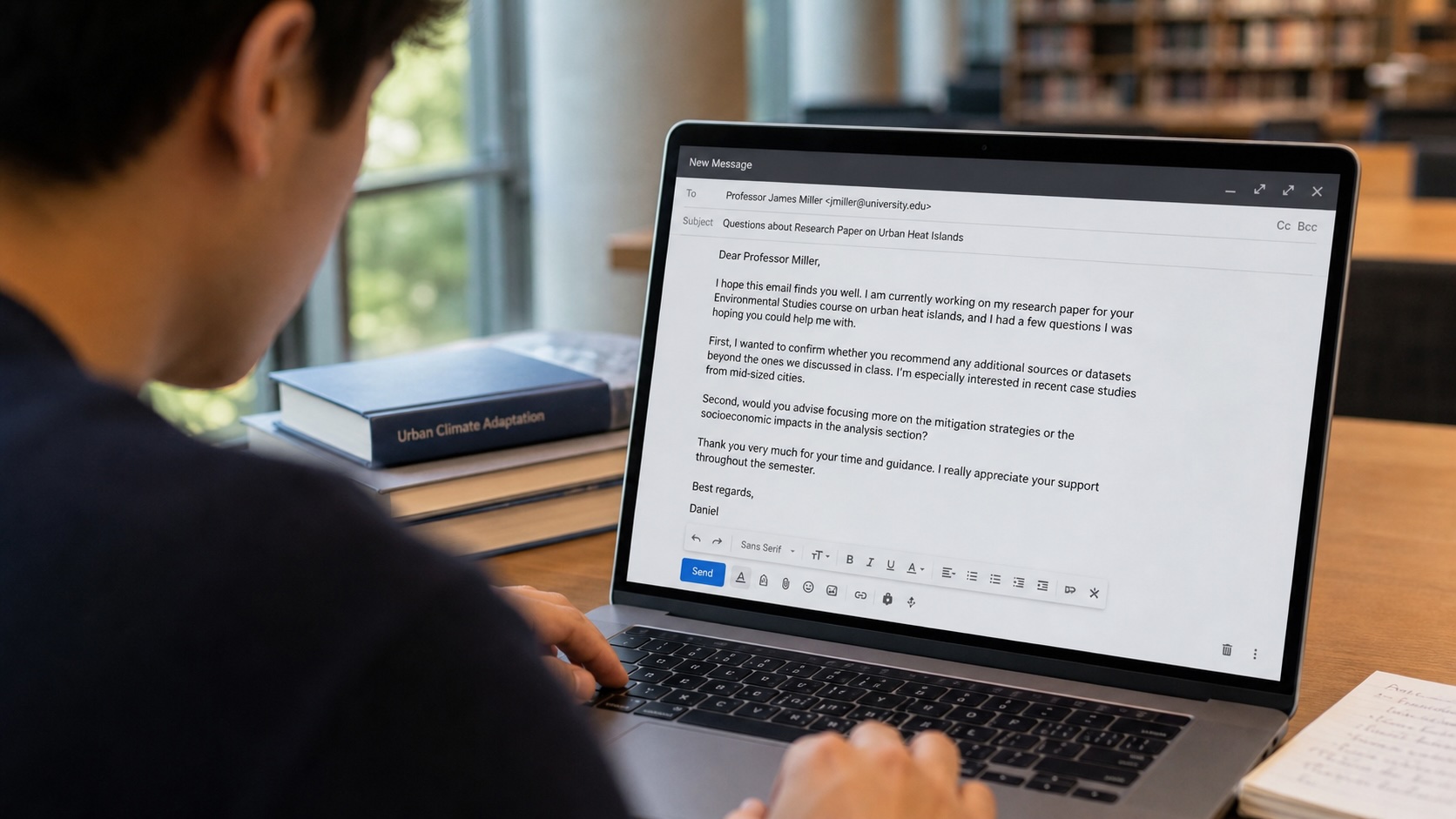
Before applying to a Japanese graduate school or laboratory, many international students first contact a professor. This early stage is not the same as the official entrance examination. It is an informal screening process in which a professor decides whether a student is realistic enough to invite to further discussion, interview, or formal application. A clear CV, a short explanation of why the lab interests you, and a calm interview can strongly affect this first decision.
Quick summary
- Informal screening exists because a laboratory cannot invite unlimited students to take entrance examinations or pursue formal application.
- Many labs receive contact from roughly 10–30 prospective students per year, but only a small number can realistically be encouraged to proceed.
- Your CV should show research achievements, but it should also show that you understand the laboratory’s actual research direction.
- Exact research-topic fit is not always necessary. However, the field-level fit should be reasonable: chemistry, physics, informatics, engineering, biology, or a related area.
- In the first interview, professors often pay close attention to your communication style, motivation, personality, and readiness to live and work in the lab for several years.
What happens before formal application?
In many Japanese laboratories, especially in science and engineering, prospective graduate students contact a professor before or during the formal application process. This does not mean that the professor alone can guarantee admission. Universities and graduate schools have official rules, deadlines, documents, examinations, interviews, and scholarship procedures.
However, the professor’s initial impression still matters. If your research background is relevant, your documents are clear, and your communication is serious, the professor may agree to continue the discussion, invite you to an online interview, suggest a possible research direction, or explain the application route. If your first message is vague or your CV is difficult to read, the conversation may stop before the formal stage begins.
Important distinction
This article is about the informal or semi-formal stage before official admission. It is not a substitute for the university’s formal application guidelines. Always follow the official instructions of the graduate school, scholarship program, and university.
Why informal screening exists
Informal screening exists for a practical reason: a single laboratory cannot send an unlimited number of students into the formal examination or application process. Even when the university examination is open, a professor must think carefully about laboratory capacity, supervision time, available research topics, funding possibilities, desk space, language support, and the balance of existing students.
In many active laboratories, it is not unusual for a professor to receive contact from approximately 10–30 prospective students in one year. Some are highly prepared. Some send generic messages to many professors. Some have a good academic record but no clear understanding of the lab. In practice, only a small part of these students can be seriously interviewed, supported, or encouraged to proceed to formal application.
This is why the first CV and first interview matter. The purpose is not to prove that you are perfect. The purpose is to help the professor quickly understand whether you are a realistic candidate for that specific laboratory.
What professors are really checking
Students often think that professors are simply looking for “excellent students.” In reality, the first screening is more practical. A professor is usually checking whether there is a reasonable match between the student, the laboratory, the timing, and the possible supervision plan.
| Question | What the professor may look for |
|---|---|
| Is the field appropriate? | The topic does not need to be identical, but the academic field should be close enough for realistic supervision. |
| Has the student studied the lab? | A short, specific comment on the lab’s research shows that the student is not sending a generic mass email. |
| Can the student explain their background? | The CV and interview should show what the student actually did, learned, measured, coded, synthesized, designed, or analyzed. |
| Is the student realistic? | Application timing, funding route, degree level, and expected start date should not be completely unclear. |
| Can the student communicate? | Perfect English or Japanese is not required, but the student should be able to communicate simply, honestly, and logically. |
A student from a famous university can look weak if the message is vague. A student from a less famous university can look promising if the CV is clear, the research background is concrete, and the reason for contacting the lab is specific.
How to prepare your first CV
The first CV should be easy to scan. A professor may read it between meetings, classes, experiments, reviews, and administrative work. Do not make the reader search for basic information. Your degree, university, research topic, technical skills, publications, and target program should be visible quickly.
For an initial inquiry, a two-page academic CV is often enough for master’s or doctoral applicants. If you have many publications or presentations, you can extend it, but avoid adding irrelevant details just to make the CV look longer.
Recommended sections for the first CV
- Name and contact: Use a professional email address and write your current affiliation clearly.
- Education: List degree, university, department, country, expected graduation date, and GPA if useful.
- Research experience: Describe your thesis, project, or internship with concrete methods and outcomes.
- Technical skills: Include instruments, software, synthesis methods, analysis tools, coding languages, or experimental systems relevant to the lab.
- Publications and presentations: Include papers, preprints, conference presentations, posters, or manuscripts in preparation if appropriate.
- Awards and scholarships: Add meaningful academic awards, scholarships, competitions, or research-related recognition.
- Language skills: State English test scores, Japanese level, and other languages if relevant.
The most important part is not decoration. It is evidence. A good CV does not just say “I am interested in nanomaterials.” It says what kind of nanomaterials you worked on, what you measured, which techniques you used, and what problem you want to study next.
Show that you understand the lab
In addition to research achievements, a strong first CV or inquiry message should show that you have understood the laboratory’s research. This does not require a long essay. In fact, a short and specific sentence is usually better.
Write one or two sentences explaining which part of the lab’s research attracted your interest. Mention a topic, method, material, system, or recent paper if possible. The goal is to show that you are not choosing only the university name. You are choosing a research environment.
A useful sentence pattern
“I was particularly interested in your laboratory’s work on [specific topic] because my previous project involved [related method, material, or concept]. I would like to develop this background toward [future research direction].”
This short explanation can be placed in the email body, research statement, or a brief “Research interests” section of the CV. It should be specific, but it does not need to sound like a final research proposal.
Research fit: important, but not exact matching
Research fit is important, but it is not a strict requirement that your previous research perfectly matches the laboratory’s current topic. In fact, perfect matching is uncommon. This is true for international students and also for Japanese students. Many students enter a laboratory and then learn a new topic, method, material, or research culture.
What matters more is field-level fit. If you are applying to a chemistry lab, your background should usually be connected to chemistry, materials science, chemical engineering, biochemistry, or a related area. If you are applying to a physics, informatics, or engineering lab, your background should be close enough that the professor can imagine how to train and supervise you.
Therefore, do not worry if your previous project is not identical to the professor’s latest paper. Instead, explain the bridge: what knowledge, technique, or way of thinking from your previous work can help you start research in the new lab?
What to send with the first email
The first email should be short enough to read quickly, but specific enough to show that you are a real candidate. In most cases, attach a CV and, if you already have one, a one-page research summary. Do not attach too many large files unless requested.
A practical first email package
- Email body: Around 150–250 words, focused on who you are, why you are contacting the professor, and what program or timing you are considering.
- CV: Clear academic CV, usually as a PDF.
- Research summary: One page summarizing your previous project, methods, results, and future interests.
- Transcript: Attach only if requested, or mention that you can provide it if needed.
- Publication or thesis: Include links or selected files only when directly relevant.
File names also matter. Use simple names such as CV_YourName.pdf and ResearchSummary_YourName.pdf. Avoid sending files with unclear names such as final_new_latest2.pdf or scanned documents that are difficult to read.
The first interview: show your personality clearly
If a professor invites you to an online interview, the most important point is not to give a long technical lecture about your personal history. The professor is usually less interested in every detail of your past than you may expect. Instead, the professor is thinking seriously about what will happen after you join the lab.
Can this student communicate with lab members? Can this student live in Japan and adjust to a new research environment? Can this student continue research for several years? Does this student have enough motivation for both laboratory life and daily life in Japan? These questions are often just as important as technical ability.
Use simple, clear, and easy-to-listen-to English. A short self-introduction and a concise explanation of your previous research are enough in many cases. If you can explain your research topic in English, that is generally acceptable. Speaking too long can be counterproductive because it may make the conversation difficult to follow.
The interview is also a chance to show your character. Be calm, honest, and focused. You do not need to look perfect. You need to show that you are serious, communicative, willing to learn, and motivated to complete several years of research life in the laboratory.
How to sound strong without exaggerating
A strong candidate does not need to sound perfect. In fact, exaggerated claims can create suspicion. It is usually better to communicate with concrete evidence and a calm tone.
| Less effective | More effective |
|---|---|
| “I am the best student in my country.” | “I ranked in the top 5% of my department and received a university scholarship.” |
| “I can do any research topic.” | “My strongest background is in electrochemistry, but I am interested in applying it to your work on energy materials.” |
| “I will definitely get a scholarship.” | “I am planning to apply for MEXT and university scholarships, and I can also consider other funding routes.” |
| “I read all your papers.” | “I read your recent paper on [topic], and I was particularly interested in [specific point].” |
The goal is to become easy to evaluate. When your documents and interview answers are specific, the professor can more easily imagine whether you could join the lab and make steady progress.
Red flags that weaken your first impression
Some mistakes can make a candidate look less serious even when the student has good potential. These are avoidable with careful preparation.
- Generic mass emails: Messages that could be sent to any professor are easy to ignore.
- No field-level connection: Exact topic matching is not required, but contacting a lab in a completely unrelated field suggests poor preparation.
- No evidence of reading the lab website: Even one short sentence about a specific lab topic can greatly improve the impression.
- Unclear CV: If your degree, research topic, and skills are hard to find, the professor may not continue reading.
- Overly long interview answers: A long personal history can be less effective than a short, clear explanation of your research and motivation.
- Unrealistic funding assumptions: Do not assume that a professor can personally provide a scholarship or salary.
- Poor interview setup: A noisy environment, unstable connection, or no preparation can damage the impression.
These points do not mean that only polished students are accepted. Rather, they show that basic preparation matters. A student who is not perfect but clearly prepared may look more promising than a student with better grades but vague communication.
Checklist before contacting a professor
Before sending your first email, check whether you can answer the following questions clearly.
- Have I identified a specific laboratory, not only a university?
- Can I explain the field-level connection between my background and this lab?
- Can I write one short sentence about which part of the lab’s research interests me?
- Is my CV updated, readable, and focused on academic evidence?
- Can I explain my previous research briefly in simple English?
- Can I show motivation for both research life and daily life in Japan?
- Do I know which program or status I am considering: master’s, doctoral, research student, exchange, or scholarship route?
- Is my expected start date realistic?
- Have I thought about funding or scholarship options?
Final advice
In pre-application screening, you do not need to look perfect. You need to look specific, prepared, honest, and realistic. The best first impression is often simple: a clear CV, a short focused email, and an interview in which you communicate your motivation, personality, and readiness for laboratory life.
Useful official sources
Use official university and scholarship pages to confirm application routes, deadlines, documents, and student status. Public research databases can also help you understand a professor’s research activity before contacting the lab.
- Study in Japan: Graduate Schools
- Study in Japan: Scholarships
- researchmap
- KAKEN: Database of Grants-in-Aid for Scientific Research
- Your target university’s graduate school admissions page
- Your target laboratory or professor’s official website
Read next