Hay Fever in Japan: Why Many People Wear Masks in Spring
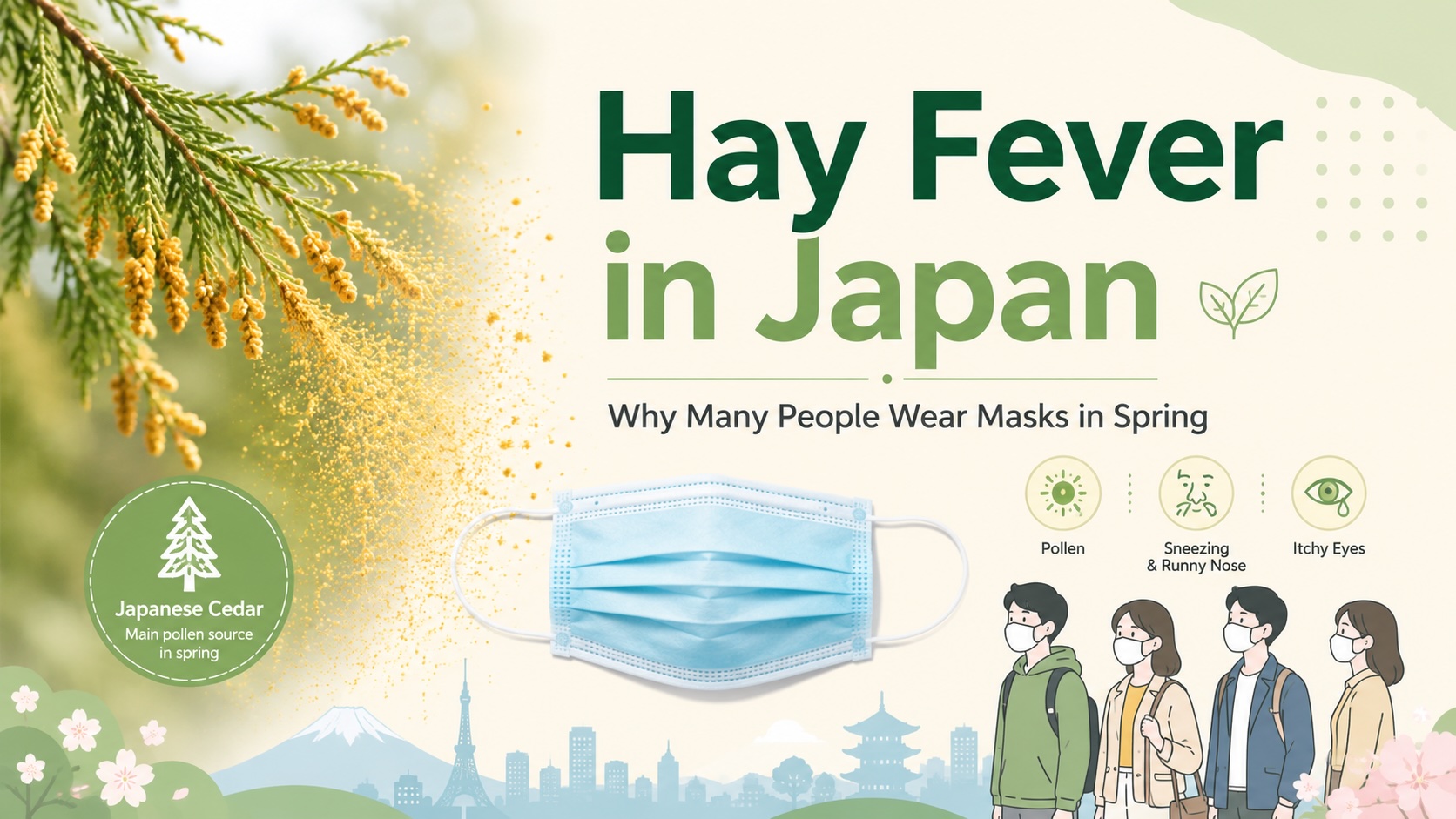
If you come to Japan in spring, you may notice many students, researchers, and office workers wearing masks even on sunny days. One major reason is hay fever, known in Japanese as kafunsho. For international students and professionals, the important point is simple: do not worry too much about wearing a mask. In Japan, it is a normal, practical, and socially accepted way to reduce pollen exposure.
Quick summary
- Hay fever is very common in Japan, especially during the cedar and cypress pollen season.
- Wearing a mask in spring is normal at universities, offices, trains, shops, and conferences.
- Many people combine masks with glasses, pollen forecasts, handwashing, face washing, and drugstore medicines.
- As of May 2026, basic hay fever preparation is not expensive, but severe symptoms can affect study, work, and daily comfort.
- If symptoms are strong, long-lasting, or interfere with sleep or concentration, consider asking a pharmacist or visiting an ENT or allergy clinic.
Short answer: masks are completely normal in spring
In some countries, wearing a surgical mask may still feel unusual outside hospitals. Japan is different. Masks are everyday items, and many people wear them for hay fever, dry air, colds, commuting, or personal comfort. During spring pollen season, a mask is not only accepted but expected in many ordinary situations.
This is especially reassuring for international students. You can wear a mask in class, in the lab, at part-time work, on trains, or during campus events without needing to explain yourself. If someone asks, saying kafunsho desu, meaning "I have hay fever," is usually enough.
What is kafunsho?
Kafunsho means pollen allergy or hay fever. Typical symptoms include sneezing, runny nose, blocked nose, itchy eyes, watery eyes, and tiredness. Some people also feel that their concentration drops during peak pollen days, which can matter during exams, experiments, seminars, job interviews, or long commutes.
The best-known spring triggers in Japan are Japanese cedar pollen, often called sugi kafun, and Japanese cypress pollen, often called hinoki kafun. The exact timing depends on region and weather, but many people begin preparing from February, with symptoms often continuing into April or May. Other pollen types can also cause symptoms outside the main spring season.
When pollen season affects daily life
Pollen season is not identical across Japan. Tokyo and other parts of eastern Japan can feel very different from Hokkaido, Okinawa, or western Japan. Weather also matters: dry, windy days after warm weather can feel harder than rainy days. For this reason, many people check pollen forecasts in weather apps, TV weather reports, or local government information during spring.
| Situation | Why hay fever matters | Practical response |
|---|---|---|
| Commuting by train | You may be exposed before reaching campus or work. | Wear a mask before leaving home, not only after symptoms begin. |
| Classes and seminars | Sneezing, itchy eyes, and sleepiness from medicines can affect focus. | Prepare tissues, eye drops, and non-drowsy options if suitable. |
| Laboratory work | Eye irritation and fatigue can be annoying during careful experiments. | Discuss severe symptoms with a doctor, especially if work requires attention. |
| Interviews and meetings | A runny nose or watery eyes can be distracting. | It is acceptable to wear a clean mask and briefly mention hay fever. |
| Drying laundry outside | Pollen can attach to clothes, towels, and bedding. | Consider indoor drying or brushing items before bringing them inside. |
Why wearing a mask works socially in Japan
The social meaning of masks is important. In Japan, a mask does not automatically mean panic, danger, or severe illness. It can mean pollen protection, consideration for others, dryness prevention, or simply a personal habit. This makes it much easier for newcomers to use masks without feeling conspicuous.
For students and professionals, this is useful because hay fever is not only a health issue but also a daily productivity issue. Wearing a mask before symptoms get worse can help you attend class, work at your desk, join a seminar, or take a train with less discomfort. You do not need a special explanation, and you do not need to wait until symptoms become severe.
Basic prevention habits
The basic strategy is to reduce how much pollen reaches your nose, eyes, hair, clothes, and room. You do not need to buy every product on the shelf. Start with simple habits and add products only if your symptoms require them.
- Wear a mask outside: choose one that fits your face reasonably well and does not leave large gaps.
- Protect your eyes: ordinary glasses can help a little; pollen-protection glasses may help more if your eyes are very itchy.
- Check pollen forecasts: on high-pollen days, avoid unnecessary long walks if your symptoms are severe.
- Brush off pollen before entering: outerwear, hair, and bags can carry pollen indoors.
- Wash your hands and face: this can reduce pollen left around your eyes and nose.
- Be careful with laundry: towels and bedding dried outside can bring pollen into your room.
Drugstores, pharmacies, and clinics
In Japan, many people first go to a drugstore or pharmacy for masks, tissues, eye drops, nasal sprays, and over-the-counter allergy medicine. If you are unsure what to buy, ask the pharmacist and explain your main symptoms: nose, eyes, sleepiness, or both. If you take other medicines, are pregnant, have asthma, or have strong symptoms, ask a medical professional rather than choosing randomly.
For stronger or repeated symptoms, an ENT clinic, internal medicine clinic, or allergy clinic can be more useful than buying many products one by one. A doctor can discuss prescription medicine, nasal sprays, eye drops, allergy testing, or longer-term options such as immunotherapy. This article is not medical advice, but it is usually better to seek help early if hay fever affects sleep, study, research work, or commuting.
How much should you budget?
Hay fever is not usually a major household expense, but it can become a small seasonal cost. As of May 2026, a basic spring setup may include disposable masks, pocket tissues, eye drops, and possibly over-the-counter medicine. If symptoms are mild, the monthly cost can be modest. If you need repeated clinic visits or prescription medicine, the cost depends on your insurance status, symptoms, and treatment plan.
| Item | Typical role | Budget note |
|---|---|---|
| Masks | Reduce pollen inhalation and make spring commuting easier. | Keep some at home, in your bag, and at your desk. |
| Eye drops | Useful when itchy or watery eyes are your main symptom. | Ask a pharmacist if you wear contact lenses. |
| Antihistamine medicine | May reduce sneezing, runny nose, and itching. | Check whether drowsiness is a concern for study, driving, or lab work. |
| Nasal spray | May help with nasal congestion or inflammation. | Use according to instructions; overuse of some sprays can cause problems. |
| Clinic visit | Helpful for strong, repeated, or unclear symptoms. | Bring your health insurance card or confirm your insurance coverage. |
The financial point is not that hay fever is expensive. Rather, it is that unprepared hay fever can quietly reduce productivity. Buying masks and medicine after symptoms become severe may be less efficient than preparing before the peak season.
Advice for students and professionals
For international students, spring pollen season can overlap with entrance procedures, new classes, lab rotations, and job-hunting events. If you already know that you have pollen allergy, prepare before arriving on campus. Keep tissues, masks, and any necessary medicine ready, and learn a few Japanese words so you can explain the issue quickly.
For professionals, hay fever can affect meetings, presentations, commuting, and screen work. If you are worried about wearing a mask in a business setting, do not overthink it. A simple phrase such as "I have hay fever" is usually enough. In Japan, a clean mask in spring is not considered unusual.
Useful Japanese words
| Japanese | Reading | Meaning |
|---|---|---|
| 花粉症 | kafunsho | Hay fever / pollen allergy |
| 花粉 | kafun | Pollen |
| マスク | masuku | Mask |
| 目薬 | megusuri | Eye drops |
| 鼻炎薬 | bien-yaku | Medicine for rhinitis / nasal allergy symptoms |
| 眠くなりにくい | nemuku nari nikui | Less likely to cause drowsiness |
| 耳鼻科 | jibika | ENT clinic |
| アレルギー科 | arerugi-ka | Allergy clinic / allergy department |
Common mistakes to avoid
- Waiting until symptoms become severe: many people benefit from preparing before the peak season.
- Buying medicine without checking drowsiness: this matters for classes, experiments, driving, and interviews.
- Ignoring eye symptoms: itchy eyes can be as disruptive as sneezing or a runny nose.
- Opening windows on high-pollen days: ventilation is useful, but timing and pollen levels matter.
- Drying bedding outside without thinking: pollen on bedding can make nighttime symptoms worse.
- Feeling embarrassed about masks: in Japan, spring masks are normal and often practical.
Final checklist
- Do you know whether your symptoms are likely hay fever, a cold, or something else?
- Do you have masks that fit well enough for daily commuting?
- Have you checked pollen forecasts for your region?
- Do you know the Japanese words for hay fever, eye drops, nasal medicine, and less-drowsy medicine?
- If you use contact lenses, have you checked whether your eye drops are suitable?
- If symptoms affect sleep, study, work, or concentration, have you considered visiting a clinic?
Important note
This article provides general practical information for life in Japan. It is not medical advice and does not replace consultation with a doctor, pharmacist, or other qualified healthcare professional. If you have severe symptoms, breathing difficulty, asthma, eye pain, fever, unusual symptoms, or concerns about medicines, seek medical advice promptly.
Useful official sources
For practical preparation, combine official health information, local pollen forecasts, and advice from pharmacists or doctors. Conditions differ by region and year, so check current information during the season.
- Tokyo Metropolitan Government: Allergic rhinitis, allergic conjunctivitis, and hay fever
- Web Japan: Masks in Japan are everyday items
- Japan Weather Association: 2026 spring pollen dispersion forecast
- Yokohama City: Hay fever
- Your local clinic, pharmacy, university health center, or workplace health office
Read next