Can You Keep a Pet in a Japanese Apartment?

Many international students and professionals in Japan want to live with a cat, dog, or other small pet. The answer is not simply whether pets are common in Japan. The real question is whether your specific rental contract, building rules, landlord, and management company allow that pet. As of May 2026, pet-friendly apartments exist, but they are usually more limited, more conditional, and potentially more expensive than ordinary rental apartments.
Quick summary
- You should assume pets are not allowed unless the listing and contract clearly say otherwise.
- Pet-friendly does not mean any animal is allowed; rules may limit species, size, weight, number, and breed.
- Keeping a pet can increase costs through extra deposit, rent conditions, cleaning, deodorizing, or restoration clauses.
- Never keep a hidden pet. It can become a serious lease violation and may create large move-out costs.
- If you bring a dog or cat from overseas, apartment approval and animal quarantine are separate issues; you need both.
Short answer: yes, but only in the right property
You can keep a pet in a Japanese apartment if the property allows it and the lease gives you permission. However, in ordinary rental housing, pet ownership is not something you can decide after moving in. The contract may prohibit pets completely, allow only certain pets, or require the landlord's written approval before you bring an animal into the room.
This is why the safest approach is to search for a property as a pet owner from the beginning. If you already have a pet, tell the real estate agent before viewing rooms. If you plan to adopt a pet later, ask whether future pet ownership is possible and whether additional conditions would apply.
How rental listings describe pet rules
Japanese rental listings often use short phrases to describe pet policies. These phrases matter because they can change the list of properties you should consider.
| Japanese phrase | Typical meaning | What to confirm |
|---|---|---|
| ペット可 | Pets are allowed in principle. | Species, size, number, extra deposit, and contract clauses. |
| ペット相談 | Pets may be negotiable, but not automatically accepted. | Approval process and whether your specific pet will be accepted. |
| 小型犬可 | Small dogs may be allowed. | Weight limit, breed limit, barking rules, and number of dogs. |
| 猫可 | Cats may be allowed. | Scratching damage, deodorizing costs, balcony rules, and number of cats. |
| 多頭飼育相談 | Multiple pets may be negotiable. | Whether two or more pets are actually permitted in writing. |
| ペット不可 | Pets are not allowed. | Do not assume exceptions unless the landlord explicitly changes the condition in writing. |
Do not rely only on the search filter. Ask the agent to confirm the rule with the landlord or management company. A listing may say pets are negotiable, but the owner may still reject large dogs, multiple cats, reptiles, birds, or animals that are likely to create noise or odor complaints.
Why pet-friendly apartments can cost more
A pet changes the financial risk for the landlord. Even a well-trained animal can scratch floors, damage wallpaper, leave odors, make noise, or cause complaints in shared spaces. For that reason, pet-friendly apartments often come with stricter conditions than ordinary apartments.
As of May 2026, the exact cost varies widely by city, property, and landlord, but the following patterns are common enough that you should check them before signing.
| Cost or condition | Why it matters | Question to ask |
|---|---|---|
| Additional security deposit | The landlord may require extra deposit because pet-related damage can be expensive. | Is the extra deposit refundable, partly refundable, or non-refundable? |
| Higher rent or management fee | Some properties may set different conditions for pet owners. | Does the monthly cost change if I keep a pet? |
| Cleaning and deodorizing | Pet odor, hair, and stains may lead to special cleaning charges. | Is there a fixed pet cleaning fee at move-out? |
| Wallpaper and floor restoration | Scratches and stains may be treated differently from ordinary wear. | Which damage is tenant-borne, and how will depreciation be considered? |
| Insurance or liability | Damage to the room or shared areas may become the tenant's responsibility. | Does my insurance cover pet-related damage or accidents? |
The most important point is not the label of the fee, but whether it is refundable, how it will be calculated, and whether it is written in the contract. If a real estate agent casually says, "It is probably fine," ask them to confirm in writing.
Contract checks before you say yes
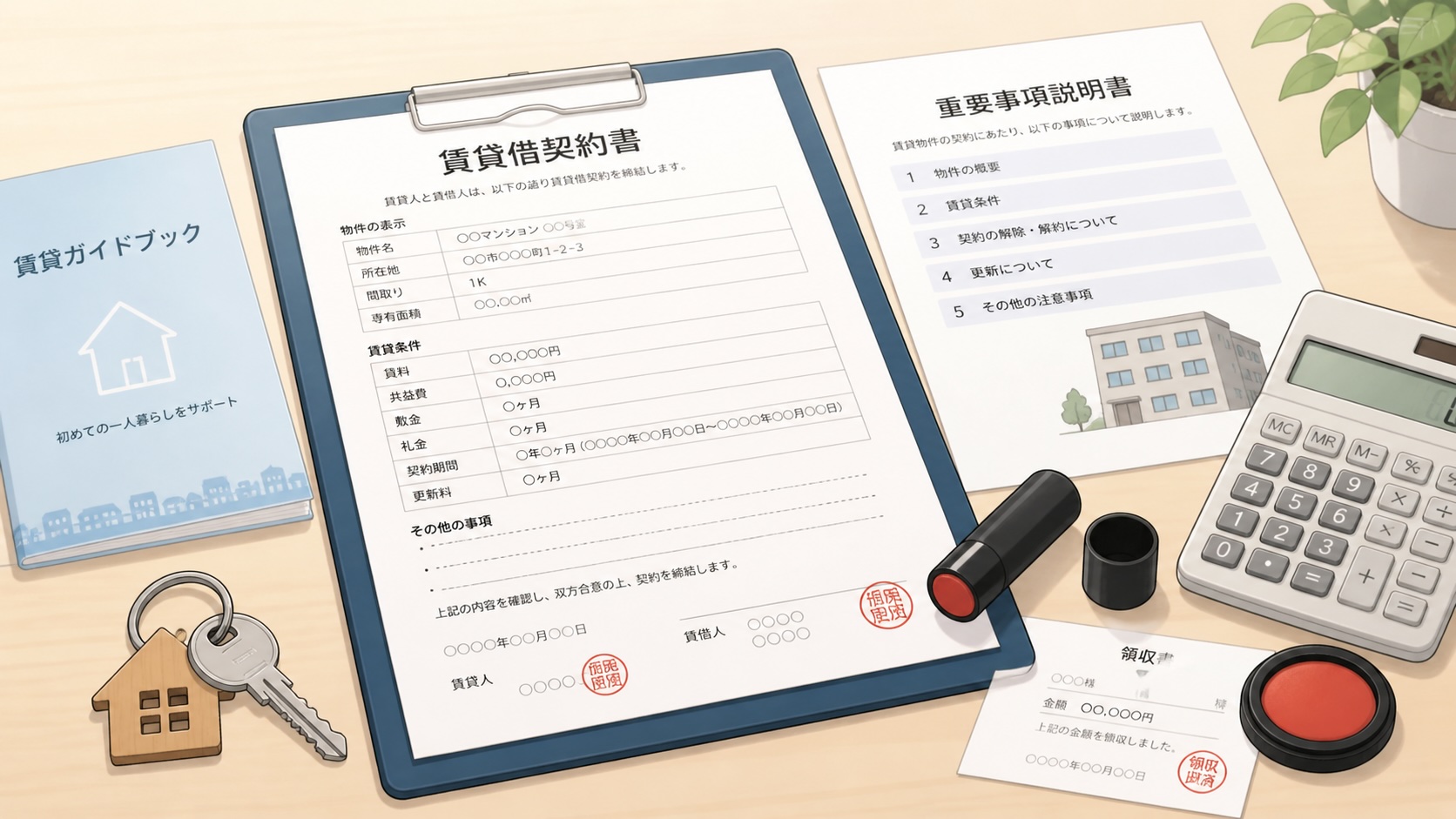
Before signing a lease, check the pet rules in the important matters explanation, lease agreement, building rules, and any separate pet memorandum. Some properties ask pet owners to sign an additional document that lists animal type, name, weight, number, vaccination status, noise rules, and move-out responsibilities.
- Is pet ownership clearly permitted? The permission should be in the contract or written approval, not only in conversation.
- Which pet is permitted? A small dog may be allowed while cats, large dogs, birds, or reptiles are not.
- How many pets are permitted? One cat and two cats may be treated very differently.
- Can you adopt a pet later? If you do not have a pet now, ask whether future approval is possible.
- What happens at move-out? Check cleaning, deodorizing, wallpaper, flooring, and restoration clauses.
- Are common areas restricted? Some buildings require pets to be carried in halls, elevators, or entrances.
- What records are required? Dogs may require registration, rabies vaccination, or other documents depending on the situation.
If you cannot understand the contract language, ask for an explanation before signing. Pet clauses are exactly the kind of small-looking condition that can become expensive later.
Dogs, cats, and other pets are treated differently
In practice, many pet-friendly listings are written with dogs and cats in mind, but even then the rules may differ. Small dogs may be accepted because the landlord sees them as easier to manage. Cats may be rejected in some properties because of scratching and odor concerns. Larger dogs may be difficult in small apartments, wooden buildings, or properties with strict noise rules.
Other animals require even more care. Birds may create sound complaints. Aquariums may raise concerns about water damage. Rabbits and small animals may damage flooring or baseboards. Reptiles may be unfamiliar to some landlords. The issue is not only whether the animal is dangerous. It is whether the landlord, management company, and building rules are comfortable with the risk.
Living with a pet without creating trouble
Once you move in, the financial risk is connected to daily habits. A good pet-friendly apartment can still become a problem if neighbors complain about noise, smell, or shared spaces.
- Control noise: barking, running, scratching, and late-night play can be a serious issue in apartments.
- Manage odor: litter boxes, pet sheets, food waste, and ventilation matter more in small rooms.
- Protect floors and walls: mats, scratch posts, washable rugs, and regular nail care can reduce damage.
- Use common areas carefully: follow elevator, hallway, entrance, and bicycle-parking area rules.
- Keep records: take move-in photos and keep receipts for cleaning, repairs, and pet-related equipment.
These habits are not only about manners. They can directly affect move-out costs and whether the landlord accepts future pet owners in the same property.
Students and professionals should think differently
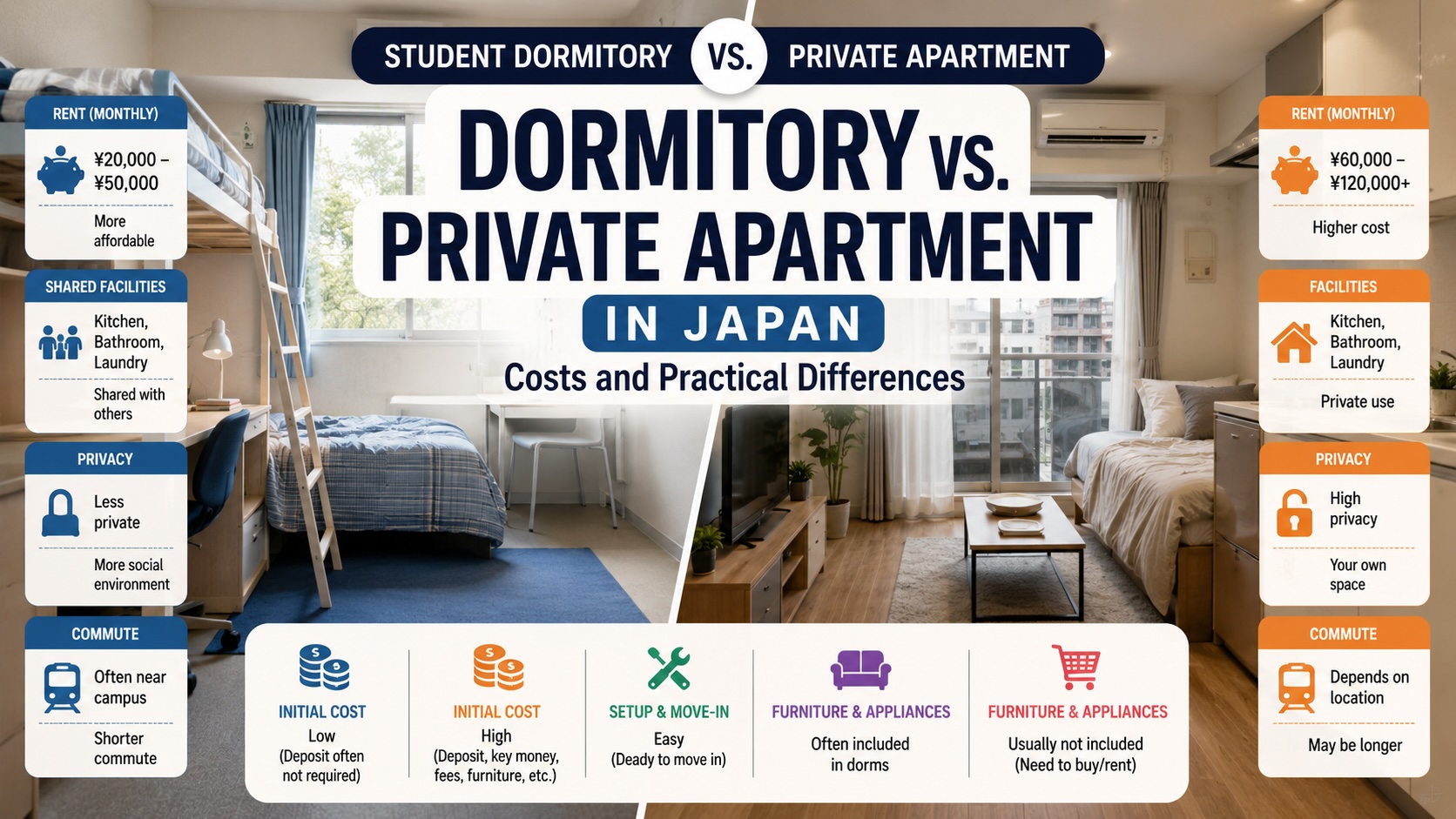
For international students, the biggest issue is often time and flexibility. University dormitories and student housing may prohibit pets. Research labs can require long hours, experiments, evening seminars, conference travel, or sudden schedule changes. Before adopting a pet, think honestly about who will care for it during busy periods.
For professionals, the issue may be location and commute. Pet-friendly apartments near major stations, central offices, or international schools may be more limited and more expensive. If you can live slightly farther from the city center, your options may improve, but you should still compare total cost, commuting time, and emergency access to veterinary care.
Bringing a pet from overseas is a separate process
If you are moving to Japan with a dog or cat from overseas, securing a pet-friendly apartment is only one part of the plan. You also need to follow Japan's animal import procedures. For dogs and cats, the Animal Quarantine Service explains requirements such as prior notification, inspection, certificates, microchip identification, rabies-related procedures, and quarantine conditions.
This means you should not wait until arrival to search for housing. If the pet arrives before you have an approved apartment, the situation can become stressful and expensive. Ideally, start both processes early: confirm the import procedure with official sources and confirm the housing conditions with the real estate agent in writing.
A practical search strategy
A good search strategy is to narrow the problem before viewing many rooms. First decide what is non-negotiable: pet type, number of pets, station area, commute time, budget, room size, and move-in date. Then tell the agent these conditions at the beginning.
- Search using terms such as ペット可, ペット相談, 猫可, and 小型犬可.
- Ask whether the listed pet condition applies to your actual pet, not pets in general.
- Check whether the room is on a floor, in a structure, or near neighbors where noise may become a problem.
- Compare total move-in cost, not only monthly rent.
- Ask for pet rules and extra costs before paying application or contract-related fees.
- Keep emails or messages that confirm permission and conditions.
If you cannot find enough options, widen the station area before lowering your contract standards. Accepting a vague pet condition can be more expensive than choosing a slightly less convenient apartment with clear permission.
Red flags to avoid
- The agent says pets are probably fine, but nothing is written. Ask for written confirmation.
- The listing says pet negotiable, but the landlord has not approved your pet. Wait for approval before signing.
- The contract prohibits pets, but someone says small animals do not count. Do not rely on verbal exceptions.
- The extra deposit is unclear. Ask whether it is refundable or automatically kept.
- Move-out restoration clauses are broad. Ask how cleaning, odor, wallpaper, and flooring will be handled.
- You plan to hide the pet. This can create contract, neighbor, and financial problems.
Final checklist
- Does the lease clearly allow your specific pet?
- Are species, size, weight, number, and breed restrictions written clearly?
- Do you understand extra deposit, rent, cleaning, deodorizing, and restoration conditions?
- Do you know whether the extra pet deposit is refundable?
- Have you checked building rules for elevators, hallways, balconies, and shared spaces?
- Have you taken move-in photos to record existing scratches, stains, and wallpaper condition?
- If bringing a pet from overseas, have you checked the Animal Quarantine Service requirements?
- Do you have enough budget and time to care for the pet during exams, lab work, business trips, or relocation?
Important note
This article provides general information for foreign residents and does not replace legal, veterinary, immigration, or real estate advice. Pet rules depend on the lease, building regulations, landlord approval, local practice, animal type, and individual facts. Always confirm your own contract and official import procedures before making decisions.
Useful official sources
Start with official sources and your own contract documents. For practical housing searches, real estate agencies can help, but the final conditions should be confirmed in writing.
- MLIT: Guide to Rental Housing and Rules for Living in Japan
- MLIT: Guideline on restoration to original condition disputes
- Animal Quarantine Service: Import and export quarantine of dogs and cats
- Animal Quarantine Service: Import dogs and cats into Japan from non-designated regions
- Your lease agreement, important matters explanation, building rules, and pet memorandum
Read next