Saving Money in Japan: How to Spend Less on Food and Drink
This article is not based on the idea that food in Japan is unusually expensive. In many cases, Japan offers very reasonable everyday food. The real issue is that international students, early-career researchers, and new professionals may not yet know how to find good meals at reasonable prices. With a few practical habits—using supermarkets, checking evening discounts, choosing simple restaurants, keeping high-quality frozen meals, and buying drinks or shelf-stable food online—you can eat well without putting unnecessary pressure on your monthly budget.
Quick summary
- Japan is not necessarily an expensive place to eat, but beginners often spend more than necessary.
- Use supermarkets as your daily food base, especially for prepared meals and evening discounts.
- Campus cafeterias, lunch sets, gyudon, udon, curry, ramen, and teishoku restaurants can be practical everyday options.
- Modern delivery frozen meal services in Japan can offer surprisingly good quality and strong cost performance.
- Amazon and other online stores are useful for drinks, rice packs, pasta, retort curry, canned food, coffee, and other shelf-stable items.
- Convenience stores are excellent, but they are best used intentionally rather than as your default source for every meal.
Eating well on a limited budget
The purpose of this guide is simple: to help students and young professionals eat reasonably, comfortably, and enjoyably in Japan. Saving money on food should not mean eating poorly. It should mean learning which options give good value for ordinary weekdays and which meals should be treated as occasional pleasures.
This is especially important for students with limited monthly budgets. Rent, tuition, insurance, commuting, and phone bills are not easy to change quickly. Food is different. Your daily choices—where you buy lunch, what you drink, whether you keep food at home, and whether you know the local discount timing—can make your month easier without making your life feel restricted.
A good goal is not to find the cheapest possible food every day. A better goal is to build a reliable pattern: simple meals on ordinary days, convenient backup meals for busy days, and enjoyable restaurants or cafes when you actually want the experience.
Use supermarkets as your main base
The simplest rule is this: supermarkets should be your default place for ordinary food. Convenience stores are clean, safe, and very useful, but supermarkets usually give you more choices and better value for repeated daily meals.
At supermarkets, look for rice, noodles, eggs, tofu, natto, frozen vegetables, meat or fish in small packs, seasonal vegetables, yogurt, bread, and ready-made side dishes. Even if you do not cook much, supermarket bento, fried food, salads, and prepared dishes can be a practical way to eat ordinary meals at a reasonable price.
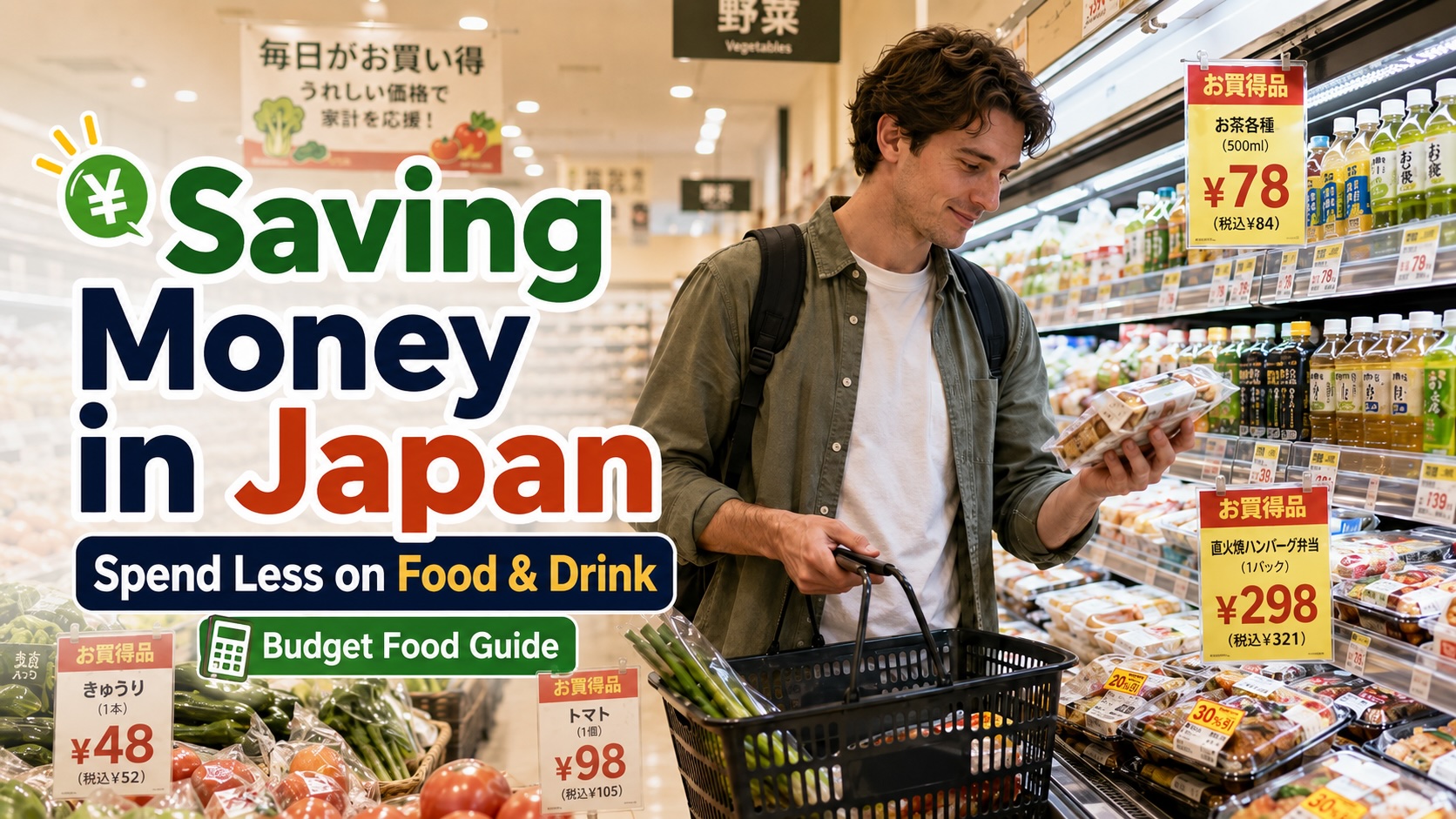
Evening discounts are particularly useful. Many supermarkets reduce prices on bento, sushi, prepared dishes, bread, meat, and fish before closing, often with stickers such as 10%, 20%, 30%, or 50% off. The timing depends on the store, but students and researchers often learn quickly when the supermarket near home starts its evening time sale. If you can shop after classes or after leaving the lab, this is one of the easiest ways to eat well for less.
Use convenience stores carefully
Japanese convenience stores are excellent. They are open late, usually clean, and sell rice balls, sandwiches, hot snacks, bento, coffee, tea, water, and basic daily goods. For a busy student or researcher, they are extremely helpful.
The point is not that convenience stores are bad. The point is that they are too easy to use. If breakfast, lunch, dinner, snacks, and drinks all come from convenience stores, your food spending can rise without you noticing. Use them for late-night work, emergencies, travel, and quick meals, but try not to make them your only food system.
A practical rule
Use convenience stores for convenience. Use supermarkets, campus cafeterias, simple restaurants, frozen meals, and online bulk buying as the base of your ordinary food routine.
Eat out, but choose the right type of restaurant
Eating out in Japan does not always mean expensive dining. Many everyday restaurants are designed for quick, affordable meals. For students and researchers, the most useful options are often gyudon chains, udon shops, curry shops, ramen shops, soba restaurants, teishoku restaurants, and campus cafeterias.
Lunch is often better value than dinner. Many restaurants offer lunch sets that include rice, soup, salad, or side dishes. If you want to enjoy restaurants while keeping costs under control, lunch is usually the better time to eat out.
| Option | How to use it wisely |
|---|---|
| Campus cafeteria | Good for routine lunches; simple, predictable, and usually student-friendly. |
| Gyudon, udon, curry | Useful when you need a quick meal and do not want to spend much time cooking. |
| Teishoku restaurants | Often a good balance of rice, soup, protein, and vegetables. |
| Ramen shops | Good for a satisfying meal; better treated as an enjoyable option rather than your only daily meal. |
| Cafes | Useful for working or meeting people, but repeated drinks and light meals can become expensive. |
Use high-quality frozen meal services
Frozen meal services should not be understood as low-quality emergency food. In Japan today, many frozen meals and delivery frozen meal services are surprisingly high quality. Some are designed to be nutritionally balanced, visually clean, and easy to store. They can be useful for students, postdocs, researchers, and professionals who return home late or have irregular schedules.
They are not always cheaper than cooking rice, eggs, tofu, and vegetables yourself. However, they can have strong cost performance because they reduce three hidden problems: time, failed meal planning, and food waste. If the real alternative is buying convenience-store meals every night, skipping dinner, or throwing away fresh ingredients, keeping several good frozen meals can be a very practical choice.
A good pattern is to use frozen meals as a backup, not as your entire diet. For example, keep a few meals in the freezer for deadline periods, late lab days, rainy nights, or weeks when you are too busy to shop properly.
Use Amazon for drinks and shelf-stable food
Amazon and other online retailers can be useful for items that are heavy, repetitive, or easy to store. Examples include bottled water, tea, coffee, cereal, instant soup, pasta, canned food, retort curry, rice packs, protein bars, and basic condiments. The main advantage is not only price. It is also the ability to buy in bulk without carrying heavy bags from the store.
This works best for products you already know you will use. Buying a large box simply because it looks cheap can waste money if you do not like it or cannot store it. A practical approach is to test a small amount first, then buy larger packs online for drinks and preserved foods that you use every week.
Save on drinks first
Drinks are one of the quietest sources of overspending. Vending machines are everywhere in Japan, and convenience stores make it easy to buy bottled tea, coffee, water, and energy drinks. One purchase feels small. Repeating it every day is different.
A simple bottle or tumbler can save a surprising amount of money. In many parts of Japan, tap water is drinkable and managed under water quality standards. If you prefer tea, making tea at home and carrying it is usually much cheaper than buying bottled tea every day.
Alcohol is another important point. Drinking with friends, lab members, or colleagues can be enjoyable, but frequent drinking parties can become one of the largest variable expenses in Japan. You do not need to avoid all social events, but it is useful to decide in advance how often you can join them comfortably.
A realistic weekly pattern
A sustainable food budget is usually not built by extreme restriction. It is built by deciding what kind of meal should be routine, what kind of meal should be backup, and what kind of meal should be a treat.
- Use a supermarket once or twice a week for ordinary food.
- Check evening discounts for bento, prepared dishes, meat, fish, bread, and sushi.
- Keep a few high-quality frozen meals for late lab days or deadline periods.
- Buy heavy drinks and shelf-stable food online when bulk prices are reasonable.
- Use campus cafeterias or simple restaurants for busy weekdays.
- Use convenience stores for urgent meals, snacks, and late-night work.
- Carry water or tea instead of buying drinks several times a day.
- Enjoy ramen, cafes, and social meals intentionally rather than automatically.
Common mistakes
- Thinking that saving money means eating badly. In Japan, reasonable meals can still be tasty and clean.
- Living only from convenience stores. Convenient does not always mean good value for repeated daily meals.
- Buying drinks every day. Drinks feel cheap one by one, but they accumulate quickly.
- Ignoring frozen meal services. Good frozen meals can be a realistic middle option between cooking and convenience-store meals.
- Ignoring supermarket discounts. Evening time sales can make prepared meals much cheaper.
- Buying heavy items one by one. Drinks and shelf-stable food are often better bought in planned bulk purchases.
- Confusing social meals with daily meals. It is fine to enjoy food in Japan, but daily meals need a different budget logic.
Final checklist
- Find two supermarkets near your home or university.
- Check when prepared meals are discounted in the evening.
- Keep several good frozen meals for busy weeks.
- Compare online bulk prices for bottled tea, water, coffee, rice packs, pasta, retort curry, and canned food.
- Carry a water bottle or tea bottle.
- Use convenience stores intentionally, not automatically.
- Separate your budget for daily food from your budget for restaurants, ramen, cafes, and drinking parties.
Important note
Food prices differ by city, neighborhood, season, exchange rate, and personal diet. This article is a practical guide for eating comfortably on a limited budget, not a fixed monthly budget. Before moving to Japan, check the latest living-cost information from your university and official student-support sources.
Useful sources to check
- Study in Japan: Living costs and expenses
- University of Tokyo: Living expenses for international students
- Ministry of Health, Labour and Welfare: Safe and tasty water
Read next
- Salary and Taxes in Japan: Basic Concepts for Foreign Professionals
- Japanese Rental Terms Explained: Shikikin, Reikin, and Cleaning Fees
- Ramen Around Japanese Universities: A Taste of Campus Life in Japan
Read next