Hiroshima University Cafeterias and Restaurants Around Higashi-Hiroshima and Saijo
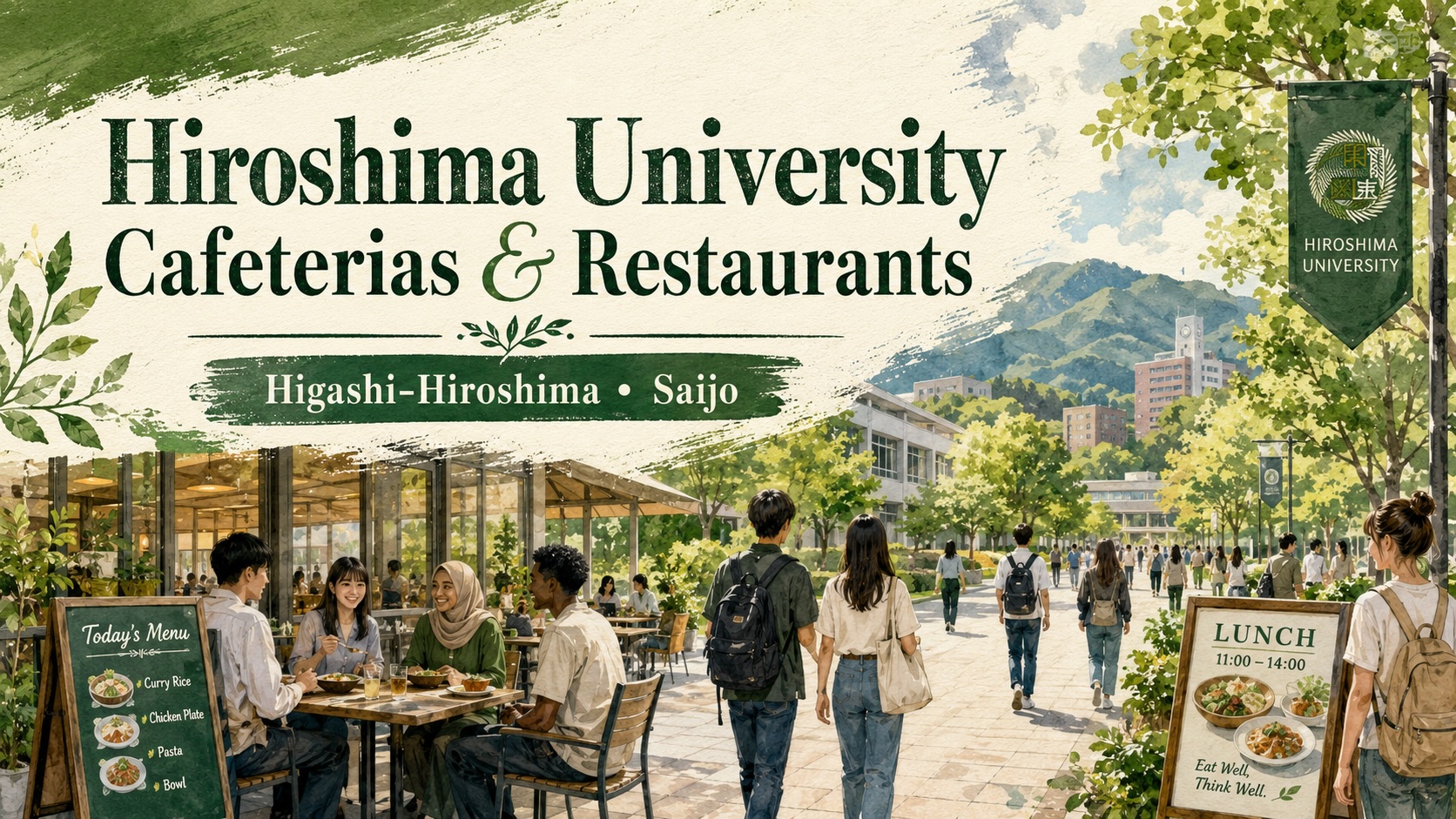
Hiroshima University’s main Higashi-Hiroshima campus gives students a quieter, more regional food lifestyle than universities in central Tokyo or Osaka. Campus cafeterias matter for everyday meals, while Saijo and Hiroshima city add local culture and weekend variety.
Quick summary
- Higashi-Hiroshima campus has multiple co-op dining and shop facilities that support daily student life.
- Saijo offers local restaurants, cafés, supermarkets, and a quieter student-town atmosphere.
- Hiroshima city provides broader food culture, including okonomiyaki and visitor-friendly meals.
- Because the campus is large and regional, students should plan meals around classes, buses, bicycles, and housing location.
- International students should check current cafeteria hours and dietary information, especially during vacations and weekends.
This is an independent student food guide
This article is an independent guide for international students, graduate applicants, and visitors who want to understand food life around Hiroshima University. It is not an official university page and it does not rank restaurants.
Cafeteria hours, co-op services, restaurant openings, and bus access can change. Confirm current information from Hiroshima University and Hiroshima University Co-op before relying on a specific meal plan.
Higashi-Hiroshima campus: cafeterias as daily infrastructure
Hiroshima University’s Higashi-Hiroshima campus is large and not located in the middle of Hiroshima city. For students, this makes campus cafeterias and shops especially important. They are not just optional conveniences; they are daily infrastructure for lunch, snacks, and quick meals between classes or lab work.
Hiroshima University Co-op information lists several dining and shop facilities on Higashi-Hiroshima campus. Students should learn which cafeteria is closest to their faculty, graduate school, dormitory, or bus route.
Saijo: local restaurants and student-town life
Saijo gives Hiroshima University students a local food base outside campus. It is quieter than Hiroshima city but offers restaurants, supermarkets, cafés, bakeries, convenience stores, and places to meet friends after class.
For many international students, Saijo becomes the practical center of life: shopping, casual dinner, part-time socializing, and weekend errands. It is useful to build a small personal map of inexpensive meals near station areas and housing routes.
Hiroshima city: food culture for weekends and visitors
Hiroshima city adds a broader layer to student life. Okonomiyaki is the most famous local food for many visitors, but the city also offers cafés, seafood, izakaya-style meals, shopping areas, and international options.
Because Hiroshima city is not the same as walking around campus, students should think of it as a weekend or special-meal destination rather than an everyday lunch backup. It is excellent for taking visitors, meeting friends from other institutions, or changing scenery after a busy week.
International student food planning
Students with dietary restrictions should check cafeteria and restaurant information carefully. Regional campuses may have fewer specialized options than central Tokyo, but co-op facilities, supermarkets, and self-cooking can make daily life manageable.
A practical international student routine might include campus cafeteria lunches, supermarket dinners near housing, a few Saijo restaurants, and occasional Hiroshima city meals. This gives variety without making daily life expensive or time-consuming.
How to enjoy Hiroshima University food life
Hiroshima University food life is calm, regional, and practical. The key is to understand the relationship between campus, Saijo, and Hiroshima city.
Use campus cafeterias for daily stability, Saijo for local routine, and Hiroshima city for weekend exploration. This balance makes student life easier and more enjoyable.
Useful sources
- Hiroshima University Welfare Facilities
- Hiroshima University Co-op Store and Dining Introduction
- Hiroshima University Co-op Cafeteria Information
- Hiroshima Official Tourism Guide
Read next