Nagoya University Cafeterias and Restaurants Around Higashiyama and Motoyama
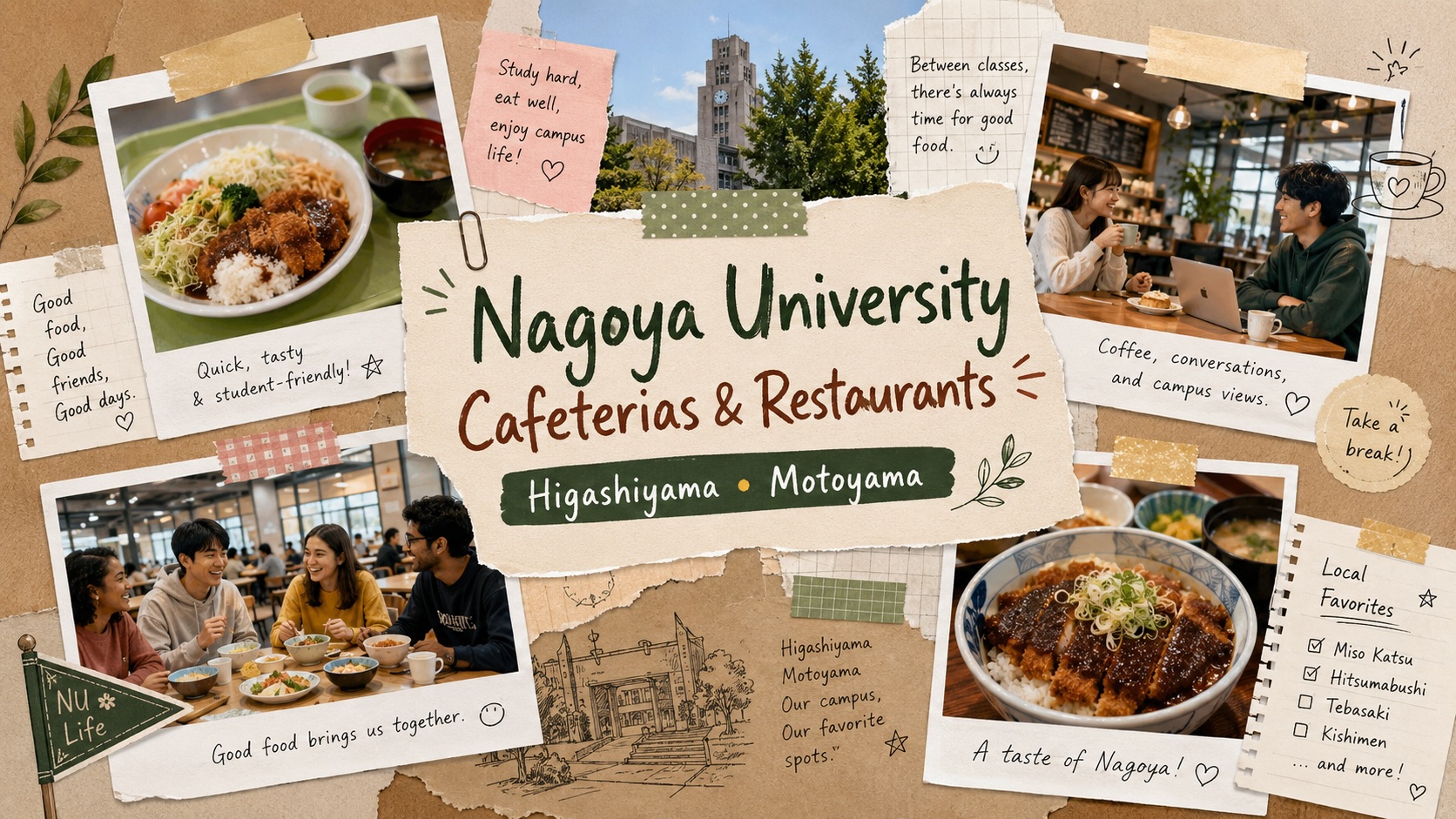
Nagoya University’s Higashiyama campus gives students a practical food environment: campus cafeterias for routine meals, Motoyama and nearby neighborhoods for cafés and restaurants, and Nagoya’s distinctive local dishes for weekend exploration.
Quick summary
- Higashiyama campus has several dining options that support daily student and research life.
- Motoyama and Nagoya Daigaku Station areas provide cafés, casual restaurants, and quick meals around campus.
- Nagoya’s local food culture, such as miso-based dishes and café morning culture, can become part of student life.
- Students should choose food spots based on class area, lab location, and subway route.
- For international students, Nagoya is large enough for variety but often easier to navigate than Tokyo or Osaka.
This is an independent student food guide
This article is an independent overview for international students and visitors who want to understand food life around Nagoya University. It is not an official university page and it does not rank restaurants.
Cafeteria names, hours, and menus change by semester and facility. Always confirm current information from Nagoya University, co-op pages, and individual cafés or restaurants before visiting.
Higashiyama campus: several food zones in one campus
Nagoya University’s Higashiyama campus is large enough that food choices depend on your building. Guides to campus food list multiple cafeterias and dining-related facilities, including North and South cafeterias and other named dining spaces.
For students, this means lunch planning is local. A first-year student, laboratory member, and visiting researcher may use different food spaces even though they are all on Higashiyama campus. Learn the dining area closest to your normal building first.
Motoyama and Nagoya Daigaku Station: everyday off-campus options
Motoyama and the Nagoya Daigaku Station area are important for cafés, casual meals, and quick dinners. Students can move between campus, subway, and neighborhood restaurants without treating every meal as a trip into central Nagoya.
The area is especially useful after seminars or group work. A café near campus can be better for conversation than a crowded cafeteria, while a casual restaurant near the subway can be an easy meeting point for friends from different departments.
Nagoya food culture for students
Nagoya has a strong local food identity. Students may encounter miso katsu, kishimen, hitsumabushi, tebasaki, ankake spaghetti, and café morning sets. These are not daily meals for every student, but they are part of how international students experience the city.
For ordinary days, many students still rely on cafeteria meals, convenience stores, supermarkets, and affordable set-meal restaurants. The balance between everyday food and local specialties is what makes Nagoya student life practical but not boring.
Dietary restrictions and ordering tips
Students with allergies, vegetarian preferences, halal needs, or other dietary restrictions should check ingredients directly. Miso, fish stock, pork, egg, and dairy can appear in dishes that do not look obvious from the menu name alone.
International students may find it useful to keep a short Japanese note explaining what they cannot eat. This is especially helpful in small local restaurants where English menus may not always be available.
How to build a Nagoya University food routine
Nagoya University food life works best when students combine campus dining with Motoyama-area convenience. Use cafeterias for routine days, nearby cafés for study breaks, and local Nagoya dishes for occasional exploration.
The result is a student lifestyle that feels less overwhelming than central Tokyo while still offering enough variety for international students to feel connected to the city.
Useful sources
- Where to Eat, KMI Nagoya University
- Nagoya University G30 Cafeterias Guide
- SHIRU CAFE Nagoya University
- Nagoya University Higashiyama Campus Guide Map
Read next