Osaka University Cafeterias and Restaurants Around Toyonaka, Suita, and Minoh
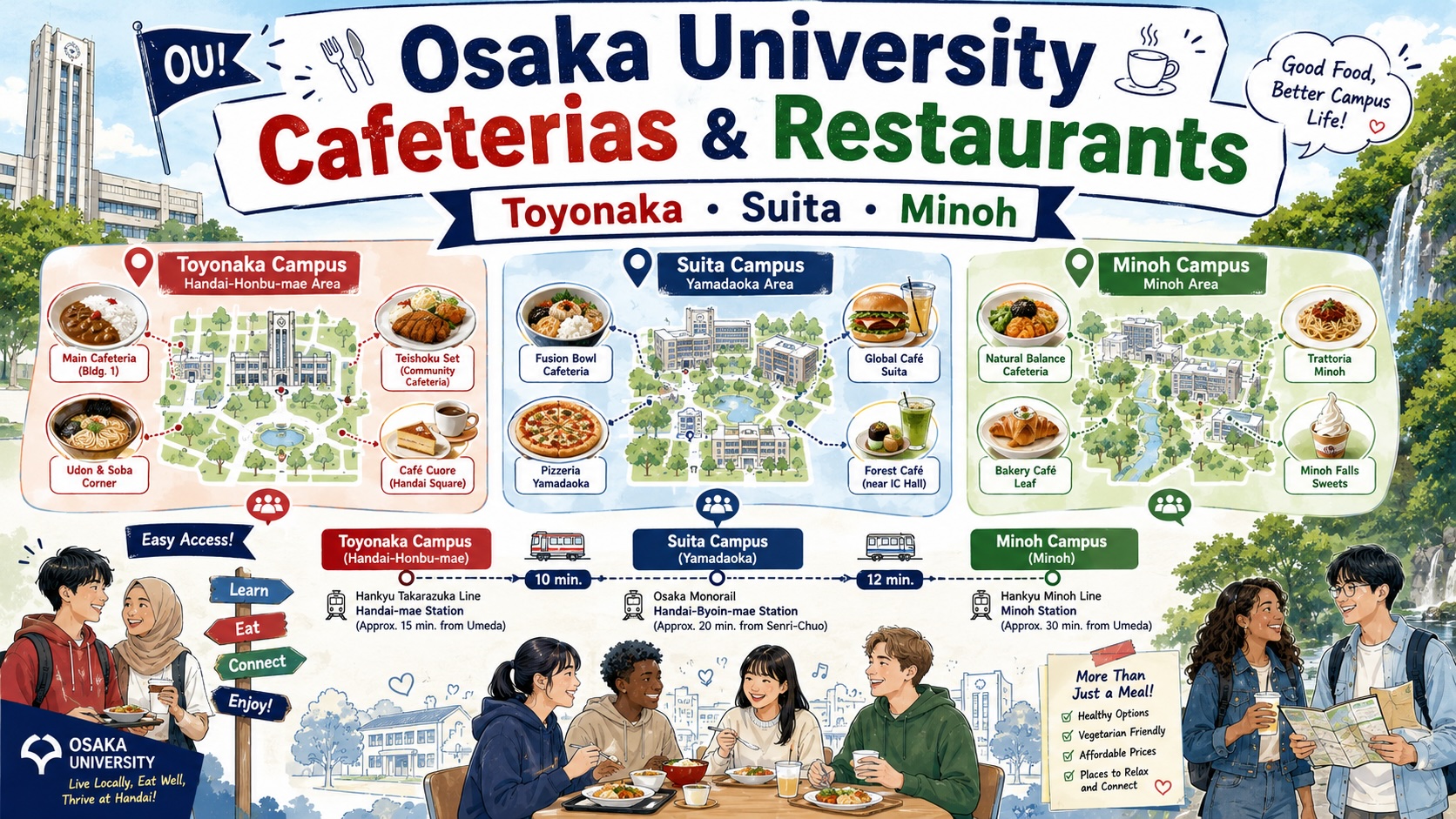
Osaka University students do not experience one single campus food life. Toyonaka, Suita, and Minoh each have different academic functions, cafeteria locations, commute patterns, and surrounding neighborhoods.
Quick summary
- Toyonaka is strongly connected to student life, classes, clubs, and daily cafeteria use.
- Suita is important for science, engineering, medicine, and large-campus research routines.
- Minoh has a newer, more focused campus environment with different access and meal planning needs.
- Osaka food culture adds energy, but students should still build practical campus-based lunch routines.
- Some Osaka University co-op facilities are known for named cafeterias and diverse menu functions, including halal options in certain facilities.
This is an independent student food guide
This article is an independent guide for international students, graduate applicants, and visitors who want to understand food life around Osaka University. It is not an official university page and it does not rank restaurants.
Cafeteria names, opening hours, and menu services can change. Always check the latest university and co-op information before visiting a specific dining facility.
Three campuses, three food routines
Osaka University’s Toyonaka, Suita, and Minoh campuses create different student routines. Toyonaka often feels closer to general student life and club activities. Suita is larger and more research-oriented. Minoh has its own access pattern and neighborhood logic.
Because of this, students should avoid thinking only in terms of “restaurants near Osaka University.” The practical question is whether you will spend your days at Toyonaka, Suita, Minoh, or move between them.
Toyonaka: cafeterias and student-friendly routines
Toyonaka has a strong everyday student atmosphere. Osaka University co-op information describes campus cafeterias and student services, including facilities such as KANSHITA under the main library and Cafeteria KASANE on Toyonaka Campus.
For international students, Toyonaka is a good place to learn how Japanese university cafeterias work: trays, small dishes, noodles, rice bowls, set meals, and busy lunch periods. It is also a useful social environment because food areas often become informal meeting points.
Suita: large-campus dining and research-day meals
Suita food life is shaped by scale. Students in science, engineering, medicine, or research programs may have long days and need reliable meals close to their building. A cafeteria that looks nearby on a map can still involve a meaningful walk across a large campus.
The practical strategy is to identify your nearest cafeteria, your backup shop, and your route to the nearest station-area food options. This matters for experiments, hospital-area schedules, and evening seminars.
Minoh: language, global studies, and local access
Minoh campus has a different character. Its location and access make it important to think about station routes, nearby shops, and when to eat before or after commuting. Students should check campus dining availability as well as food options around Minoh-semba-handai-mae Station.
For international students, Minoh can feel calmer than central Osaka while still offering access to the wider Kansai food scene. This can be a good balance if you prefer quieter daily life with occasional trips to Umeda, Namba, or Kyoto.
Osaka food culture around student life
Osaka is famous for casual food culture, but everyday student meals are often simple: cafeteria plates, curry, noodles, rice bowls, convenience-store food, and affordable restaurants near stations. Takoyaki and okonomiyaki are part of the city image, but they are usually social meals rather than daily nutrition plans.
The best way to enjoy Osaka as a student is to separate daily food from city exploration. Use campus cafeterias for ordinary weekdays, then explore Osaka food culture with friends after classes or on weekends.
How to build an Osaka University food routine
Osaka University food life is easiest when students think by campus. Toyonaka, Suita, and Minoh all require different planning, and no single restaurant list can cover them equally.
A good routine includes one nearest cafeteria, one backup meal near the station, and one flexible city-food plan for friends or visitors.
Useful sources
- Campus Stores, Cafeterias, The University of Osaka
- Osaka University Co-op Services
- New Co-op Stores, Osaka University
- Access Maps, The University of Osaka
Read next