University of Tsukuba Cafeterias and Restaurants Around Japan’s Science City
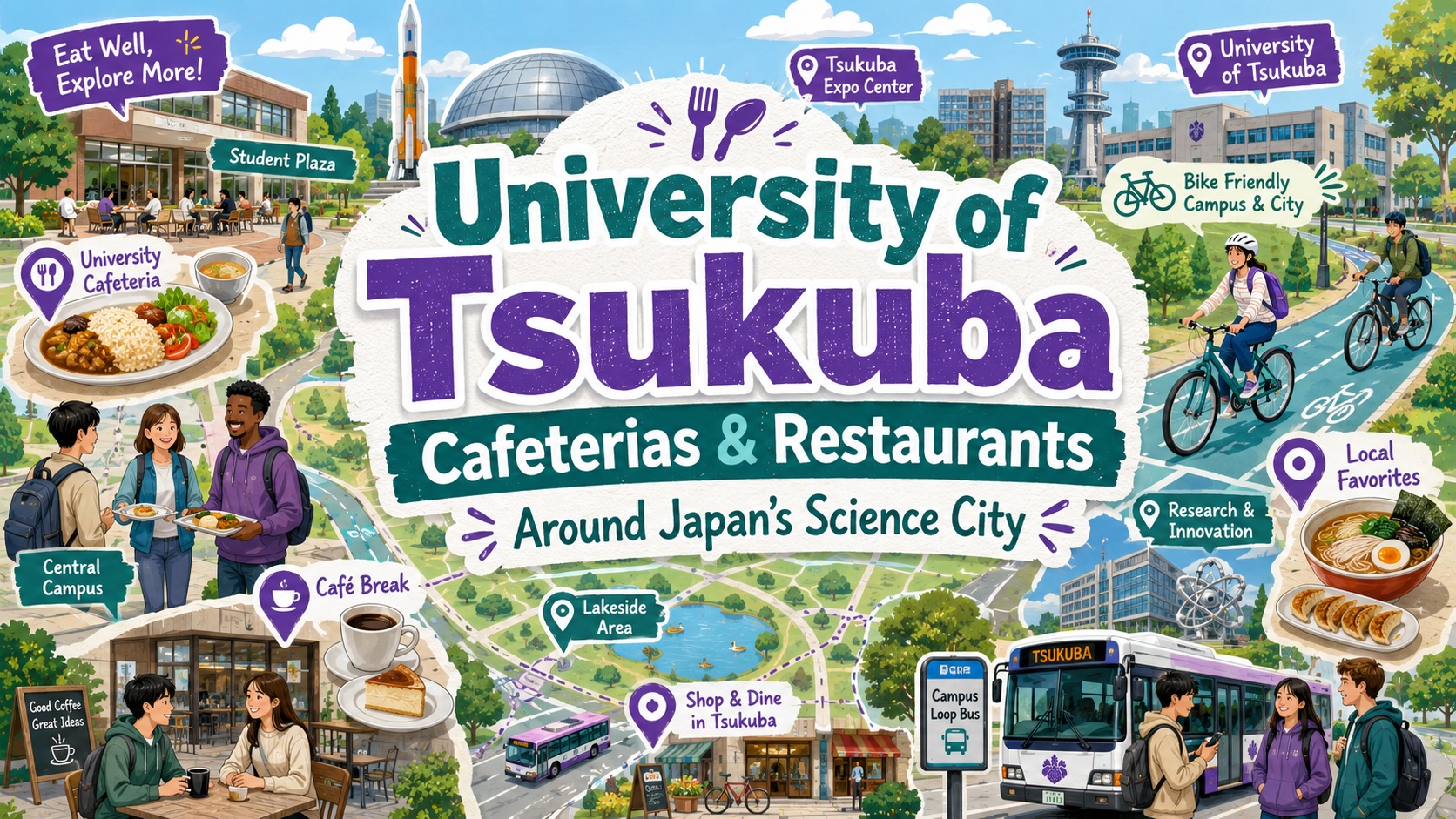
The University of Tsukuba is different from many Japanese universities because the campus is large, open, and closely connected to a planned science city. Food life is therefore about distance, bicycle routes, campus areas, and knowing where to eat before the next class or experiment starts.
Quick summary
- The University of Tsukuba has dining and shop facilities across campus areas, so location matters strongly.
- Because the campus is large, students should learn food options near their own area rather than treating the campus as one small place.
- Halal-friendly dining, cafés, and international student needs are part of Tsukuba’s food-life identity.
- Tsukuba Center, supermarkets, and suburban restaurants complement campus meals for dinner and weekends.
- Bicycles and buses affect where students realistically eat during normal weekdays.
This is an independent student food guide
This article is an independent guide for international students, graduate applicants, and visiting researchers who want to understand food life at the University of Tsukuba. It is not an official university page and it does not rank restaurants.
Campus dining, cafés, shop hours, and menus change by semester and vacation period. Students should confirm current information on official University of Tsukuba pages and individual facility pages.
A large campus means food planning matters
At Tsukuba, “near campus” is not specific enough. The campus is large, and students may move by bicycle, bus, or long walks between areas. A cafeteria that is convenient for one student may be unrealistic for another student with a short break.
The university’s dining and shop information emphasizes that cafeterias, coffee shops, bookstores, and commodity shops are located in each campus area. This is important because food life is distributed rather than concentrated in a single central street.
Campus cafeterias, cafés, and daily student meals
The basic student routine often starts with campus cafeterias. Students can use them for ordinary lunches, quick meals between classes, and convenient food during busy research periods. Coffee shops and small campus stores can also support study breaks and snack needs.
Because Tsukuba is bicycle-oriented, many students learn food options by route. A student may know where to eat near class, where to buy coffee near the library, and where to get dinner on the way back to housing.
International and halal-friendly food needs
Tsukuba has a significant international student and researcher community, and food options have developed with that diversity in mind. One well-known example is Café Marhaban, introduced as a halal-friendly campus restaurant that serves students and staff regardless of nationality.
Even with international options, students with strict dietary needs should confirm ingredients and preparation methods directly. Halal, vegetarian, vegan, allergy, and religious restrictions can be handled more smoothly when students prepare Japanese phrases or written explanations.
Restaurants around Tsukuba Center and the science city
Outside campus, Tsukuba Center, shopping areas, supermarkets, and suburban restaurants support evening and weekend life. The restaurant landscape is different from dense Tokyo neighborhoods: options can be spread out, and access may depend on bicycle, bus, or car.
For new international students, it is useful to separate daily food from weekend food. Daily food means cafeterias, campus cafés, convenience stores, and nearby supermarkets. Weekend food can include restaurants around Tsukuba Center, larger shopping areas, and trips to nearby cities.
How to build a Tsukuba food routine
University of Tsukuba food life becomes comfortable once students understand distance. The key is to know your own area, your bicycle routes, and your backup options before the semester becomes busy.
A realistic routine combines campus cafeterias, one or two cafés, a supermarket near home, and a few restaurants around Tsukuba Center or other accessible areas.
Useful sources
- Dining & Shops, University of Tsukuba
- Cafeteria for Art and Physical Education, University of Tsukuba
- Café Marhaban, JV-Campus
- University of Tsukuba Campus Access
Read next