Science Tokyo Cafeterias and Restaurants Around Ookayama and Suzukakedai
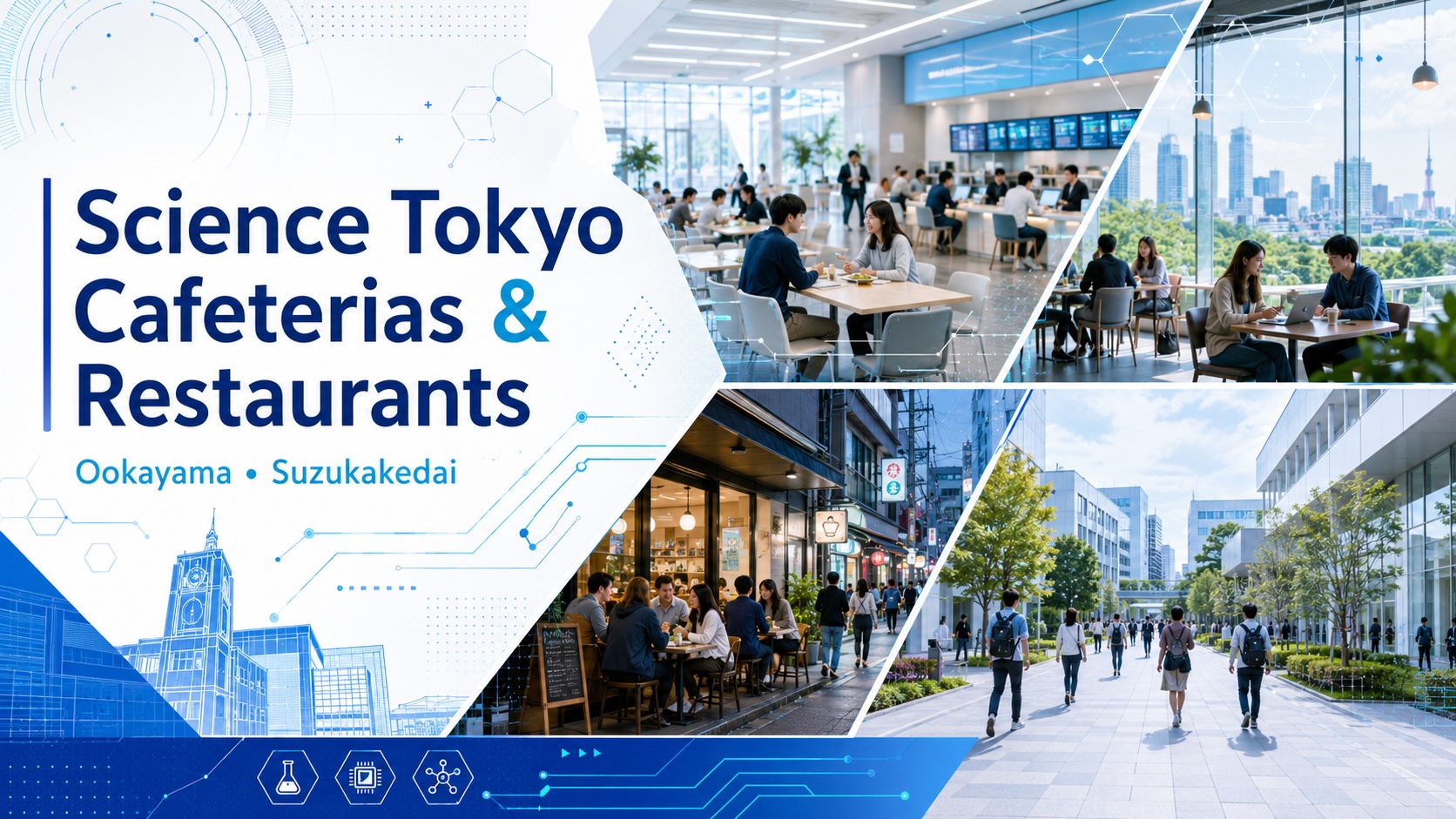
Science Tokyo food life depends strongly on whether your daily base is Ookayama or Suzukakedai. Ookayama offers a compact Tokyo campus with neighborhood options nearby, while Suzukakedai is calmer, greener, and more research-campus oriented.
Quick summary
- Ookayama is convenient for quick meals, takeout, cafés, and small restaurants near a residential Tokyo campus.
- Suzukakedai has a quieter Yokohama-area research-campus feel, making official cafeteria and shop hours especially important.
- Campus shops and co-op services are useful for lunch, snacks, textbooks, and daily student needs.
- Students should plan separately for class days, lab days, evening work, and weekend meals.
- Because Science Tokyo inherited Tokyo Tech campus culture, many food routines still revolve around Ookayama and Suzukakedai campus geography.
This is an independent student food guide
This article is an independent guide for prospective students and researchers who want to understand everyday food life around Science Tokyo. It is not an official university page and it does not rank restaurants.
Science Tokyo was formed from Tokyo Tech and TMDU, and campus names and operations may continue to evolve. Always confirm current cafeteria, shop, and campus information on official Science Tokyo pages.
Two food lifestyles: Ookayama and Suzukakedai
Ookayama and Suzukakedai create different meal routines. Ookayama is close to a residential Tokyo neighborhood with station access, small shops, takeout options, and cafés. Suzukakedai is more spacious and research-focused, so students often depend more on campus facilities during the day.
For new students, the first question should be: where will you actually spend most weekdays? A student taking classes at Ookayama and a student working in a Suzukakedai lab may both be at Science Tokyo, but their lunch choices and evening backup plans are different.
Ookayama: compact campus and neighborhood food
Ookayama is practical because students can combine campus cafeterias, shops, convenience stores, and local restaurants within a relatively small area. It works well for quick lunch, short coffee breaks, and casual meals after group work.
The surrounding neighborhood is not a tourist district, which is an advantage for student life. Students can find ordinary, repeatable meals rather than only special-occasion restaurants. This is the kind of environment where a reliable bento shop or noodle place can become part of a weekly routine.
Suzukakedai: research-campus meals and planning
Suzukakedai has a different rhythm. Because the campus is quieter and more research-oriented, students should pay closer attention to cafeteria and shop hours. Official campus information lists dining and shop facilities for the Yokohama campus, including cafeteria functions in Suzukake Hall.
Lab-based students should plan for both daytime meals and late work. If the cafeteria closes before your experiment ends, you need a backup near the station, near home, or from a convenience store.
Takeout, cafés, and small neighborhood places
Science Tokyo students often benefit from simple takeout strategies. A quick bento, bakery item, or café lunch can be more realistic than a full restaurant meal between experiments or meetings. Around Ookayama in particular, takeout culture can support busy class days.
Cafés also serve a social role. They can be places to review presentation slides, talk with classmates, or rest after a lab meeting. However, avoid treating cafés as guaranteed study spaces: seating, Wi-Fi, power outlets, and time limits vary by shop.
How to build a Science Tokyo food routine
Science Tokyo food life is best understood as practical and campus-specific. Ookayama gives compact urban flexibility, while Suzukakedai requires more deliberate planning around cafeteria and shop hours.
A good student routine should include one campus lunch option, one quick takeout option, one evening backup, and one quiet café or restaurant suitable for talking with friends or lab members.
Useful sources
- Science Tokyo Cafeterias and Shops
- Science Tokyo Use of Facilities and Services
- Science Tokyo Ookayama Campus
- Takeout Around Ookayama Campus, Tokyo Tech Discover
Read next