Tohoku University Cafeterias and Restaurants Around Kawauchi and Aobayama
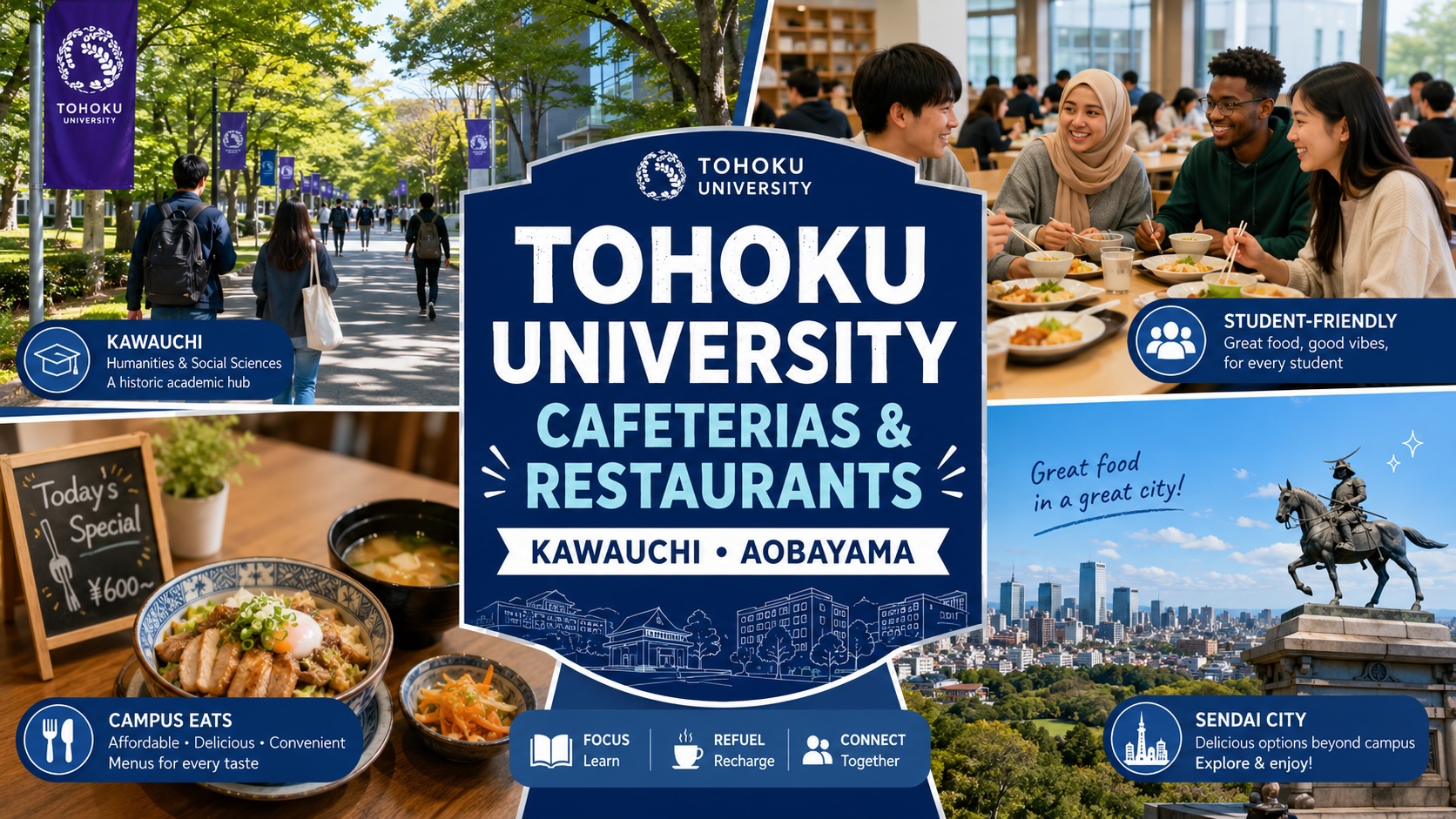
Tohoku University students quickly learn that food life depends on campus geography. Kawauchi, Aobayama, Katahira, and Seiryo are all connected to Sendai, but lunch routes, cafeteria choices, and dinner plans feel different at each site.
Quick summary
- Kawauchi is a key student campus with dining options that support regular class days.
- Aobayama is more science-and-engineering oriented, so cafeteria access matters for lab-based students.
- Sendai food culture adds variety through gyutan, ramen, cafés, seafood, and ordinary student restaurants.
- Campus movement can involve hills, subway rides, and time gaps, so students should plan meals by daily schedule.
- Tohoku University’s cafeteria events and dining locations can be useful, but current dates and eligibility should be checked.
This is an independent student food guide
This article is an independent guide for international students, graduate applicants, and visitors who want to understand food life around Tohoku University. It is not an official university page and it does not rank restaurants.
Dining locations, cafeteria campaigns, and opening hours can change. Always confirm current details from Tohoku University, the university co-op, and individual restaurants before relying on a specific meal plan.
Start with Tohoku University’s campus geography
Tohoku University has several main campuses in Sendai, including Kawauchi, Aobayama, Katahira, and Seiryo. This geography matters for food because students do not always return to the same area between classes, experiments, seminars, and meetings.
Kawauchi has a strong general student-life role, while Aobayama is especially important for science and engineering. A student based in a lab on Aobayama may have a very different lunch routine from a humanities student whose classes are concentrated at Kawauchi.
Kawauchi: student dining near classes and support offices
Kawauchi is one of the areas where many students develop their first everyday food routine. Cafeterias, convenience options, study spaces, and student support functions make it practical for lunch between classes or before afternoon activities.
A typical new student should learn three things early: the nearest cafeteria, the closest quick snack option, and the best place to sit between classes. These details matter more than finding a famous restaurant during the first month.
Aobayama: science, engineering, and lab-day meals
Aobayama food life is closely tied to research schedules. Students may need lunch between experiments, early dinner before evening work, or a quick meal after a seminar. In this environment, reliable campus dining is a practical tool, not just a convenience.
Because Aobayama is less like a dense restaurant street than central Sendai, students should check cafeteria locations and opening hours carefully. If your lab work often runs late, identify an evening backup near your station or home.
Sendai food culture beyond campus
Sendai adds an enjoyable layer to student life. The city is known for gyutan, ramen, seafood, cafés, and ordinary student-friendly restaurants. Central Sendai and station areas are useful for meeting friends, hosting visitors, or taking a break from campus food.
For international students, Sendai is large enough to offer variety but often easier to navigate than Tokyo or Osaka. This makes it possible to build a balanced food routine: campus meals on busy days, local restaurants near home, and central Sendai for social meals.
Practical food tips for international students
Do not assume that every campus option is open during vacations, weekends, or entrance exam periods. Check dates before planning a campus visit. If you have dietary restrictions, confirm ingredients directly with staff or official menu pages when available.
If you will move between Kawauchi and Aobayama, test the actual route and meal timing once before classes become busy. A plan that looks easy on a map may feel tight when you add walking, hills, subway time, and lunch crowds.
How to build a Tohoku University food routine
Tohoku University food life is comfortable when students understand campus geography. Kawauchi and Aobayama serve different daily needs, and Sendai provides a strong city-food backup.
The best strategy is to build a three-part routine: a campus cafeteria for normal days, a station-area option for late days, and a Sendai restaurant list for friends and weekends.
Useful sources
- Tohoku University Map & Directions
- Tohoku University 100-yen Breakfast, Spring 2026
- Kawauchi Campus Guide, Tohoku University
- Tohoku University Global Learning Center Map and Access
Read next