Kyoto University Cafeterias and Restaurants Around Yoshida and Hyakumanben
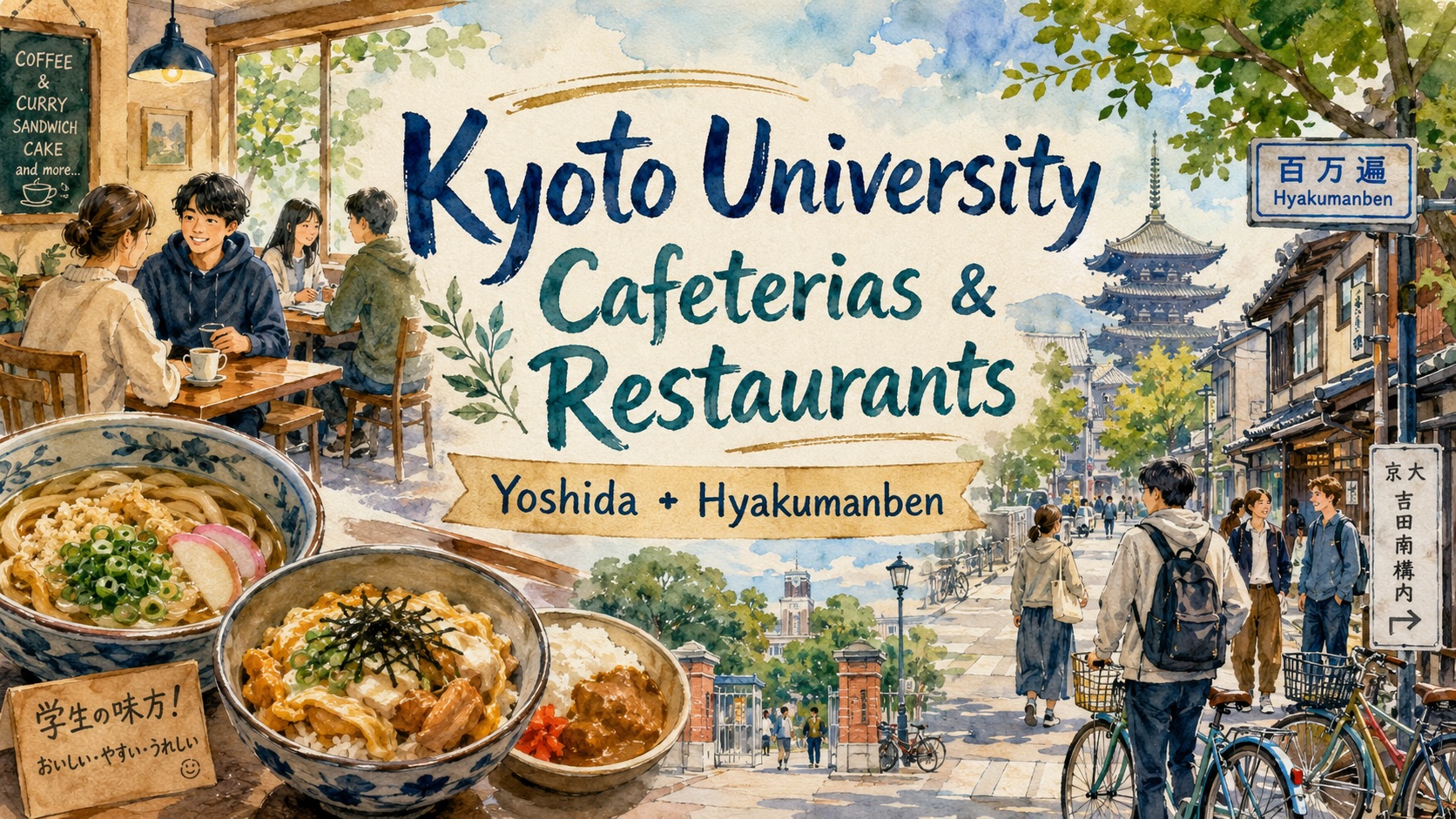
Kyoto University’s Yoshida area is one of Japan’s most distinctive academic neighborhoods. Cafeterias, small restaurants, cafés, bookstores, bicycles, temples, and the Hyakumanben intersection all shape the daily food life of students.
Quick summary
- Yoshida campus has on-campus dining options, but Hyakumanben and nearby streets are central to everyday student food life.
- Kyoto’s student neighborhoods are strong for casual meals, cafés, ramen, set meals, and international food options.
- The area is walkable and bicycle-friendly, but popular lunch spots can be crowded during class periods.
- International students should check vegetarian, halal, and allergy information directly because restaurant styles vary widely.
- Kyoto University food life is not only about eating; cafés and small restaurants often become informal study and social spaces.
This is an independent student food guide
This article is an independent overview for prospective students, visiting researchers, and international applicants. It is not an official Kyoto University guide and it does not attempt to rank restaurants.
Menus and opening hours can change, especially during vacation periods, holidays, entrance exam seasons, and campus events. Always check official university and co-op pages for current information.
Yoshida campus: food within an academic neighborhood
Yoshida is not an isolated campus. It sits inside a lively university district where food, housing, bookstores, bicycles, and student routines overlap. This makes everyday meals flexible: students can use a cafeteria for speed, a nearby restaurant for variety, or a café for a short study break.
Campus maps show multiple facilities around Yoshida, including dining-related facilities and convenience-store functions in the broader campus area. For a new student, the first week is usually enough to learn the nearest cafeteria, the quieter backup option, and the local street with reliable dinner choices.
Hyakumanben: a student food hub outside the gate
Hyakumanben is one of the key names to remember. The intersection and surrounding streets connect Kyoto University students with casual restaurants, cafés, ramen shops, curry, bakeries, and small international food places. It feels less like a mall and more like a student neighborhood.
For international students, Hyakumanben is useful because it offers variety without requiring a long train ride. After classes or seminars, students can meet friends, grab a quick meal, or continue a discussion outside the lab.
Kyoto-style food life: quiet, local, and walkable
Kyoto food life around the university can be calmer than what students imagine from tourist districts. Everyday meals may be simple: noodles, rice bowls, curry, cafeteria plates, bakery items, convenience-store food, and coffee. The strength is not luxury but walkability and atmosphere.
At the same time, Kyoto’s broader food culture is nearby. Students can reach Demachiyanagi, the Kamo River, Gion, Kawaramachi, or temple areas when they want a different weekend experience. This gives Kyoto University students a strong balance of ordinary study life and cultural exploration.
Dietary needs and practical communication
Vegetarian, vegan, halal, allergy, and religious dietary needs should be checked directly with each cafeteria or restaurant. Kyoto has more international food options than many smaller cities, but availability still varies by place and time.
Useful Japanese phrases include niku nashi for no meat, sakana nashi for no fish, tamago nashi for no egg, gyunyu nashi for no milk, and arerugi ga arimasu for “I have an allergy.” Having a written note in Japanese can make small restaurants easier.
How to use food to understand Kyoto University life
Kyoto University food life is part of the academic experience. Cafeterias are efficient, Hyakumanben gives everyday variety, and Kyoto’s cafés and streets provide places to think, meet, and recover from long study days.
For a new student, the best strategy is to learn three layers: your closest campus cafeteria, your reliable local dinner area, and a few Kyoto spots for weekends or guests.
Useful sources
- Kyoto University Main Campus Map
- Kyoto University Yoshida-South Campus Map
- Kyoto University Co-op English Information
- Kyoto University Yoshida Campus Co-op North Building
Read next