University of Tokyo Cafeterias and Restaurants Around Hongo, Komaba, and Kashiwa
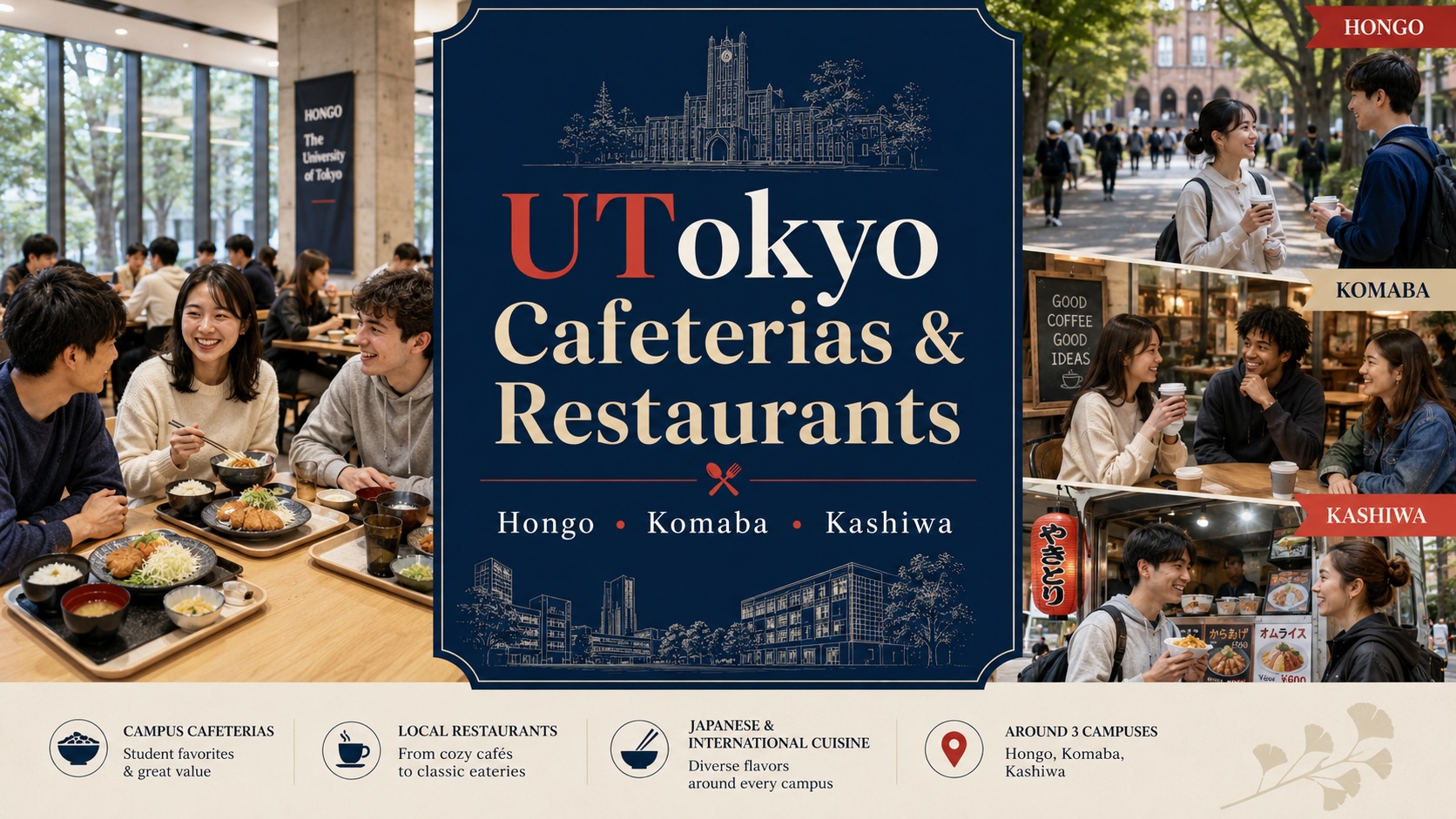
Food is one of the easiest ways to understand student life at the University of Tokyo. Hongo, Komaba, and Kashiwa are all UTokyo campuses, but they create different lunch routines, dinner options, and daily habits for international students and visiting researchers.
Quick summary
- Hongo offers several on-campus dining options and many small restaurants in surrounding central Tokyo neighborhoods.
- Komaba is convenient for students who want cafeterias, casual meals, and quick access to Shibuya-side food culture.
- Kashiwa is more research-campus oriented, so checking campus dining hours and nearby station options matters more.
- Food trucks and co-op cafeterias can be useful on busy class or lab days, but hours and menus should be checked before relying on them.
- For international students, the best approach is to combine campus cafeterias with a small list of reliable local restaurants near the campus actually used most often.
This is an independent student food guide
This article is written for prospective international students, graduate students, researchers, and visitors who want a practical sense of food life around the University of Tokyo. It is not an official university page and it does not rank individual restaurants.
Cafeteria hours, menus, food truck schedules, and restaurant availability change by semester, vacation period, and campus event. Treat this article as a planning guide and confirm current details on official university, co-op, and restaurant pages before visiting.
Why the campus matters more than the university name
At UTokyo, “where do you study?” is a food question as well as an academic question. A student based at Hongo may use central campus dining halls and the small restaurant streets of Bunkyo. A Komaba student may move between cafeteria meals and cafés around Komaba-Todaimae or Shibuya. A Kashiwa researcher may build a routine around campus facilities, convenience stores, and restaurants near Kashiwa-no-ha or Kashiwa Station.
This means the best food strategy is not to search for “restaurants near the University of Tokyo” in general. It is better to start with the building where your classes, lab meetings, or seminars will actually happen.
Hongo: central Tokyo dining with an academic rhythm
Hongo has the strongest “classic UTokyo” atmosphere. The campus area includes major dining halls and cafés, and the surrounding neighborhoods offer ramen, curry, soba, set meals, bakeries, small cafés, and convenience-store options. For busy students, the biggest advantage is density: there is usually something within walking distance.
Hongo is also close to Ueno, Nezu, Yanaka, Ochanomizu, and Akihabara. This makes weekend food exploration easy, but it can also make central-area prices higher than students expect. For daily life, students often learn which cafeterias are efficient, which local restaurants are less crowded after the lunch rush, and where they can sit for a quiet coffee after seminar.
Komaba: student meals with easy access to western Tokyo
Komaba gives a different food experience. The campus is calmer and more residential than central Tokyo, but Shibuya and other west-side neighborhoods are nearby. This is helpful for students who want ordinary daily meals during the week and more varied café or restaurant choices on weekends.
Komaba food life is especially convenient for students who like short breaks between classes. A simple routine might be cafeteria lunch, coffee near campus, and occasional dinner in Shibuya or Shimokitazawa. However, a student moving between Komaba and Hongo should not underestimate train time, especially during peak hours.
Kashiwa: research-campus routines and local planning
Kashiwa is a quieter, more spacious research-campus environment. It can be comfortable for students who spend long hours in laboratories, but it requires more planning than a dense central Tokyo campus. Depending on your laboratory schedule, you may rely heavily on campus facilities during the day and nearby station areas for evening meals.
For international students based in Kashiwa, the practical question is whether you will live near campus, near Kashiwa-no-ha, near Kashiwa Station, or along a train route. Each choice changes your dinner options, supermarket access, and late-night routine.
Tips for international students
Students with dietary restrictions should check menus in advance and be ready to ask simple questions about ingredients. Many campus cafeterias display menu information clearly, but allergen, vegetarian, halal, or religious dietary needs still require confirmation.
It is also useful to learn a few Japanese food words early: teishoku for set meal, donburi for rice bowl, soba and udon for noodles, yasai for vegetables, niku for meat, sakana for fish, tamago for egg, and arerugi for allergy. These words make cafeteria lines and small local restaurants easier to navigate.
How to build a realistic UTokyo food routine
The best UTokyo food routine is campus-specific. Use official dining information for your daily base, then build a short personal list of nearby restaurants, cafés, supermarkets, and convenience stores.
For a new student, the goal is not to find the “best” restaurant immediately. It is to find reliable places for normal days, cheap meals for busy weeks, and a few pleasant options for friends, visitors, and recovery after a long lab day.
Useful sources
- School Cafeterias and Special Meals, UTokyo
- University of Tokyo Co-op Cafeteria Information
- UTokyo Facilities on Campus for International Students
- Explore Our Campuses, The University of Tokyo
Read next