Tohoku University for Materials Science and Chemistry: A Guide for Prospective Graduate Students
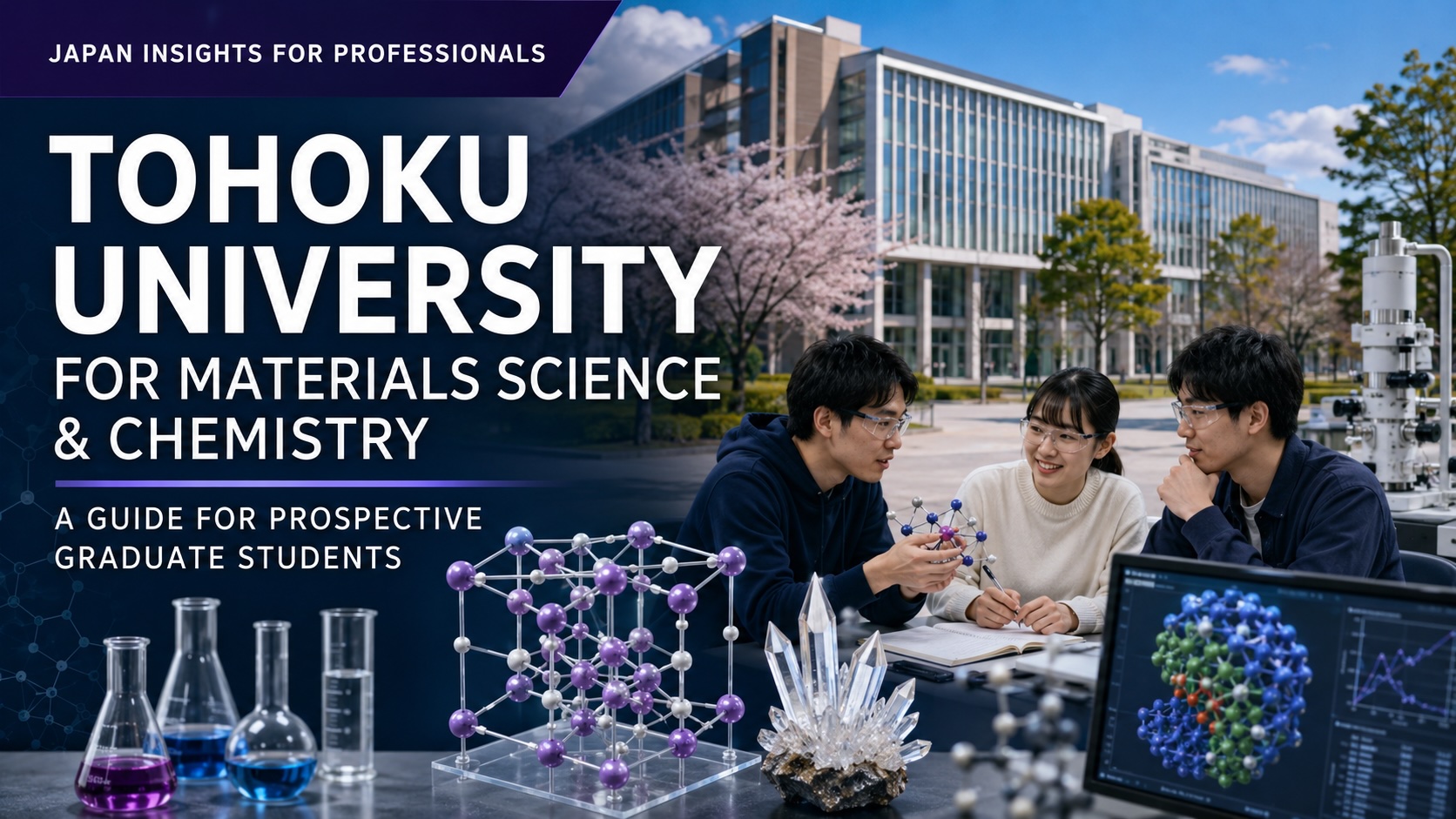
Tohoku University is one of Japan’s major national universities and is especially visible in materials science, engineering, and the natural sciences. For international students interested in chemistry, materials, devices, energy, polymers, metals, ceramics, nanoscience, or analytical science, it can be a serious option. However, applicants should understand that “materials science and chemistry” may be spread across several schools, departments, and programs rather than one simple department name.
Quick summary
- Tohoku University is a strong research university for materials science, engineering, chemistry, and related interdisciplinary fields.
- Materials-related graduate study may be found in engineering departments, science departments, and research institutes.
- International students should check English-taught programs such as IMSE and science graduate programs, but also confirm the exact department and supervisor.
- The most important step is to identify a laboratory and professor whose current research fits your background.
- Applicants should check official admission guidelines every year because deadlines, documents, and examination formats can change.
Why Tohoku University is important in this area
Tohoku University has a long-standing reputation in materials science, engineering, and basic science. For students, this matters because research opportunities may not be limited to one department. Materials and chemistry-related topics can appear in departments of materials science, applied chemistry, chemistry, physics, engineering, and university research institutes.
This breadth is attractive but can also be confusing. A student interested in battery materials, molecular materials, polymer chemistry, catalysis, biomaterials, semiconductors, metallurgy, or spectroscopy may need to compare several programs before choosing where to apply.
Where prospective students should look first
Start with official graduate school and department pages, not only general rankings or social media. Then search for individual laboratories. In Japan, graduate students are usually linked strongly to a specific laboratory, and professor fit can be more important than the broad program title.
- Check the School of Engineering and materials-related departments.
- Check science programs for chemistry and related basic science fields.
- Check English-taught international programs if you do not yet have strong Japanese ability.
- Check research institute pages when a professor’s laboratory is connected to an institute.
- Confirm whether your desired professor can supervise students in the program you plan to enter.
Materials science routes
Students interested in materials science should look carefully at engineering-based programs. Tohoku University’s materials-related education and research can involve metals, ceramics, polymers, semiconductors, electronic materials, structural materials, energy materials, and computational materials science. The International Materials Science and Engineering Course is one route for graduate students seeking an English-based materials science environment.
Do not assume that all materials science laboratories accept students through the same route. A laboratory may belong to a department, a graduate school, or a research institute, and the entrance procedure may differ depending on the program. Always check the official admission page for the specific year.
Chemistry routes
Chemistry-related graduate study may be found in the Graduate School of Science, engineering departments, and interdisciplinary programs. A student interested in molecular synthesis, physical chemistry, analytical chemistry, computational chemistry, materials chemistry, or chemical biology should search by research theme and professor, not only by the word “chemistry” in the department name.
| Your interest | Possible place to search | What to check |
|---|---|---|
| Molecular synthesis | Chemistry or applied chemistry laboratories. | Recent papers, available instruments, and student projects. |
| Materials chemistry | Materials science, applied chemistry, engineering, or institutes. | Whether the focus is molecules, devices, polymers, metals, or ceramics. |
| Physical chemistry | Chemistry, physics, materials science, or interdisciplinary programs. | Methods such as spectroscopy, computation, microscopy, or theory. |
| Energy and devices | Engineering, materials science, chemistry, or institute-linked labs. | Connection to batteries, catalysts, semiconductors, or energy conversion. |
Application preparation
Before applying, prepare a short research summary, transcript, CV, and a clear explanation of why your background fits the laboratory. If you contact a professor, do not write only that Tohoku University is famous. Mention a specific paper, research theme, or method. Explain what skills you already have and what you hope to develop during graduate study.
International applicants should check whether the program requires prior professor contact, written examinations, interviews, English scores, Japanese ability, recommendation letters, or scholarship procedures. Timelines can differ between April and October enrollment and between master’s and doctoral programs.
Official sources
- Tohoku University: International Materials Science and Engineering Course
- Tohoku University School of Engineering: Graduate Admissions
- Tohoku University Graduate School of Science: IGPAS
- Study in Japan: Graduate Schools
Read next