How to Prepare for an Online Interview with a Japanese Professor

After you contact a Japanese professor, the next step may be an online interview or informal meeting. This conversation can feel difficult because it may include both research discussion and admissions-related questions. In many cases, the professor is not only checking your English ability or motivation; they are checking whether your background, research interests, schedule, funding situation, and personality fit the laboratory.
Quick summary
- Prepare a two-minute self-introduction that connects your background to the professor’s research.
- Read at least one recent paper from the laboratory and prepare one or two specific questions.
- Expect questions about your past research, technical skills, future plan, funding, admission route, and timeline.
- Do not treat the meeting as a one-way test; you should also ask practical questions about the lab, program, and application process.
- After the meeting, send a short thank-you email with any requested documents.
Understand the purpose of the meeting
An online interview with a Japanese professor is often somewhere between an admissions interview, a research discussion, and a mutual introduction. The professor may want to know whether your academic background is strong enough, whether your research interests match the lab, whether you understand the application route, and whether you have a realistic funding plan.
It is not always a formal university interview. Sometimes it is a preliminary conversation before the professor decides whether to support your application. In other cases, it may be part of a scholarship, special program, or laboratory selection process. The safest assumption is that the meeting is important even if it is described casually.
What to prepare before the interview
Prepare a short, clear self-introduction. Do not simply list your university name and degree. Connect your background to the laboratory. For example, explain your research topic, the methods you used, the results you obtained, and why that experience leads you to the professor’s current work.
| Preparation item | Why it matters | Practical target |
|---|---|---|
| Self-introduction | Shows whether you can explain your background clearly. | Two minutes, focused on research and motivation. |
| Research summary | Lets the professor judge your technical readiness. | One page, with methods and outcomes. |
| Recent lab paper | Shows genuine interest and preparation. | Read at least one paper carefully. |
| Application route | Prevents unrealistic expectations. | Know the entrance exam, scholarship, and deadline options. |
| Funding plan | Important for international students. | Be honest about MEXT, private funding, or self-support. |
Common questions you may be asked
Professors often ask about your previous research, technical skills, motivation, and future plan. They may also ask why you chose Japan, why you chose their laboratory, and whether you understand the degree program. The best answers are specific but not too long.
- Can you briefly explain your previous research?
- What experimental, computational, analytical, or language skills do you have?
- Why are you interested in this laboratory?
- Which recent paper or project from our lab interested you?
- Do you want to enter as a research student, master’s student, or doctoral student?
- How do you plan to support yourself financially?
- When do you hope to start?
Questions you should ask the professor
The meeting is also your opportunity to understand the laboratory. Good questions show maturity. Avoid asking only about scholarship money at the beginning. Instead, ask about research direction, application procedure, daily supervision, language use, and what documents the professor would like to see next.
Useful questions from the applicant side
- Which research direction would be most suitable for a student with my background?
- Is it better to apply as a regular graduate student or first as a research student?
- What documents should I prepare before the formal application?
- How much Japanese is needed for daily laboratory life and coursework?
- Are there current students working on related topics?
Online manners and practical details
Confirm the time zone. Japan Standard Time is UTC+9 and does not use daylight saving time. Join the meeting a few minutes early, use a clear display name, and prepare a quiet environment. If your internet connection is unstable, tell the professor at the beginning and prepare to reconnect quickly.
It is usually acceptable to use slides if the professor asked for a research presentation, but do not prepare a long presentation unless requested. For a first meeting, a short research summary or a few slides may be enough. The goal is not to impress with volume but to make discussion easy.
After the meeting
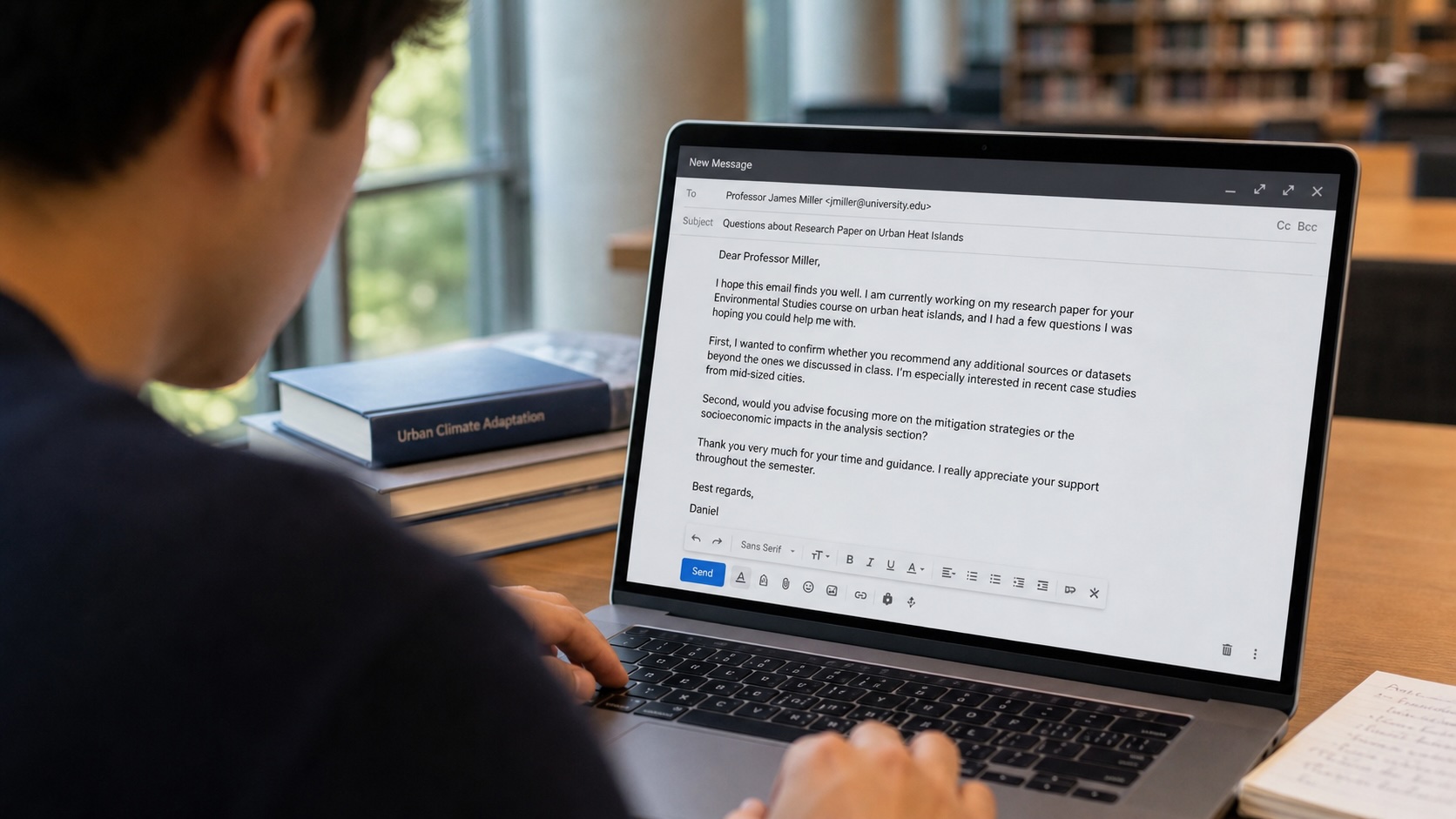
Send a short thank-you email within one or two days. Mention that you appreciated the discussion and attach any documents requested during the meeting. If the professor asked you to revise a research plan, do so carefully and respond with a clear filename and short explanation.
If the professor does not immediately promise acceptance, do not panic. In Japan, formal acceptance may depend on graduate school rules, entrance examinations, scholarship review, immigration documents, and internal procedures. A positive interview is important, but it is often only one step in the process.
Read next