Easy Conversation Topics with Japanese Students in the Lab
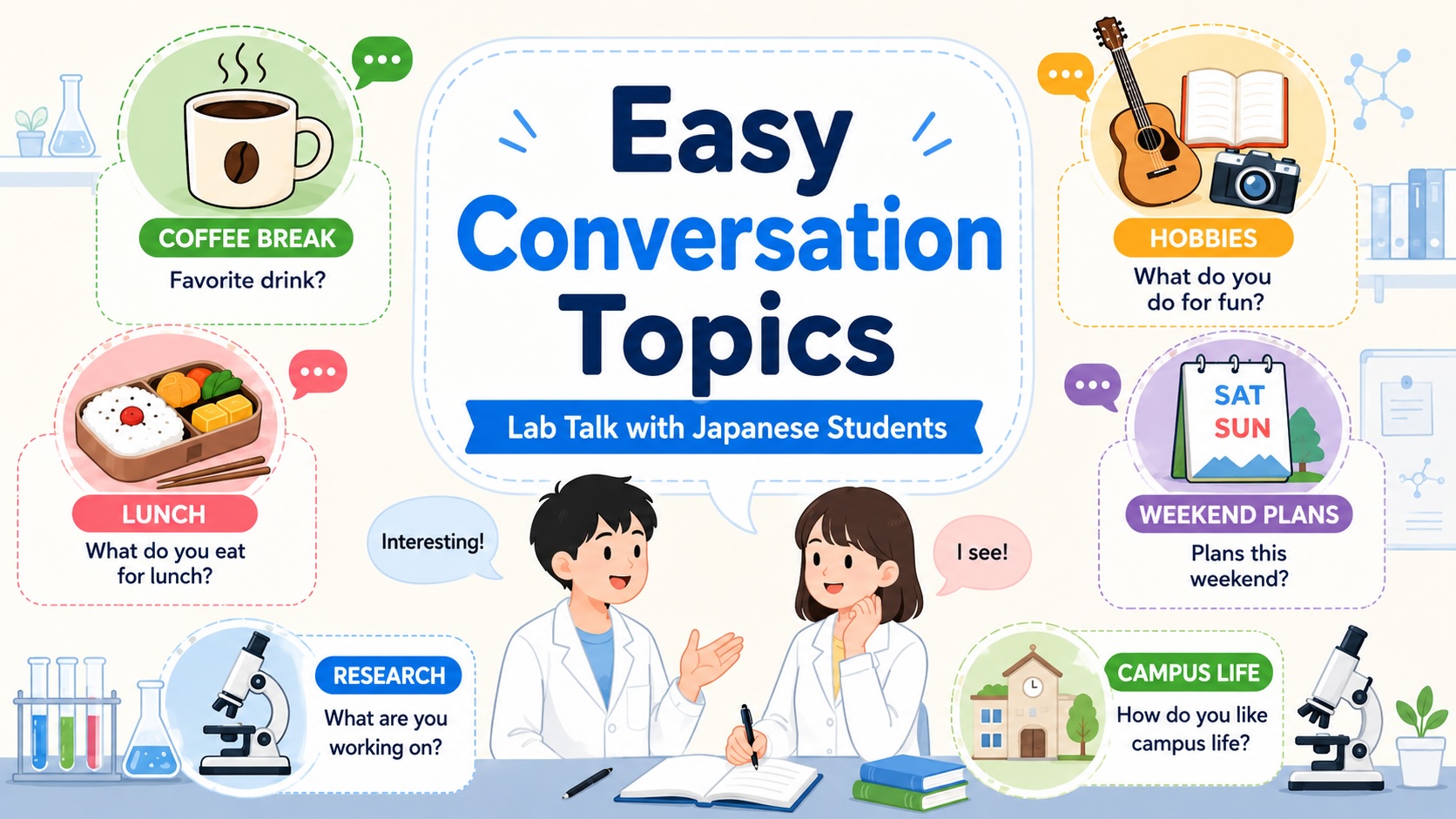
In a Japanese university lab, good conversation topics are usually concrete and familiar: food near campus, music people actually listen to, movies and anime many students know, sports teams they follow, games they have played, cooking at home, and places they want to visit. This article summarizes practical topics that international students can use naturally with Japanese students in the lab, including Japanese examples and overseas examples that are also widely understood in Japan.
Quick summary
- Food and local places: ramen, cafeteria lunch, convenience-store food, cafés, supermarkets, and local restaurants are easy first topics.
- Music: Japanese artists, anime songs, U.S. pop, and K-pop are all common enough to become natural lab conversations.
- Movies and streaming: Detective Conan movies, Japanese horror, Disney, Zootopia, Hollywood films, Netflix, and Korean dramas can all work.
- Manga, anime, and games: not every student is a fan, but many labs have at least one or two people who can talk deeply about them.
- Sports, cooking, and travel: J.League, Premier League, baseball, washoku, Italian or Chinese food, weekend trips, and hot springs are broadly usable topics.
Food, cafés, convenience stores, and local places
Food is usually the safest and most practical topic in a lab. It is not too private, and everyone has daily experience with it. In Japan, the conversation can easily move from the university cafeteria to convenience stores, ramen shops, curry restaurants, lunch sets, cafés, supermarket discounts, vending machines, and regional food. These topics are especially useful for international students because they also produce practical information for everyday life.
| Topic area | Japanese topics students may know | Overseas or broader topics that also work |
|---|---|---|
| Cafeteria and campus lunch | Daily set meals, noodles, curry, karaage, seasonal menus, cheap lunch options, crowded times. | Ask about similar student meals in your country, or compare what is cheap, filling, or easy to eat between experiments. |
| Convenience stores | Onigiri, bento, sandwiches, coffee, sweets, fried chicken, limited-time snacks, frozen meals. | Convenience-store food is easy to compare internationally because many countries have different versions of quick meals. |
| Ramen, curry, and local restaurants | Ramen styles, curry chains, student-friendly lunch shops, places open late after experiments. | You can connect this to noodles, curry, spicy food, street food, or student restaurants from your own country. |
| Cafés and sweets | Chain cafés, campus cafés, convenience-store desserts, seasonal sweets, bakeries, places with power outlets. | Coffee, tea, cakes, bubble tea, and study cafés are familiar enough to discuss across cultures. |
Music: Japanese artists, U.S. pop, K-pop, and anime songs
Music is a strong topic because both Japanese and overseas references are easy to use. For Japanese topics, you can mention artists such as YOASOBI, Kenshi Yonezu, Ado, Official HIGE DANdism, King Gnu, Mrs. GREEN APPLE, idol groups, anime songs, Vocaloid-related music, and karaoke songs. At the same time, U.S. pop and K-pop are widely recognized in Japan, so artists such as Taylor Swift, Ariana Grande, BTS, BLACKPINK, or NewJeans can also become ordinary lab conversation topics.
| Topic area | Japanese topics students may know | Overseas or broader topics that also work |
|---|---|---|
| Japanese artists and bands | YOASOBI, Kenshi Yonezu, Ado, Official HIGE DANdism, King Gnu, Mrs. GREEN APPLE, karaoke songs. | Ask whether similar artists are known overseas, or introduce artists from your country with a similar style. |
| Anime songs and Vocaloid-related music | Opening songs, ending songs, movie theme songs, Hatsune Miku-related music, songs found through anime. | Anime songs often connect naturally to karaoke, streaming playlists, and overseas anime fandom. |
| U.S. pop and global artists | Students may know globally famous artists through streaming services, social media, or concerts in Japan. | Taylor Swift, Ariana Grande, Billie Eilish, Bruno Mars, and other global artists can be common reference points. |
| K-pop | K-pop is widely visible in Japan through music shows, social media, concerts, and Japanese members in some groups. | BTS, BLACKPINK, TWICE, NewJeans, and similar groups can work even with students who are not intense fans. |
Movies: Conan, horror, Disney, Zootopia, Hollywood, and Netflix
Movies and streaming are easy because many reference points are shared. For Japanese topics, Detective Conan movies are a particularly accessible example because they are released regularly and are widely known. Japanese horror is also a recognizable genre, even among people who do not watch it often. At the same time, Disney films, Zootopia, Hollywood blockbusters, Netflix series, Korean dramas, and anime movies are ordinary references in Japan, so international students do not need to limit the conversation to Japanese films only.
| Topic area | Japanese topics students may know | Overseas or broader topics that also work |
|---|---|---|
| Japanese mystery and anime films | Detective Conan movies, films based on manga, anime movies, mystery dramas, school or workplace dramas. | Disney, Pixar, Zootopia, Spider-Man, and other globally known films are also easy comparison points. |
| Japanese horror and suspense | Japanese horror, urban legends, ghost stories, suspense dramas, scary movies watched during summer. | Horror and thriller films from the U.S., Korea, or other countries can be compared naturally. |
| Netflix and streaming | Japanese dramas, anime on streaming platforms, Korean dramas popular in Japan, documentaries. | Netflix, Disney+, YouTube, and other streaming habits are familiar enough for casual conversation. |
| Movie theaters | Subtitles vs. dubbing, ticket prices, late shows, IMAX, whether students go alone or with friends. | Useful for comparing cinema culture, release timing, and whether people prefer theaters or streaming. |
Manga, anime, and games: famous titles and shared childhood memories
Manga, anime, and games can become some of the deepest hobby topics in a lab. It is important not to assume that every Japanese student likes them, but in my personal impression, roughly one third of students in many labs have at least some interest in manga, games, or anime. In a typical lab, there is a good chance that at least one or two people enjoy these topics enough to talk about them in detail.
| Topic area | Japanese topics students may know | Overseas or broader topics that also work |
|---|---|---|
| Manga | Detective Conan, One Piece, Naruto, Slam Dunk, Jujutsu Kaisen, SPY×FAMILY, manga apps, completed vs. ongoing series. | Ask which titles are also famous in your country, or whether the Japanese version is difficult to read. |
| Anime | Demon Slayer, Attack on Titan, Frieren, Studio Ghibli films, seasonal anime, voice actors, anime theme songs. | Many anime are watched internationally, so you can compare subtitles, dubbing, and overseas popularity. |
| Games | Mario, Zelda, Pokémon, Animal Crossing, Splatoon, Monster Hunter, Final Fantasy, mobile games. | Nintendo, PlayStation, PC games, mobile games, and esports can connect Japanese and international experiences. |
| Childhood memories | Anime watched as a child, first game console, manga read in elementary or junior high school. | Works well after you know people better because it often leads to personal but comfortable stories. |
These topics are especially useful after you have spent some time in the same lab. During the first few weeks, they may feel a little sudden. After half a year, however, students often know each other’s personalities better, and hobby conversations can become surprisingly detailed.
Sports: baseball, J.League, Premier League, and international events
Sports can work very well because they connect Japan with the wider world. In Japan, baseball is one of the strongest shared topics, especially professional baseball, high school baseball, and Japanese players active overseas. Football can be discussed through the J.League, the Japan national team, university football, and international leagues. Among students who follow football, the Premier League is often recognized, and some fans watch matches even though the time difference makes live viewing late at night or early in the morning.
| Topic area | Japanese topics students may know | Overseas or broader topics that also work |
|---|---|---|
| Japanese baseball | Professional baseball, high school baseball, university baseball, Shohei Ohtani, Japanese players in MLB. | MLB, national teams, baseball culture in your country, and differences in stadium atmosphere are easy links. |
| J.League and Japanese football | Local J.League clubs, J1/J2/J3, the Japan national team, hometown teams, stadium food and atmosphere. | Premier League, Champions League, World Cup, and Japanese players in Europe are often recognized by football fans. |
| Premier League and European football | Famous clubs, Japanese players abroad, late-night viewing, highlights on social media. | Many students know the league even if they do not watch every match; serious fans may follow it closely. |
| Other sports | Basketball, tennis, volleyball, figure skating, martial arts, running, cycling, gym routines. | NBA, Olympics, World Cup events, school sports, and exercise habits can broaden the conversation. |
Cooking: Japanese food and international cuisines
Cooking is broadly recommended because it connects daily life, culture, budget, health, and time management. You can talk about Japanese home cooking, rice cookers, curry, miso soup, noodles, bento, supermarket ingredients, and convenience foods. At the same time, cooking in Japan is not limited to washoku. Chinese, Italian, French, Korean, Indian, and many other cuisines are widely familiar, so the conversation can expand beyond “Japanese food” very naturally.
| Topic area | Japanese topics students may know | Overseas or broader topics that also work |
|---|---|---|
| Japanese home cooking | Rice, miso soup, curry rice, nabe, grilled fish, stir-fried vegetables, gyudon, simple side dishes. | Ask what students actually cook on weekdays, not only traditional dishes from guidebooks. |
| Chinese and Korean food in Japan | Gyoza, fried rice, ramen, mapo tofu, Korean fried chicken, kimchi, hot pots, Korean-style cafés. | These cuisines are very familiar in Japan and easy to connect to restaurants near campus. |
| Italian and French food in Japan | Pasta, pizza, bakeries, cafés, omurice-style Western food, casual French or Western-style restaurants. | Students may have favorite pasta shops, bakeries, cafés, or family-restaurant versions of Western food. |
| Cooking from your country | Spices, staple foods, family dishes, simple recipes, ingredients that are hard to find in Japan. | Works well because many students are curious about everyday food overseas, not only famous dishes. |
Travel: weekend trips, hot springs, hometowns, and overseas travel
Travel is another generally recommended hobby topic because it is easy to discuss even with people who do not share the same media interests. In a lab, travel conversations can include hometowns, weekend trips, hot springs, local food, seasonal scenery, theme parks, museums, hiking, trains, conference trips, and places students recommend for international visitors. Overseas travel also works well because many students are interested in food, safety, transportation, and student life in other countries.
| Topic area | Japanese topics students may know | Overseas or broader topics that also work |
|---|---|---|
| Local travel | Day trips near the university, nearby cities, beaches, mountains, parks, local festivals. | Ask about similar weekend trips near universities in your country. |
| Major destinations in Japan | Tokyo, Kyoto, Osaka, Hokkaido, Okinawa, Hiroshima, Kanazawa, Nikko, Hakone. | Students often have practical opinions about crowded places, cheaper timing, and less obvious spots. |
| Seasonal travel | Cherry blossoms, autumn leaves, snow, summer festivals, fireworks, hot springs. | Compare seasons, holidays, and local events with your country. |
| Overseas travel | Countries students want to visit, food overseas, safety, public transport, airports, language worries. | Useful because international students can share concrete experiences without giving a formal lecture. |
Light research-life topics
Research-life topics are useful when they stay concrete and light. Instead of asking a heavy question about someone’s thesis, talk about presentation styles, conferences, useful apps, note-taking, poster design, English presentations, or how people choose papers. These topics are close to lab life but do not require the other person to explain confidential or stressful research details.
| Topic area | Specific examples | How to keep it concrete |
|---|---|---|
| Presentations | Japanese vs. English slides, poster design, fonts, figures, seminar style. | Students often have practical opinions, especially before seminars or conferences. |
| Conferences | Domestic meetings, international conferences, poster sessions, travel, nervousness. | Can naturally connect research, travel, and student experience. |
| Tools and routines | Reference managers, note apps, graph software, coding tools, schedule management. | Practical and easy to answer without becoming too private. |
| Paper reading | How students find papers, whether they read in English, how they summarize results. | Useful for graduate students and closely connected to lab life. |
Topics to approach carefully
Some topics may become possible after people know each other well, but they are usually not good starting points. Income, family problems, romantic relationships, religion, politics, detailed health issues, and strong criticism of Japan or another country can feel too direct. Comparisons between countries are interesting when they are small and specific, but they can become tiring if they sound like a judgment of which country is better.
Practical rule
The best lab topics are specific enough to answer easily: “Which ramen shop near campus do you like?” is better than “What do Japanese people usually eat?”
Recommended topic map
If you want a simple topic list, the most useful areas are below. The order is not strict, but it moves from low-risk daily topics to hobbies that can become deeper after you know each other better.
| Topic group | Recommended subtopics | Best timing |
|---|---|---|
| Daily life | Cafeteria, convenience stores, restaurants, cafés, supermarkets, local shops. | Any time, especially around lunch or after experiments. |
| Entertainment | Japanese artists, anime songs, U.S. pop, K-pop, Detective Conan, Japanese horror, Disney, Zootopia, Hollywood movies, Netflix. | Good on Fridays, after weekends, or when a new release is being discussed. |
| Pop culture | Detective Conan, One Piece, Demon Slayer, Studio Ghibli, Pokémon, Mario, Zelda, mobile games. | Best after checking whether the other person is interested. |
| Sports | Japanese baseball, J.League, Japan national team, Premier League, MLB, basketball, tennis, volleyball. | Good after major matches, tournaments, or university sports events. |
| Home and travel | Washoku, Chinese food, Italian food, cooking from your country, weekend trips, hometowns, hot springs, overseas travel. | Good after several casual conversations, or before vacations and conferences. |
In short, the best conversation topics in a Japanese lab are not necessarily “traditional Japanese culture.” They are everyday interests that Japanese and international students can both join: food, music, movies, manga, games, anime, sports, cooking, and travel.
Useful official sources
As of May 2026, the following sources can help international students check current examples for sports, travel, streaming, and language learning alongside daily lab conversation.
- J.LEAGUE Official International Website
- Netflix Top 10: Japan
- Travel Japan: Japan National Tourism Organization Official Guide
- JF Japanese e-Learning Minato
- Your university’s international student support office or Japanese-language course information page
Read next