MEXT Scholarship Basics for Prospective Graduate Students
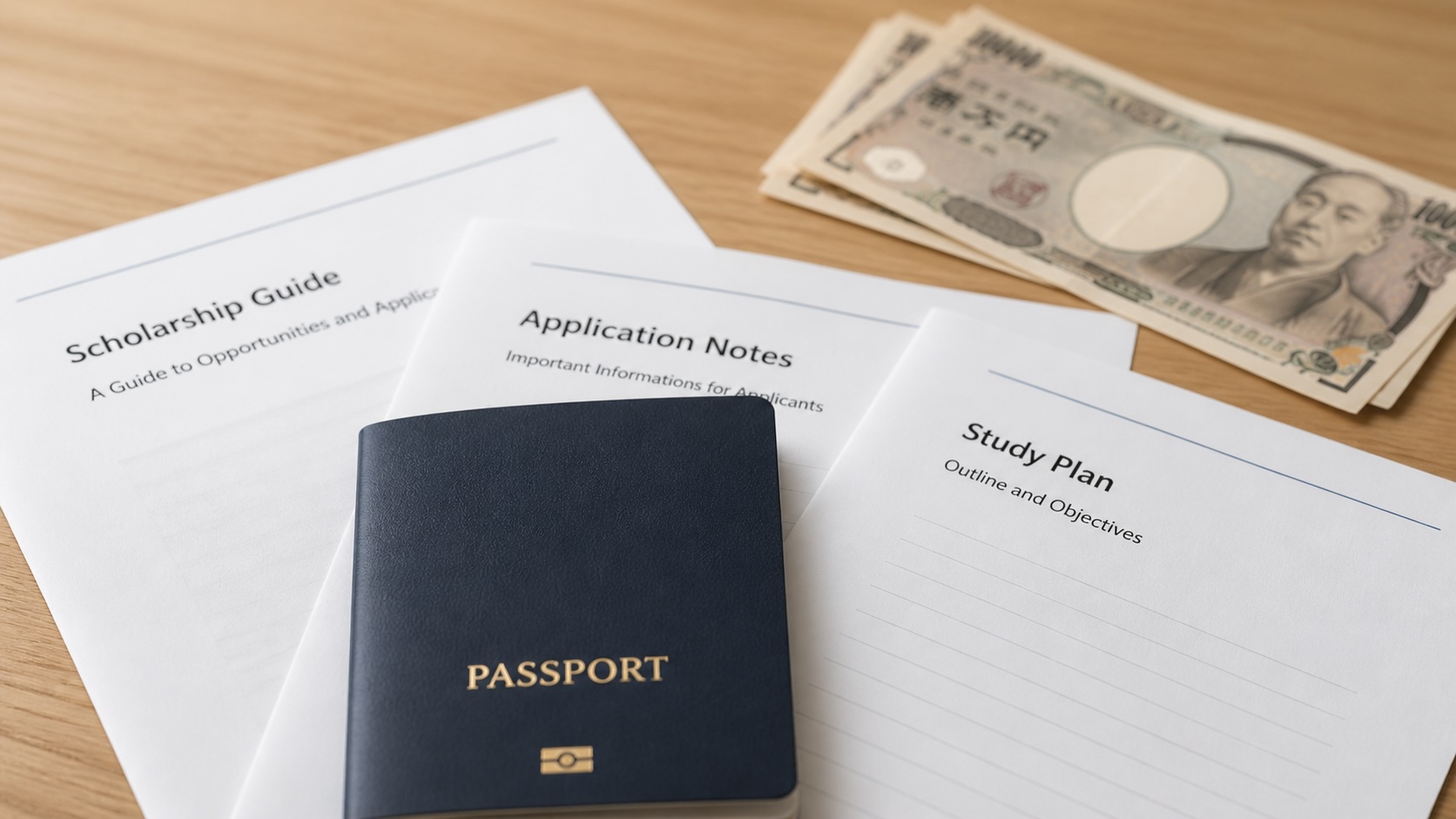
The MEXT Scholarship is one of the best-known Japanese government scholarship programs for international students. For prospective graduate students, it can be a route to study or conduct research in Japan, but the application process depends heavily on the recommendation route, target university, country, academic field, and year of application.
Quick summary
- MEXT is a Japanese government scholarship program for international students.
- Prospective graduate students usually need to understand the Research Student pathway.
- The two major routes are Embassy Recommendation and University Recommendation.
- Application schedules and documents vary by country, university, program, and year.
- You should always check the latest official guidelines before preparing documents.
What is the MEXT Scholarship?
MEXT stands for the Ministry of Education, Culture, Sports, Science and Technology of Japan. The Japanese Government MEXT Scholarship supports selected international students who study at Japanese higher education institutions.
The scholarship has several categories. For prospective graduate students, the most relevant category is usually the Research Student category. In many cases, this may include people who plan to enter a master's program, doctoral program, or non-degree research student period before entering a degree program.
Because the details differ by year and route, this article does not replace official application guidelines. Instead, it explains the basic structure and the practical points applicants should understand before they begin preparing.
The two main routes
Graduate-level MEXT applications are commonly discussed through two major routes: Embassy Recommendation and University Recommendation. The difference matters because the timeline, first contact point, document flow, and selection process are not the same.
| Route | Basic idea | What applicants should check |
|---|---|---|
| Embassy Recommendation | You apply through the Japanese Embassy or Consulate in your country. | Country-specific deadline, document list, examination/interview process, and how to obtain university acceptance after the first screening. |
| University Recommendation | A Japanese university recommends selected candidates to MEXT. | Whether your target university and graduate school offer this route, internal deadlines, supervisor matching, and required application materials. |
The practical difference is important. For the Embassy Recommendation route, your first official contact is usually the Japanese diplomatic mission in your country. For the University Recommendation route, you usually need to follow the instructions of the Japanese university or graduate school.
Understanding the Research Student pathway
The phrase "Research Student" can be confusing. It does not always mean the same thing as being directly enrolled in a master's or doctoral program from the first day.
In some cases, a student may first come to Japan as a non-degree research student, take entrance examinations, and later enter a master's or doctoral degree program. In other cases, the university or program may allow a more direct path into degree study. The exact route depends on the university, graduate school, professor, and application system.
Important note
Do not assume that receiving a MEXT scholarship automatically means direct admission to a master's or doctoral degree program. You may still need to satisfy the university's formal admission requirements, entrance examination procedures, language requirements, and supervisor approval process.
What to check before applying
Before preparing documents, you should identify the correct route and the correct official source of information. Many mistakes come from mixing information from different years, countries, universities, or scholarship categories.
Check these points first
- Your scholarship category: Research Student, Undergraduate, Japanese Studies, or another category.
- Your recommendation route: Embassy Recommendation or University Recommendation.
- Your application year and arrival period.
- Your nationality-based embassy or consulate instructions.
- Your target university and graduate school requirements.
- Whether you need to contact a professor before applying.
- Whether your intended program requires Japanese, English, or both.
Common documents and preparation
The exact documents differ depending on the route and year. However, prospective graduate students should usually expect to prepare academic and research-related materials well before the deadline.
| Document | Why it matters | Practical advice |
|---|---|---|
| Application form | Provides basic personal, academic, and program information. | Use the form for the correct year, country, and scholarship category. |
| Field of Study and Research Plan | Shows your academic direction and research feasibility. | Make it specific, realistic, and connected to your target field in Japan. |
| Academic transcripts | Show your academic record and eligibility. | Prepare official versions early, especially if translation or certification is required. |
| Recommendation letter | Supports your academic potential and reliability. | Ask early and provide your recommender with your CV and research plan. |
| Health certificate | May be required in the official application package. | Follow the exact format and medical instructions provided in the guidelines. |
| Language documents | May support your ability to study or research in Japan. | Check whether English or Japanese scores are required, recommended, or optional. |
How to think about the research plan
For graduate-level applicants, the research plan is often one of the most important documents. It should not be only a general statement of interest. It should show that you understand your field, have a feasible direction, and can explain why Japan or a particular laboratory is appropriate for your goals.
A strong research plan is usually specific enough to show academic seriousness, but flexible enough to be refined after discussion with a supervisor. It should also be realistic for the degree level, available facilities, language environment, and expected research period.
A basic structure for the research plan
- Background: What problem or topic are you interested in?
- Research question: What do you want to clarify, test, compare, or develop?
- Methods: What approaches, experiments, analysis, or materials may be used?
- Fit with Japan: Why is Japan, the university, or the laboratory relevant?
- Expected outcome: What academic or practical contribution might result?
- Feasibility: Why is this plan realistic for your background and time frame?
Should you contact professors?
Whether and when to contact professors depends on the route and university. In many graduate-level cases, supervisor fit is important. However, some programs have specific instructions about when applicants should contact faculty members or administrative offices.
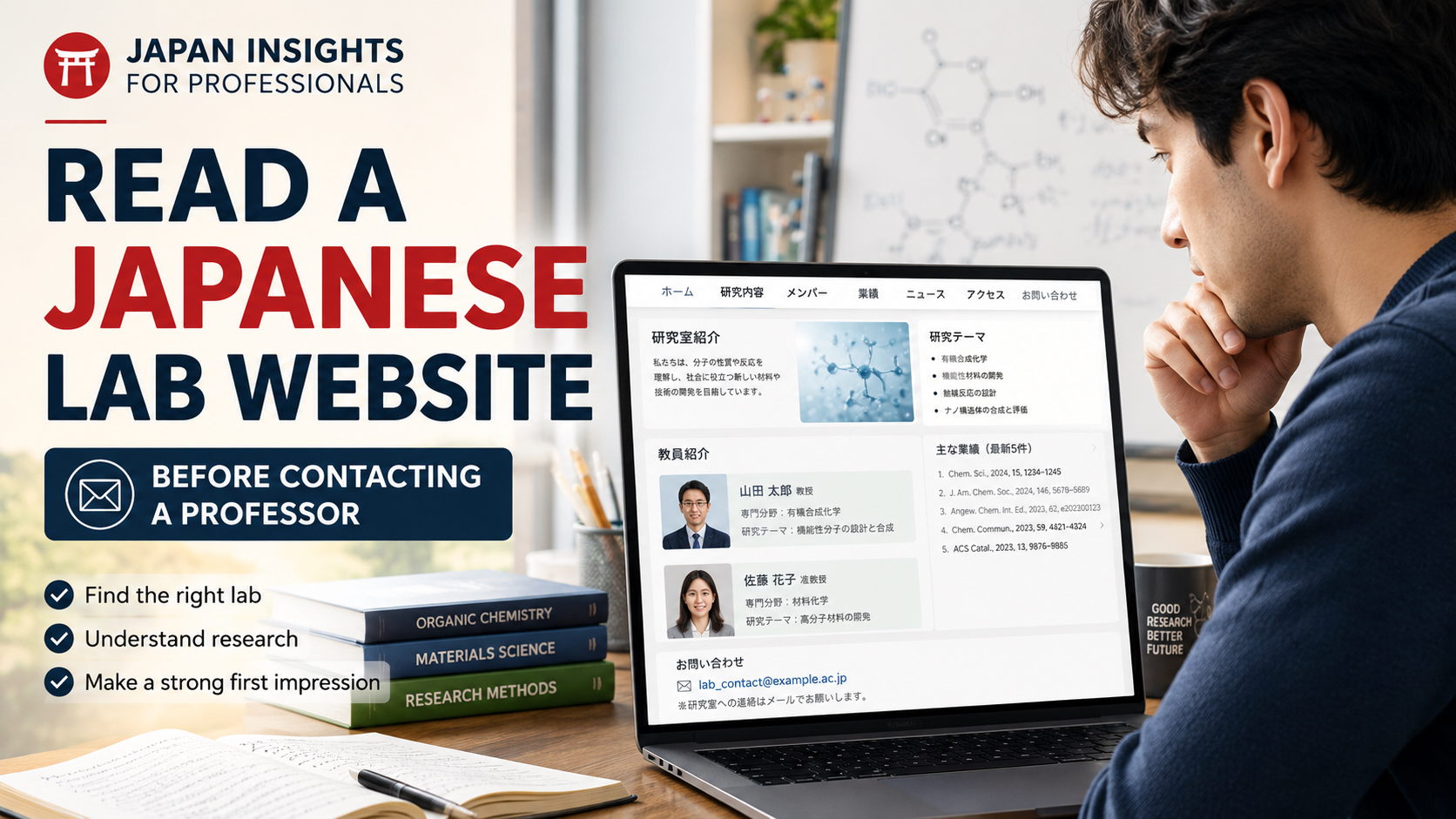
If you contact a professor, the email should be short, specific, and clearly connected to the professor's research. Do not send a generic message to many laboratories. A professor is more likely to respond if your background, research interest, timing, and funding route are easy to understand.
For detailed advice on the first email, see: How to Contact a Japanese Professor Before Applying.
A practical timeline
The exact schedule differs depending on the route, country, university, and year. Still, prospective graduate students should usually start preparation much earlier than the official deadline.
| Timing | Recommended preparation |
|---|---|
| 6-12 months before application | Research universities, laboratories, programs, eligibility, and language requirements. |
| 3-6 months before application | Draft your research plan, prepare CV, contact recommenders, and review official guidelines. |
| 1-3 months before deadline | Finalize documents, request official transcripts, confirm forms, and check submission method. |
| After first screening or university selection | Follow the official instructions for university placement, supervisor contact, or further screening. |
Common mistakes
- Using outdated guidelines: Always use the application documents for the correct year.
- Mixing routes: Embassy Recommendation and University Recommendation are different processes.
- Writing a vague research plan: A general interest in Japan is not enough for graduate study.
- Contacting professors too casually: Your email should show research fit and academic seriousness.
- Ignoring university admission: Scholarship selection and degree admission are not always the same step.
- Starting too late: Recommendation letters, transcripts, translations, and health documents can take time.
Final checklist before you begin
- Have you identified the correct MEXT category for graduate-level study?
- Do you know whether you are applying through an embassy or a university?
- Have you found the latest official guidelines for your application year?
- Have you checked whether your target graduate school requires separate admission procedures?
- Have you prepared a research plan that fits your academic background?
- Have you checked whether professor contact is expected, allowed, or restricted?
- Have you confirmed all deadlines using official sources?
Important note
MEXT Scholarship rules, deadlines, required documents, monthly allowances, travel support, arrival periods, and application procedures can change. They can also differ depending on your country, university, route, and scholarship category. Always confirm the latest official information from the Japanese Embassy or Consulate, Study in Japan, MEXT, and your target university.
Useful official sources
Start from official sources and then check the instructions of your target university and graduate school.
- Study in Japan: Japanese Government (MEXT) Scholarship
- Study in Japan: MEXT Scholarship for Research Students, Embassy Recommendation
- MEXT official website
- Your country’s Japanese Embassy or Consulate website
- Your target university’s international admissions or scholarship page
Read next