Campus Life Around the University of Tsukuba: Student Life in Japan’s Science City
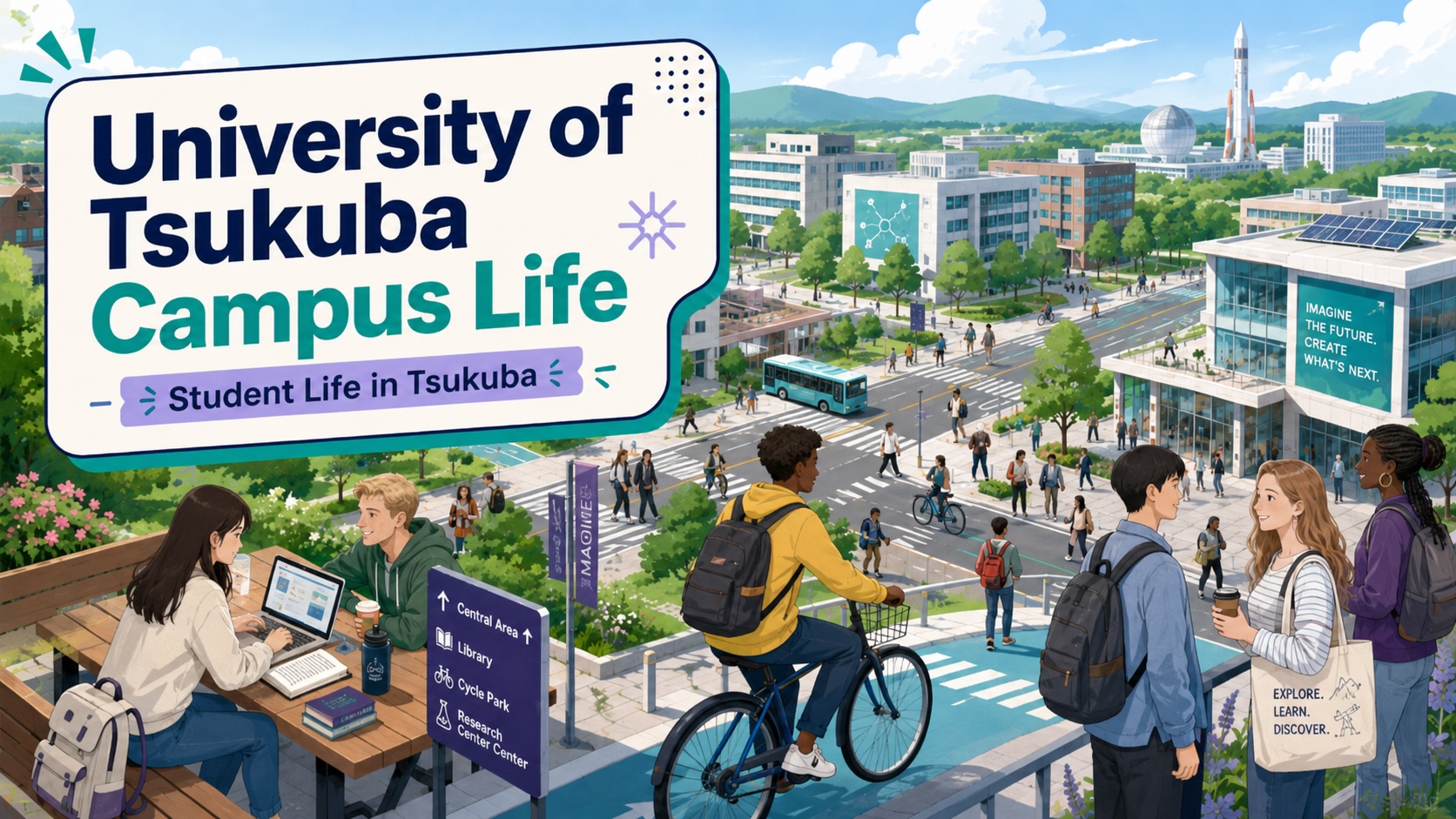
The University of Tsukuba is not a typical city-center university. It is strongly connected to Tsukuba Science City, a planned academic and research environment where campus size, dormitories, bicycles, buses, and research institutes all shape student life.
Quick summary
- The Tsukuba Campus is large and campus-centered, not a compact urban campus.
- The university reports 257 student groups and 3,517 dormitory rooms for AY 2025 on its campus-life page.
- University residence halls are among the largest in Japan’s national-university sector, according to the university.
- Bicycles and local buses often matter more than trains for daily campus movement.
- International support includes counseling, housing, dining, clubs, and other student services.
This is an independent campus-life guide
This article is written for international students, graduate applicants, researchers, and professionals who want to understand daily life around the University of Tsukuba. It is not an official university page, and it does not rank universities or campuses. The goal is to explain what student life may feel like around the campus area and what practical points to check before moving to Japan.
Campus locations, dormitory availability, student support systems, transportation routes, and local prices can change. As of May 2026, applicants should always confirm the latest information on official university pages and through the relevant graduate school, international office, or laboratory.
Tsukuba Science City: campus life beyond a normal university town
Tsukuba is often called Japan’s Science City, and the University of Tsukuba is deeply connected to that identity. The area includes universities, national research institutes, laboratories, parks, residential districts, and planned roads.
For students, this creates a distinctive lifestyle. Daily life is less about a dense downtown and more about campus, laboratories, dormitories, supermarkets, bicycles, buses, and research-community networks.
Students who want a focused academic environment may enjoy Tsukuba. Students who expect constant urban entertainment may need to adjust their expectations.
A large campus that changes daily movement
The Tsukuba Campus is large. The official campus map lists multiple areas, residence halls, research facilities, and student services across a wide site. This means that even within the same university, moving from one building to another can take time.
Many students use bicycles. This can be convenient, but weather, parking rules, distance, and night travel still matter. Some students also rely on campus buses or city buses depending on their housing location.
Before arriving, students should study the map and ask where their classes or laboratory will actually be located. A room that looks “near the university” may still be far from your daily destination.
Dormitories and housing
The University of Tsukuba emphasizes housing and dining as part of campus life, and its English campus-life page reports thousands of dormitory rooms. The university’s housing page also describes residence halls spread across several areas and mentions Global Village as part of recent internationalization efforts.
Dormitory life can be helpful for first arrival because students can start with a known environment and learn local systems gradually. Private apartments are also common, especially for students who want more independence or stay longer.
The key housing question is location. In Tsukuba, distance to your laboratory, supermarket, bus stop, bicycle route, and student services may matter more than distance to a train station.
Daily life: practical, academic, and local
Tsukuba has supermarkets, restaurants, cafes, hospitals, city services, and large shopping areas, but they are spread out. Many students develop routine paths: dormitory to lab, lab to cafeteria, campus to supermarket, apartment to bus stop.
For international students, this can be comfortable after the initial adjustment. The environment is relatively calm, and the research-community atmosphere can make it easier to focus on study.
The challenge is social life. Because the city is spread out, students may need to actively join clubs, international events, laboratory gatherings, or community activities rather than relying on spontaneous city-center encounters.
International support and campus community
The University of Tsukuba provides international student support including counseling in English and Japanese, housing and dining information, extracurricular activities, and other campus-life resources.
This is important because many international students arrive with practical questions about city hall, banking, mobile phones, Japanese language, medical systems, and part-time work. Using official support early can reduce anxiety.
The university also has many student groups, which can help students meet people outside the laboratory.
Food, cafés, and nearby places to visit
Because the University of Tsukuba campus is very large, food and café routines are part of mobility planning. The university has cafeterias, coffee shops, bookstores, and commodity shops in different campus areas, so students should learn which facilities are closest to their dormitory, department, and laboratory.
Off campus, students often use Tsukuba Center, Kenkyu-gakuen, and nearby shopping areas for restaurants, cafés, supermarkets, and weekend errands. For places to visit, the Tsukuba Expo Center, Tsukuba Botanical Garden, and Mount Tsukuba are natural choices because they match the city’s science-and-nature identity.
Tsukuba student life is not centered on a single downtown street. It is more practical to think in terms of bicycles, buses, campus areas, and a few reliable food or café spots you can return to regularly.
Who will enjoy Tsukuba life?
The University of Tsukuba is a strong fit for students who want a large campus, research-centered life, and a calmer environment than Tokyo. It is especially suitable for students who enjoy cycling, campus communities, and focused academic routines.
The main preparation point is spatial awareness. Tsukuba life is comfortable when you understand distance, transportation, and campus layout before choosing housing.
Useful sources
- Campus Life, University of Tsukuba
- Tsukuba Campus Map, University of Tsukuba
- Housing, University of Tsukuba
- Support for International Students, University of Tsukuba
- Dining and Shops, University of Tsukuba
- Tsukuba Botanical Garden
- Tsukuba Expo Center
Read next