Campus Life Around Nagoya University: Student Life in Central Japan’s Major Academic City
Nagoya University is often discussed for research strength, but daily life also matters. For international students, Nagoya offers a useful middle ground: a large city with strong transportation and job connections, but usually less overwhelming than Tokyo.
Quick summary
- Higashiyama Campus is the main reference point for many students.
- Nagoya University also has Tsurumai and Daiko campuses, so campus location should be checked carefully.
- University housing options include international residences such as Ohmeikan, Daiko, and Yamate.
- Nagoya’s subway system makes commuting easier than in many smaller cities.
- The city is practical for students who want urban life without Tokyo-level density.
This is an independent campus-life guide
This article is written for international students, graduate applicants, researchers, and professionals who want to understand daily life around Nagoya University. It is not an official university page, and it does not rank universities or campuses. The goal is to explain what student life may feel like around the campus area and what practical points to check before moving to Japan.
Campus locations, dormitory availability, student support systems, transportation routes, and local prices can change. As of May 2026, applicants should always confirm the latest information on official university pages and through the relevant graduate school, international office, or laboratory.
Nagoya as a student city
Nagoya is one of Japan’s major metropolitan areas, located between Tokyo and Osaka. For students, it offers shopping, restaurants, transport, companies, museums, and urban services without the same feeling of constant crowding that some experience in Tokyo.
This makes it practical for international students. Daily life can be organized around campus, subway lines, supermarkets, and affordable restaurants. Weekend trips to Kyoto, Osaka, Tokyo, or regional destinations are also possible because Nagoya is a major transport hub.
The city can feel less immediately glamorous than Tokyo or Kyoto, but it is often comfortable for long-term study.
Higashiyama, Tsurumai, and Daiko
Nagoya University’s student life is centered especially on Higashiyama Campus, but the university also uses Tsurumai and Daiko campuses. The campus matters because medicine-related fields, health-related areas, and other programs may not share the same daily location.
Higashiyama has a strong comprehensive-campus identity and is connected to the subway system. Tsurumai is closer to medical and hospital-related environments. Daiko is associated with specific university facilities and student housing.
If you are applying to graduate school, confirm your laboratory address before choosing housing. “Nagoya University” alone is not precise enough for daily life planning.
Housing and international residences
Nagoya University operates multiple international residences, including International Ohmeikan, International Residence Daiko, and International Residence Yamate. Some are near Higashiyama, while Daiko has a different commuting pattern.
University housing can be helpful for students arriving from abroad because it reduces the immediate burden of private rental contracts, guarantors, furniture, and neighborhood choice. Availability and eligibility should always be confirmed through official pages.
For private apartments, students often consider access to Higashiyama Campus, subway convenience, rent, supermarket distance, and whether the neighborhood feels comfortable at night.
Daily routines: subway, food, and study rhythm
A practical strength of Nagoya is subway-based life. Students can often organize housing and daily movement around a manageable train network rather than relying entirely on buses or bicycles.
Food options around campuses and stations include cafeterias, set-meal restaurants, ramen shops, cafes, supermarkets, convenience stores, and student-friendly chains. Nagoya also has a strong local food culture, but most students’ daily meals are simpler and budget-conscious.
For graduate students, the key is sustainability. Choose a living pattern that lets you handle late seminars, experiments, and administrative errands without exhausting commuting.
Student support and adjustment
Nagoya University provides international student support, including advisors and guidance for academic and personal adjustment. This is important because students often arrive with questions about residence procedures, housing, medical systems, banking, and Japanese-language life.
Support systems are most useful when used early. Students should not wait until a small problem becomes serious. The first month is the best time to ask about city hall, health insurance, commuting, campus systems, and emergency contacts.
Once basic life is stable, Nagoya can become an efficient base for both study and future career exploration in central Japan.
Food, cafés, and nearby places to visit
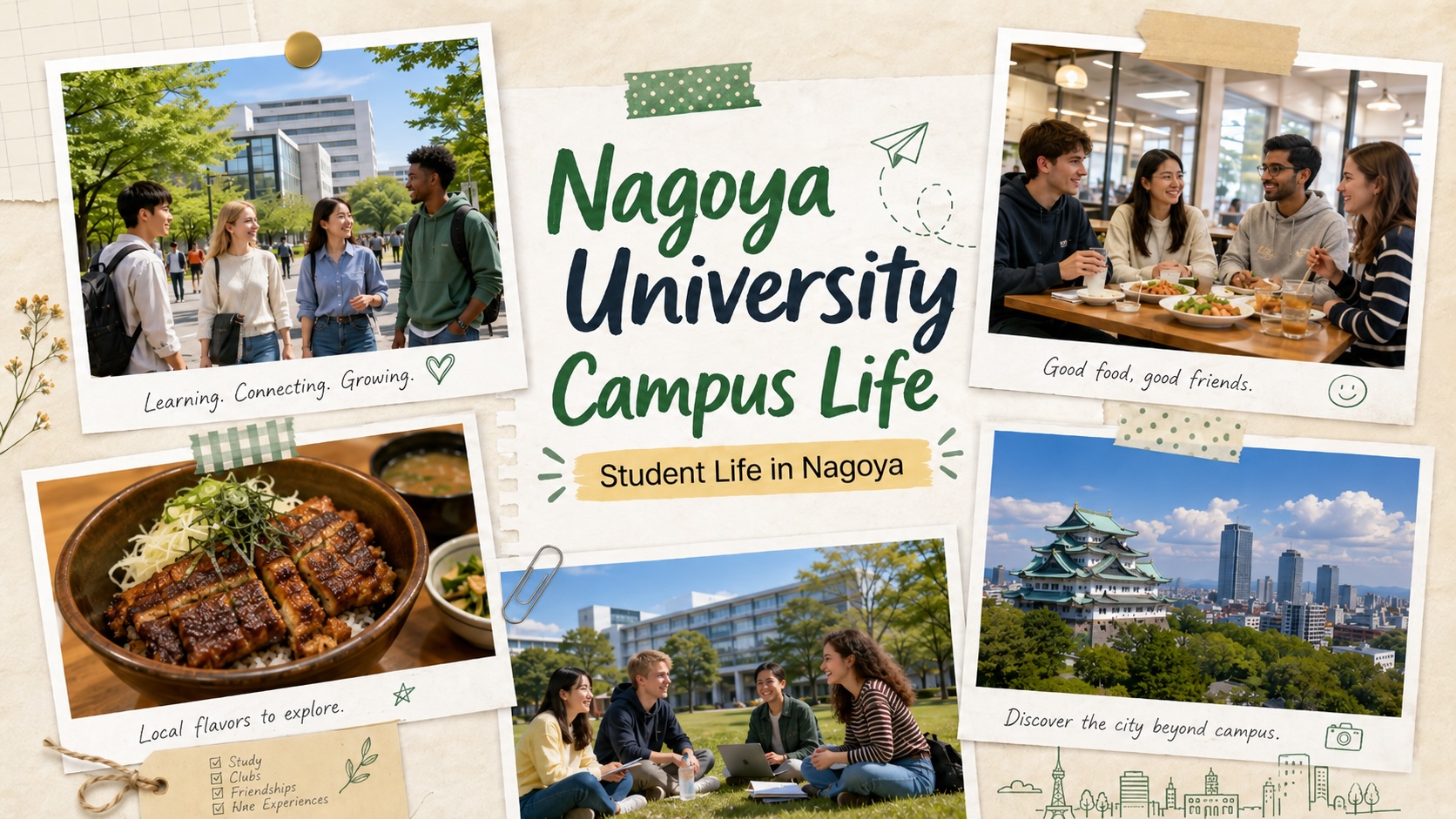
Nagoya University students usually find daily food through campus cafeterias, cafés, Co-op shops, convenience stores, and restaurants around Higashiyama, Motoyama, and Yagoto. The Higashiyama area is especially practical because it combines campus access, subway access, and ordinary student services.
Off campus, Nagoya is a strong food city. Students can gradually explore local dishes such as miso-katsu, kishimen, hitsumabushi, tebasaki, and café morning sets. For short outings, Higashiyama Zoo and Botanical Gardens, Osu, Sakae, and Nagoya Castle are realistic places to visit without turning the weekend into a long trip.
The best way to enjoy Nagoya student life is to keep weekdays simple and use the subway network for weekend exploration. Compared with Tokyo, moving around the city often feels more compact and less exhausting.
Who will enjoy Nagoya University life?
Nagoya University is a strong fit for students who want a major-city environment without the intensity of Tokyo. It is practical, well-connected, and comfortable for long-term study.
The main advice is to confirm your campus and housing options early. Higashiyama, Tsurumai, and Daiko can create different daily routines even within the same university.
Useful sources
- Campus life, Nagoya University
- Higashiyama Campus, Nagoya University
- Student Support & Campus Life, Nagoya University G30
- Housing, Nagoya University
- Where to eat, Nagoya University KMI
- Nagoya Castle Official Website
Read next