Campus Life Around Kyoto University: Student Life in Japan’s Historic Academic City
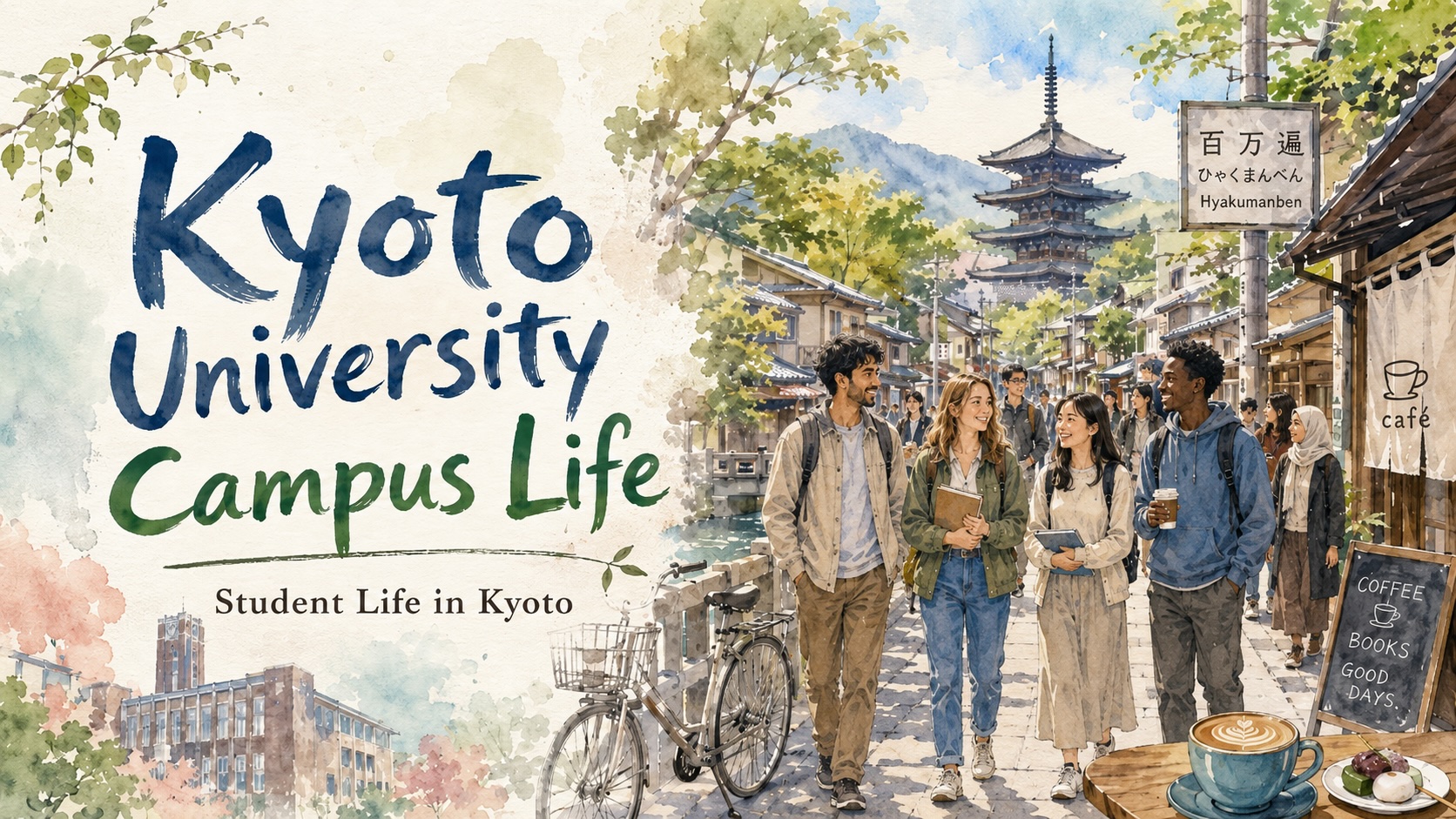
Kyoto University is often associated with temples, tradition, and academic prestige. For students, the daily reality is more practical: bicycles, buses, campus cafeterias, local apartments, late seminars, and the difference between Yoshida, Uji, and Katsura campuses.
Quick summary
- Kyoto University has three main campuses: Yoshida, Uji, and Katsura.
- Yoshida is closest to the classic Kyoto student-life image, with academic neighborhoods and cultural sites nearby.
- Katsura and Uji can feel more research-oriented and commuting-dependent.
- Bicycle life is common, but students should understand bus routes and rainy-season travel.
- Kyoto is attractive, but tourism can affect crowds, housing, and daily movement.
This is an independent campus-life guide
This article is written for international students, graduate applicants, researchers, and professionals who want to understand daily life around Kyoto University. It is not an official university page, and it does not rank universities or campuses. The goal is to explain what student life may feel like around the campus area and what practical points to check before moving to Japan.
Campus locations, dormitory availability, student support systems, transportation routes, and local prices can change. As of May 2026, applicants should always confirm the latest information on official university pages and through the relevant graduate school, international office, or laboratory.
Three campuses, three lifestyles
Kyoto University comprises three main campuses: Yoshida, Uji, and Katsura. This matters because student life around Kyoto University is not identical across all departments and laboratories.
Yoshida Campus is the center of the traditional Kyoto University image. It is surrounded by academic streets, bookstores, small restaurants, older neighborhoods, and cultural landmarks. Uji is more research-institute oriented and located outside central Kyoto. Katsura, especially relevant to engineering and related fields, has a planned campus atmosphere on the western side of the city.
Before imagining your life in Kyoto, confirm where your laboratory is located. A student living near Yoshida may have a very different routine from a student who must travel regularly to Katsura or Uji.
Yoshida: the classic Kyoto academic neighborhood
Yoshida is one of the easiest places in Japan to imagine as a university neighborhood. Students can walk or cycle between libraries, seminar rooms, cafes, affordable restaurants, and residential streets. The area is academic but not isolated from the city.
The advantage is cultural richness. Museums, temples, riverside paths, older shopping streets, and student-friendly eateries are within reach. The disadvantage is that central Kyoto can be crowded, especially during tourist seasons, and housing close to the most convenient areas may require early searching.
Yoshida suits students who want a strong sense of place. It feels like Kyoto not as a postcard, but as a working student city.
Katsura and Uji: research campuses with commuting logic
Katsura and Uji have different rhythms from Yoshida. Katsura is important for engineering-oriented research and may require bus use or careful planning from central Kyoto. Uji is associated with research institutes and a quieter atmosphere outside the city center.
For graduate students, these locations can be excellent because the research environment may be more focused. However, they require a realistic understanding of commuting. A short trip on a map may involve transfer time, bus waiting, hills, or limited late-night transportation.
If your laboratory is in Katsura or Uji, ask current students where they live. The best answer is often not the most famous Kyoto neighborhood but the most convenient one for your actual schedule.
Daily life: bicycles, buses, and small routines
Kyoto student life often revolves around small routines. Many students use bicycles, but cycling is not a universal solution. Rain, summer heat, winter cold, hills, and parking rules all matter.
The city has many affordable eating options around universities, including cafeterias, noodle shops, set-meal restaurants, bakeries, and supermarkets. For international students, Kyoto is also relatively easy to navigate because of its large student population and international tourism infrastructure.
Still, daily Kyoto is not only sightseeing. Garbage rules, housing contracts, crowded buses, seasonal humidity, and part-time work regulations are part of real student life.
Housing around Kyoto University
For Yoshida-based students, living within cycling distance can be very attractive. Areas around Sakyo Ward and nearby neighborhoods offer student apartments, shared houses, and older rental options, but conditions vary widely.
Katsura- or Uji-based students should think more carefully about transportation. Living near a station, bus route, or laboratory may matter more than living near tourist Kyoto.
International students should confirm whether university housing, private apartments, guarantor support, or dormitory options are available through their program or international office before arrival.
Food, cafés, and nearby places to visit
Kyoto University life is strongly shaped by small daily food routines. On campus, Co-op cafeterias and shops support normal student meals, while the Yoshida and Hyakumanben areas have many casual restaurants, bakeries, coffee shops, and inexpensive lunch places used by students.
The advantage of Yoshida is that academic life and Kyoto sightseeing are unusually close. The Kamo River, Demachiyanagi, Ginkaku-ji, the Philosopher’s Path, and the Okazaki museum area can become part of an ordinary weekend rather than a special trip. Students based at Katsura or Uji will usually rely more on local campus facilities and plan central Kyoto visits around bus or train access.
For daily life, think of Kyoto as a city of walking, cycling, buses, small cafés, and seasonal routines. Rather than trying to see famous temples every weekend, students often enjoy one nearby food area or walking route at a time.
Who will enjoy Kyoto University life?
Kyoto University is a strong choice for students who want deep academic life in a culturally rich city. It is especially attractive to students who enjoy walking or cycling, reading in cafes, and living close to history while working seriously in a laboratory.
The main caution is campus specificity. Kyoto can be wonderful, but your experience depends on whether your daily life is Yoshida, Uji, Katsura, or a combination of them.
Useful sources
- Campuses, Kyoto University
- Directions, Kyoto University
- Study at KyotoU
- Katsura Campus, Kyoto University Graduate School of Engineering
- Kyoto University Co-op
- Philosopher’s Path, Kyoto City Official Travel Guide
Read next