Campus Life Around the University of Tokyo: What Student Life in Japan’s Capital Is Really Like
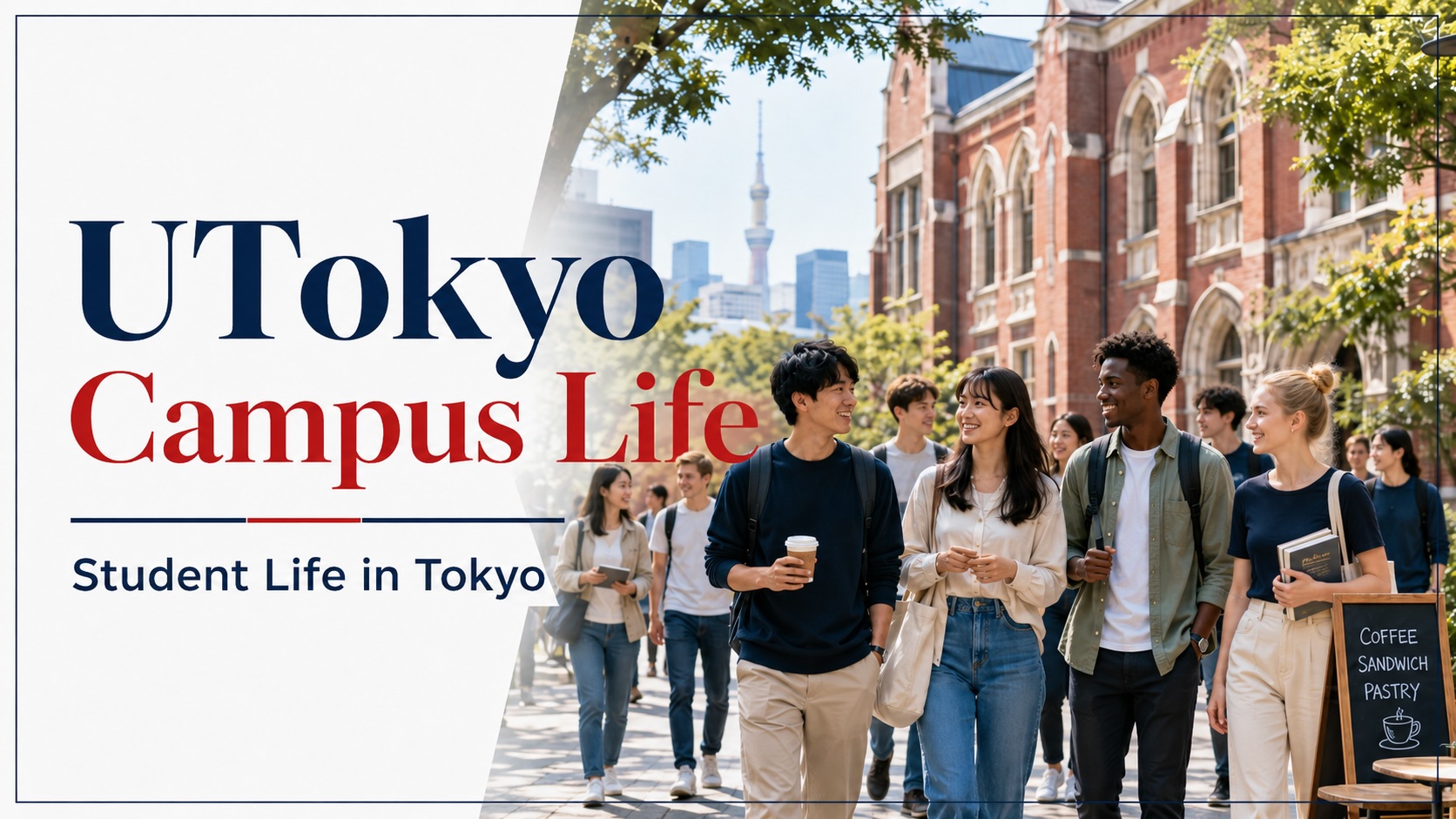
For many international students, “studying in Tokyo” sounds like one simple lifestyle. At the University of Tokyo, however, daily life depends strongly on campus. Hongo feels urban and historical, Komaba is closer to the student energy of western Tokyo, and Kashiwa has a quieter research-campus atmosphere outside the city center.
Quick summary
- UTokyo life is not one single Tokyo experience: Hongo, Komaba, and Kashiwa have different rhythms.
- Hongo is best understood as a dense academic district in central Tokyo rather than a closed campus town.
- Komaba offers easier access to Shibuya-area student life while remaining residential.
- Kashiwa is quieter, research-oriented, and more suburban, with a different housing and commuting logic.
- Before choosing housing, students should confirm which campus they will actually use most often.
This is an independent campus-life guide
This article is written for international students, graduate applicants, researchers, and professionals who want to understand daily life around the University of Tokyo. It is not an official university page, and it does not rank universities or campuses. The goal is to explain what student life may feel like around the campus area and what practical points to check before moving to Japan.
Campus locations, dormitory availability, student support systems, transportation routes, and local prices can change. As of May 2026, applicants should always confirm the latest information on official university pages and through the relevant graduate school, international office, or laboratory.
Start with the campus, not only the university name
The first practical question is simple: which campus will shape your normal week? UTokyo uses several major campuses, and students can easily misunderstand the distance between them. Hongo, Komaba, Kashiwa, and other sites are all part of the same university, but they create very different living patterns.
Hongo is the classic image of UTokyo: libraries, old gates, research buildings, nearby bookstores, hospitals, and dense neighborhoods in Bunkyo. Komaba is associated with early undergraduate education and also graduate programs, with a more open student atmosphere and access to the west side of Tokyo. Kashiwa is a newer research campus in Chiba, farther from central Tokyo and closer to a planned science-and-residential environment.
For graduate students, laboratory location is especially important. A professor’s affiliation may sound like UTokyo in general, but your daily routine may involve a specific building, train line, housing area, and support office.
Hongo: academic Tokyo with a serious daily rhythm
Hongo is convenient, prestigious, and busy. It is close to Ueno, Ochanomizu, Akihabara, and other central Tokyo areas, but the immediate surroundings are more academic than entertainment-focused. Students can find small restaurants, cafeterias, bookstores, clinics, and urban services, but rents nearby can be high.
The advantage of Hongo is density. If your laboratory, library, seminar room, and administrative office are all on or near Hongo, your academic life can be efficient. The disadvantage is that central Tokyo housing often requires compromise: smaller rooms, longer commute, higher rent, or older apartments.
This campus suits students who want access to the city but still prefer an academic environment rather than a nightlife-centered student district.
Komaba: residential Tokyo with student access to Shibuya
Komaba gives a different impression. It is close to Shibuya by train, but the campus neighborhood itself is relatively calm and residential. For international students, this can be a good balance: urban access without living directly inside the busiest part of Tokyo.
Students based in Komaba may find it easier to enjoy cafes, language exchange, small music or art events, and international communities in western Tokyo. At the same time, day-to-day life can still be ordinary: supermarkets, laundromats, convenience stores, small apartments, and train commuting.
If your studies require movement between Komaba and Hongo, check the commute carefully. Tokyo maps can make distances look short, but a daily transfer during rush hour feels very different from an occasional visit.
Kashiwa: quieter research life outside central Tokyo
Kashiwa is important for many science and engineering students because it has a strong research-campus identity. It is not the same lifestyle as living near Hongo or Komaba. The surrounding area is more spacious, more suburban, and often more comfortable for students who prefer a quieter environment.
For students who spend long hours in a laboratory, Kashiwa can be practical. Housing may be easier than central Tokyo, and the atmosphere can be less distracting. However, students who imagine frequent central Tokyo nightlife or events should remember that travel time matters.
Kashiwa is a good example of a broader rule in Japan: a university’s name may be famous nationally, but your actual student life is local.
Housing and commuting: decide after confirming your base campus
UTokyo provides accommodation information and support for international students and researchers, but university housing is limited and competition can exist. Many students use private apartments, share houses, or housing support services.
The best housing strategy is different for each campus. A Hongo-based student may choose a smaller apartment with a shorter subway commute. A Komaba-based student may look along the Inokashira Line or nearby residential areas. A Kashiwa-based student may consider staying near campus or near a station with reasonable access.
Do not choose housing only because it is “in Tokyo.” Ask where you will attend seminars, whether you must visit another campus, and whether late-night lab work makes a long commute unrealistic.
Food, cafés, and nearby places to visit
Food options also depend on the campus. Hongo has several university Co-op dining halls and cafés, and some dining halls provide options for students with specific dietary needs. Komaba has a more student-centered atmosphere, while Kashiwa is better understood as a quieter research base where students often plan meals around campus facilities and nearby stations.
Around Hongo, students can easily combine daily campus life with short walks to Nezu, Ueno, and Yanaka. These areas offer museums, parks, old-Tokyo streets, small cafés, and casual restaurants, making them useful places for both weekday breaks and weekend sightseeing. Around Komaba, Shibuya and Shimokitazawa are close enough for food, cafés, music, and student social life.
A practical routine is to use cafeterias for ordinary weekdays, then explore one local area at a time: Ueno for museums and parks, Yanaka and Nezu for quieter streets, and Shibuya-area neighborhoods when you want a more urban student-life atmosphere.
What UTokyo student life is really like
UTokyo life can be intense, intellectually stimulating, and very urban, but it is not a single lifestyle. Hongo, Komaba, and Kashiwa each create a different version of studying in Japan.
For international students, the best preparation is practical: check the campus, train routes, housing options, support office, laboratory schedule, and neighborhood atmosphere before arriving. Once these are clear, Tokyo becomes much easier to navigate.
Useful sources
- Explore Our Campuses, The University of Tokyo
- UTokyo Housing Office
- Support Offices for International Students, UTokyo
- Website for International Students, UTokyo
- School Cafeterias and Special Meals, UTokyo
- Yanaka and Nezu, GO TOKYO
- Ueno, Travel Japan
Read next