Ramen Around Japanese Universities: A Taste of Campus Life in Japan
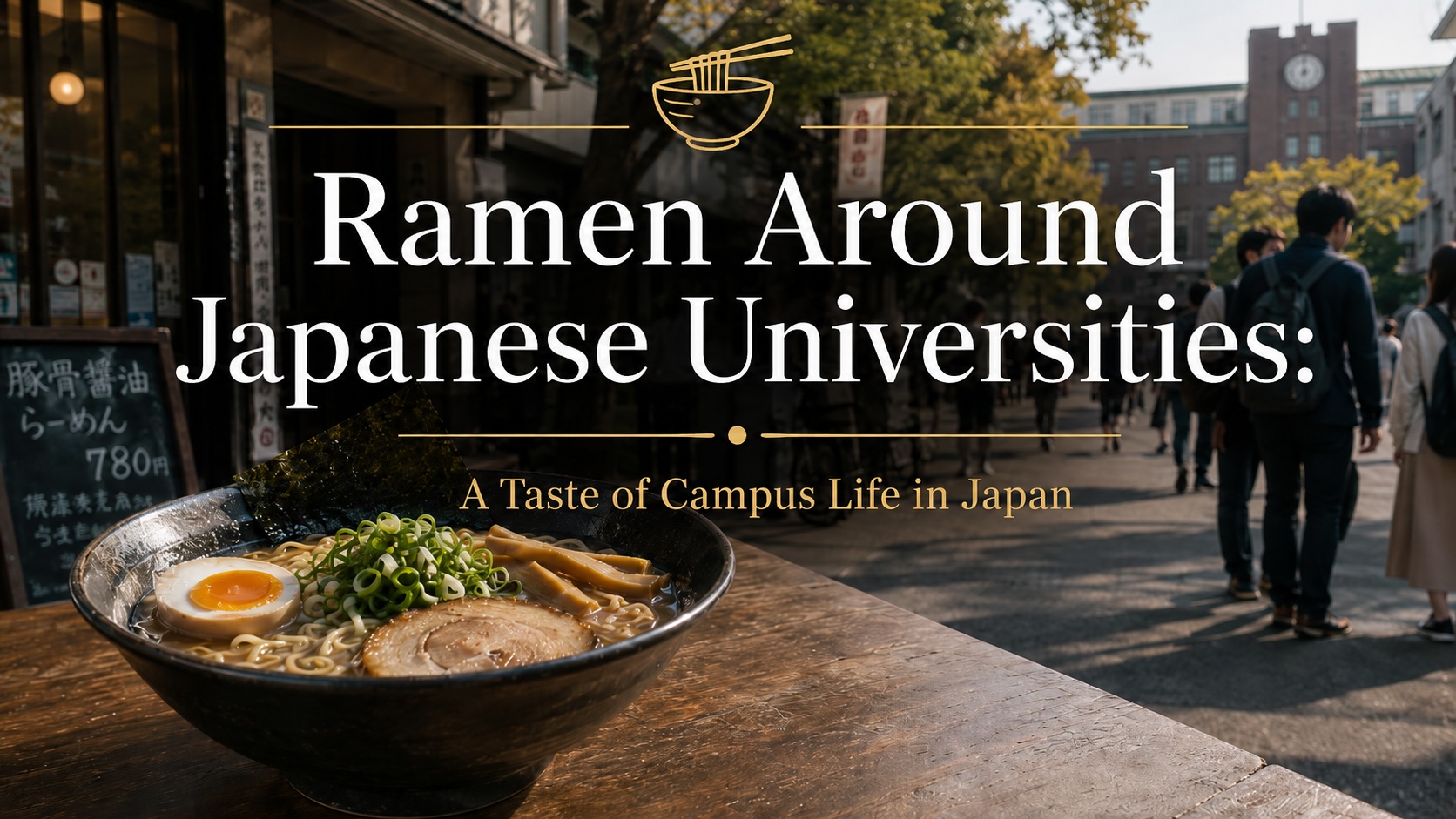
Around Japanese universities, ramen is not only a famous Japanese food for tourists. It is also an everyday meal for students, graduate students, researchers, and staff. This article does not introduce individual ramen shops. Instead, it explains the difference between simple ramen inside campus and more distinctive ramen shops just outside campus, introduces common ramen styles, and gives practical tips for trying ramen without stress.
Quick summary
- Ramen inside university campuses is usually convenient and relatively inexpensive, but it is not always a special culinary experience.
- Ramen shops just outside campus are often more distinctive, slightly more expensive, and more memorable.
- Common styles include shoyu, miso, shio, tonkotsu, Jiro-style ramen, abura soba, tsukemen, and other local or creative variations.
- You do not need advanced Japanese to try ramen, especially if the shop uses photos or ticket machines.
- If you have religious, vegetarian, allergy, or dietary restrictions, check carefully because pork, chicken, fish, shellfish, egg, and wheat are common.
The short answer: ramen is part of university life
Around universities, ramen is often an ordinary part of daily life. It can be a quick lunch between classes, a late dinner after experiments, or a casual meal with lab members after a seminar. For many students and researchers, ramen is not a special event. It is simply one of the easiest meals to choose when they are hungry and short on time.
This everyday quality is what makes ramen interesting for international students and visiting researchers. You do not need to visit a famous restaurant to experience it. A simple bowl near campus can already show you something about Japanese university life: people are busy, schedules are dense, and practical meals matter.
Ramen inside university campuses
Many Japanese universities have cafeterias, food courts, or small dining spaces where ramen is available. Campus ramen is usually convenient and relatively inexpensive. It is useful when you have only a short break, when the weather is bad, or when you do not want to leave campus between lectures, experiments, and meetings.
At the same time, campus ramen is usually not the most special ramen experience in Japan. It is often simple, standardized, and designed to serve many people quickly. The taste may be good enough for daily lunch, but it is not always the kind of ramen that students talk about excitedly.
In other words, campus ramen is practical. It is part of the university infrastructure, like the cafeteria, convenience store, library, and bicycle parking. It helps people get through the day, but it is not necessarily the main food culture around the university.
Ramen shops just outside campus
Ramen shops just outside campus are often more interesting. They may be located near the main gate, around the closest train station, along the road used by students, or near student apartments. These shops are usually independent restaurants, and each one often has a clearer personality.
One shop may be known for a heavy pork-bone soup, another for a clean soy-sauce broth, another for a large portion, another for spicy ramen, and another for a dry noodle dish such as abura soba. Compared with campus cafeteria ramen, these shops are often slightly more expensive, but they can feel much more like a real food experience.
This is why off-campus ramen can become part of student memory. A favorite ramen shop near a university is not just a place to eat. It can become the place people go after a long experiment, after finishing a presentation, after an entrance exam, or on the way home from campus.
Common ramen styles to try
If you are new to ramen, it is helpful to know a few basic categories. The most standard styles are shoyu ramen, based on soy sauce; miso ramen, based on miso; and shio ramen, a lighter salt-based style. These are good starting points because they are common and relatively easy to understand.
Tonkotsu ramen uses pork-bone broth and is often richer, thicker, and more intense. It is popular, but it may not be suitable for people who avoid pork. Jiro-style ramen is another distinctive type, famous for very large portions, thick noodles, garlic, bean sprouts, and a heavy soup. It can be exciting, but it is not always the best first bowl if you want something light.
Abura soba is a soupless or low-soup noodle dish mixed with sauce and oil. Tsukemen is dipping ramen, where noodles and soup are served separately. Some shops also serve spicy ramen, seafood-based ramen, chicken-based ramen, vegetarian ramen, or highly creative local styles. Around universities, this variety is part of the fun: you can try one style, remember what you liked, and gradually build your own map of off-campus ramen.
How to order and eat without stress
Many ramen shops use a ticket machine near the entrance. Choose your ramen, pay at the machine, take the ticket, and give it to the staff. If the machine has no English, photos can help. The top-left or largest button is often a standard or popular item, although this is not a strict rule.
If the shop uses a menu, you can point to a photo or use a simple phrase such as kore onegaishimasu, meaning "this one, please." During busy hours, decide reasonably quickly, keep your belongings compact, and avoid staying too long after finishing. Ramen shops are casual, but many of them move quickly.
Slurping noodles is common in Japan, but you do not have to force yourself to do it. Eat comfortably, follow the queue if there is one, and carry some cash because older ticket machines or small local shops may not accept every card.
Dietary cautions: check before you eat
Ramen can be difficult for people with dietary restrictions. Broth may contain pork, chicken, fish, shellfish, or several ingredients at once. Noodles contain wheat, toppings may include egg, and sauces may include soy sauce or seafood-derived ingredients. A bowl that looks simple may still contain animal-based broth.
Vegetarian, vegan, halal, and allergy-friendly ramen options exist in Japan, especially in large cities, but they are not guaranteed near every university. If this matters to you, search in advance, check the shop website or menu, and do not assume that removing visible meat makes the dish vegetarian or halal.
For students staying in Japan for a long time, it is worth making a short Japanese note on your phone explaining what you cannot eat. This is often easier than trying to explain everything verbally in a busy shop.
Practical conclusion
Start with campus ramen if you want something cheap, quick, and easy. Then try ramen shops just outside campus when you want a more memorable experience. Do not worry about finding the most famous restaurant at first. Around Japanese universities, the fun of ramen is often gradual: one simple bowl after class, one new shop near the station, and one favorite place that slowly becomes part of your own campus life.
Useful sources
- Japan National Tourism Organization: A Guide to Ramen in Japan
- Japan National Tourism Organization: Japanese manners and noodle culture
- Study in Japan: Cost of living for international students
Read next